Culture
The Café and the Commute
France treats coffee as a place to sit. America treats it as fuel for the road. Both are right — and both are missing something.
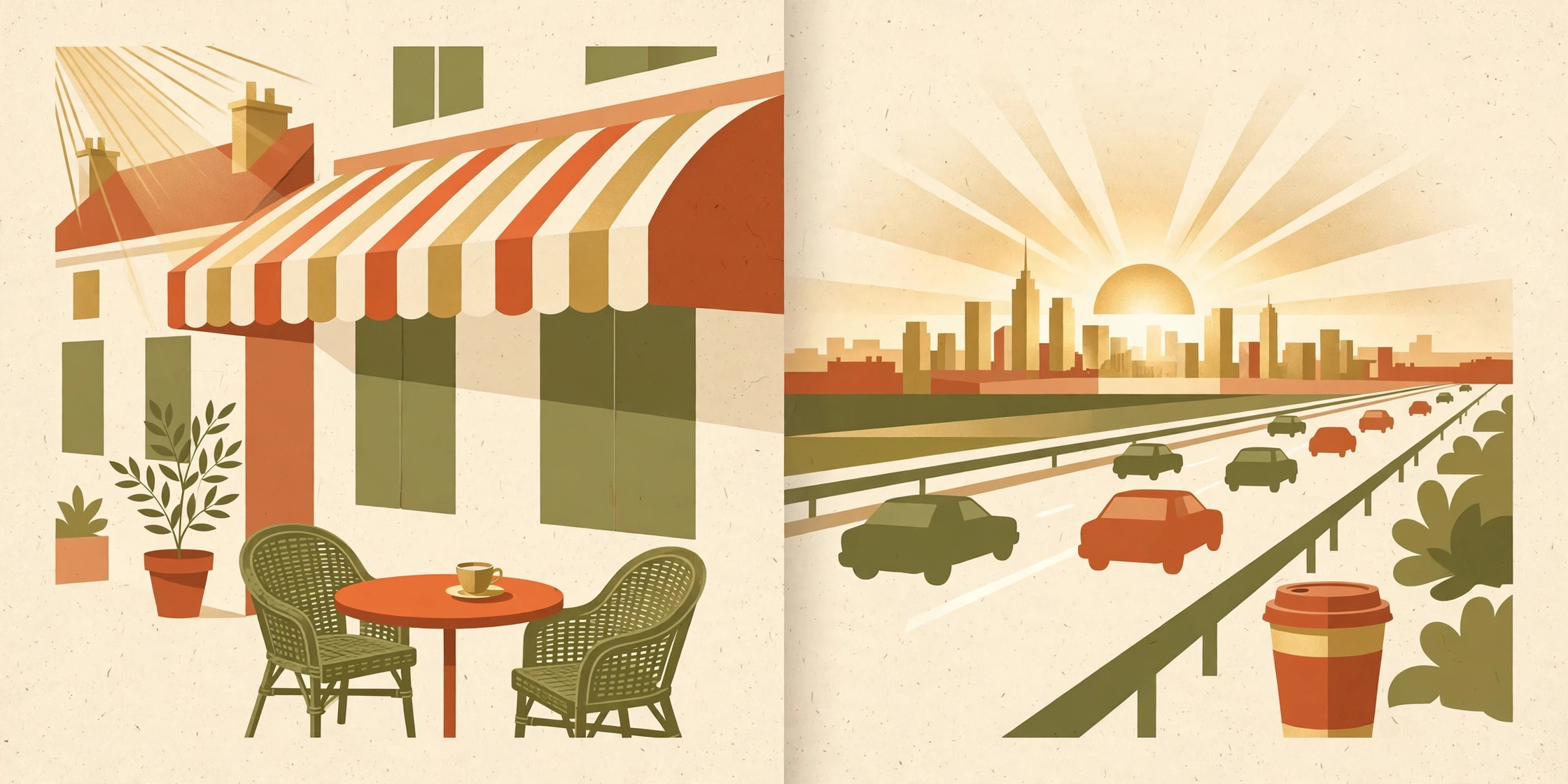
In France, you do not get coffee. You take coffee — prendre un café — the way you take a seat, take your time, take the afternoon. The verb already knows something the American verb doesn’t, and the difference between the two civilizations can be located, with unusual precision, in that single verb. To get is to acquire and move on. To take is to claim a moment and inhabit it. Everything else — the cup, the chair, the terrace, the two-hour lunch of the soul — follows from the grammar.
In America, you get coffee the way you get gas: efficiently, in large quantities, and without leaving the vehicle if it can possibly be avoided. Nobody takes coffee in America; coffee is gotten, ideally before seven in the morning, ideally in a cup with a lid whose engineering would impress aerospace contractors. The transaction is optimized for a single variable — speed — and it is optimized brilliantly. The tragedy, if it is one, is that nobody involved experiences it as a tragedy. It feels like freedom.
Advertisement
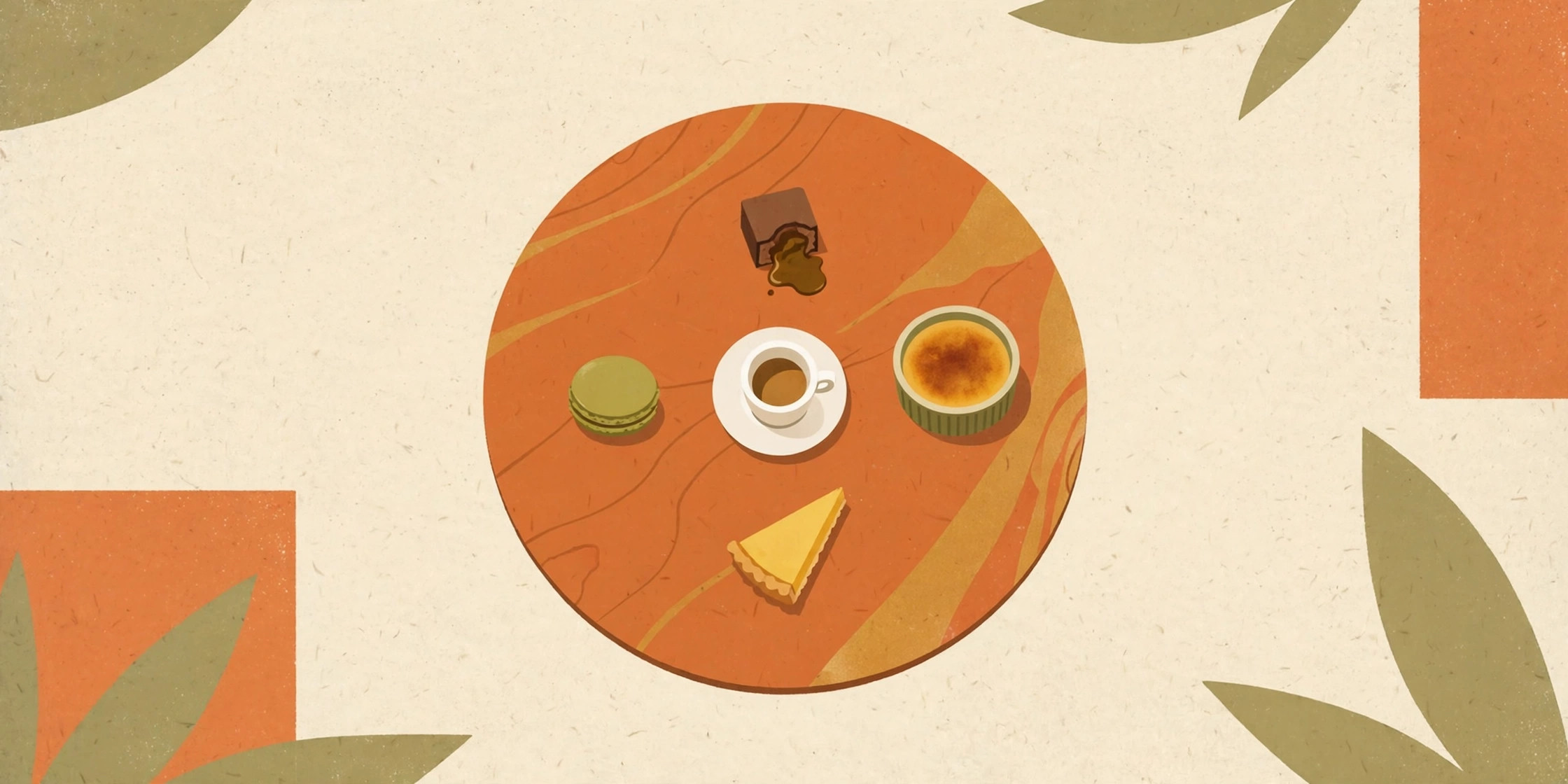
The French order is three syllables long: un café. What arrives is an espresso — small, dark, unsweetened unless you say otherwise — served in a cup the size of a thimble that has seen things. An American witnessing this for the first time experiences a brief moment of genuine panic: that’s it? Where is the rest of it? The French drinker, meanwhile, regards the cup as exactly the right size for its purpose, the way a haiku is exactly the right size for its purpose. More would be vulgar. More would miss the point.
The American order, by contrast, is a paragraph. Size, temperature, milk, milk alternative, the temperature of the milk alternative, syrup, syrup quantity, ice, no ice, extra shot, half-caf, upside-down — an American coffee order has the grammatical complexity of a tax return and the emotional stakes of a medical diagnosis. The French hear this recited at a counter and think, with sincere bewilderment: c’est une commande ou une négociation ? Both parties are behaving rationally. They simply disagree about what a cup of coffee is for.
The seat is the product
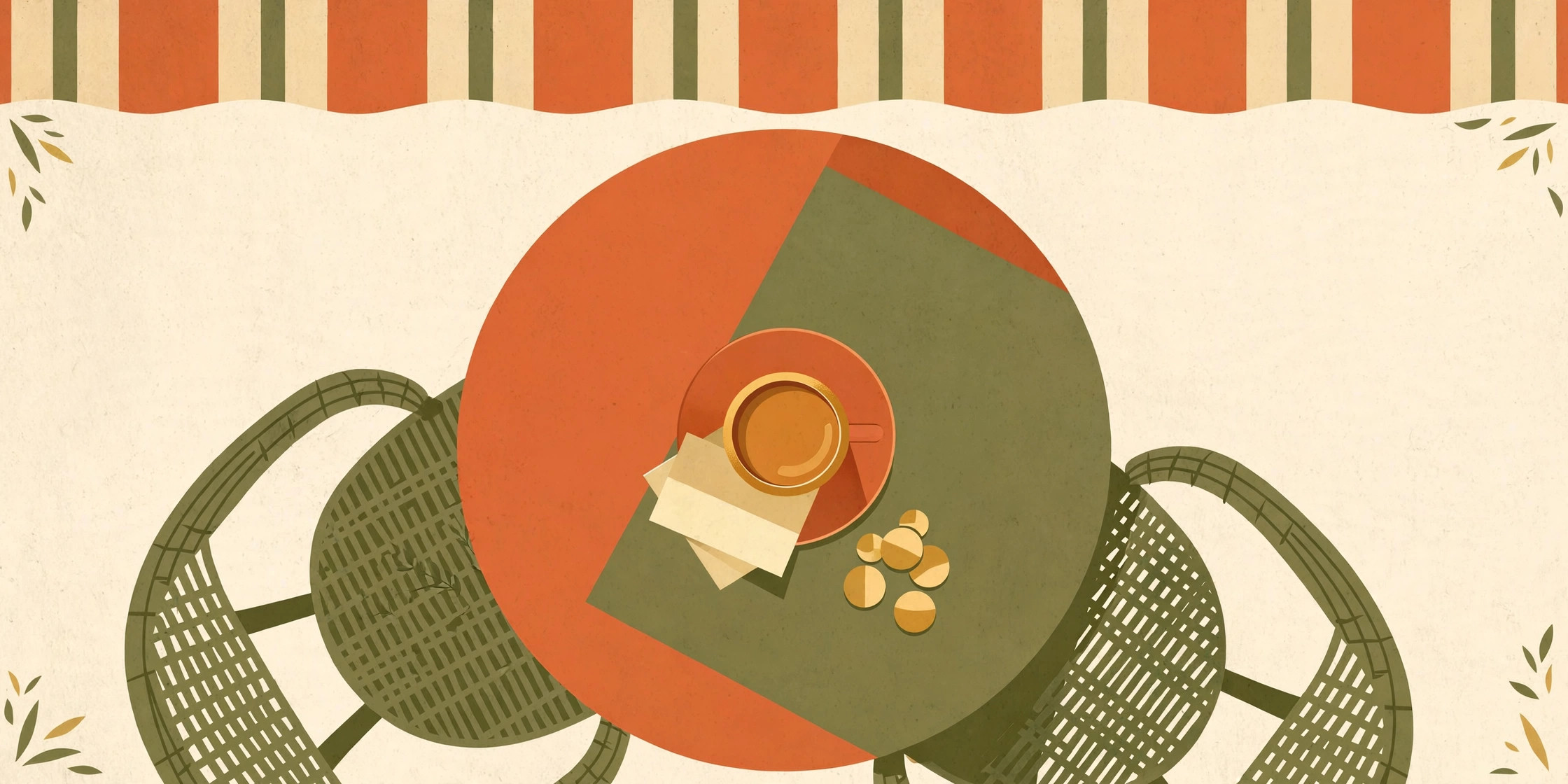
Here is the great secret of the French café, the one no guidebook quite explains: you are not paying for the coffee. You are paying for the chair. At the counter — au comptoir — the espresso costs less, drunk standing in ninety seconds among regulars who nod at the barman like co-conspirators in a pleasant crime. At a table, on the terrace, it costs more — and what you have purchased, officially and without embarrassment, is the right to remain. The French have itemized lingering and put it on the menu.
And remain you may. This is the part Americans cannot quite believe, even after living in France for years: in a French café, nobody will ever rush you. The waiter will not hover. The check will not materialize unasked. You may nurse a single espresso for two hours while reading, writing, staring at the street, or practicing the sacred French discipline of rien — nothing — and this is not merely tolerated. It is the entire business model. The café is not selling coffee; it is selling permission.
The terrace is the reason. France’s great contribution to coffee civilization is not the espresso — Italy would like a word, and Italy is right. It is the chair facing outward: the row of seats turned toward the street like an audience at a play that never ends. The French café terrace is a theater where the performance is everyone else, and the ticket costs the price of a coffee. To sit en terrasse on a spring afternoon, watching the city file past, is to participate in the cheapest and most democratic spectacle in France.
America solved the same problem — the human need to pause with a hot drink — differently, because America faced a different landscape. The American café, and there are magnificent ones in every city, run by people who care desperately about extraction times and water chemistry, is built for a country where nobody walks past the window. So the coffee had to become portable. The cup grew a lid, the lid grew a sleeve, the sleeve grew a logo, and the whole ritual was redesigned around the one geographic feature France doesn’t have: the commute.
Fuel
The American to-go cup is an engineering marvel and a philosophical statement in roughly equal measure. Twenty ounces — well over half a liter — of hot liquid, sealed, insulated, designed to survive a cupholder, a subway pole, a steering wheel, and a toddler. It is not really a beverage. It is a provision, like a canteen on a march. The French cup holds roughly three sips. The American cup holds a morning. Neither is wrong; they are answers to different questions.
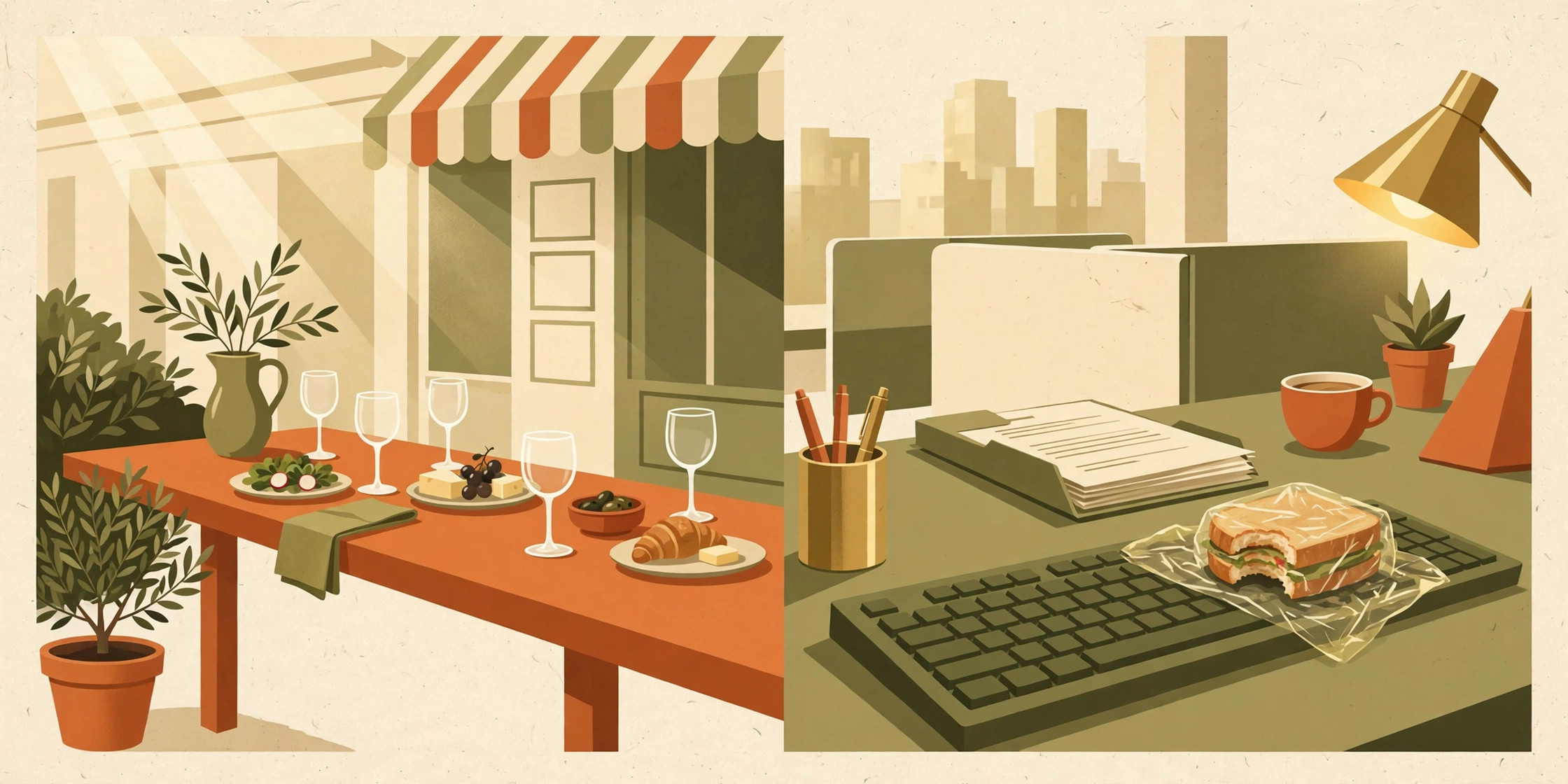
This is because in America, coffee is fuel, and fuel is consumed in transit. The classic American coffee moment is not seated; it is vehicular. The hand wrapped around the cup on the 7:42, the cup in the console on the interstate, the cup on the desk by nine — coffee marks the stages of the American morning the way church bells once marked the hours in a French village. To ask an American to drink coffee sitting down, with nothing else happening, is to ask them to waste the only hours that compound.
Advertisement
France has its version of the morning rush, of course; the French are not a nation of lotus-eaters. The pause-café at the office, the lightning espresso at the counter before work — caffeine as necessity is fully understood. But the default setting differs: even the quick coffee is taken somewhere, standing at a zinc counter that has a name, served by someone who recognizes your face. The transaction has a geography. The coffee has an address.
The deepest difference is one of ambition. American coffee culture is a culture of more: more ounces, more shots, more customization, cold brew steeped for eighteen hours, nitro-infused, shaken with oat milk and brown sugar. The French menu contains, essentially, four items — café, crème, noisette, allongé — and the culture treats this brevity as a virtue rather than a limitation. To require twelve modifiers, the French suspect, is to confess that one does not actually like coffee.
The drive-through and the third place
Nothing captures the American relationship more completely than the drive-through. Coffee, acquired without unbuckling a seatbelt, handed through a window, consumed at sixty miles an hour. A French person witnessing this for the first time reacts the way an American reacts to a two-hour lunch: with the dawning suspicion that the other civilization has misunderstood something fundamental about being alive. Both suspicions are, in their way, correct.
And yet — and this is the twist the French never expect — America invented the modern idea of lingering, then sold it back to the world at scale. The great American coffee chain built its empire on the “third place”: not home, not work, but somewhere to be. Armchairs, outlets, Wi-Fi, refills. It is the French terrace, franchised and air-conditioned — and the French, who invented sitting, now sit in it too, often while complaining about it, which is the most French possible way to enjoy something.
The French objection to iced coffee deserves its own paragraph, because it is total and non-negotiable. Coffee, in the French cosmology, is hot. Un café glacé was for decades a contradiction in terms, like a warm ice cube or a quiet drum solo. The American habit of drinking iced coffee in February, in a snowstorm, through a straw, strikes the French as a category error so profound it barely registers as coffee at all. They are wrong — cold brew is delicious — but they are wrong with magnificent consistency.
Americans, for their part, find the French cup faintly absurd. Three sips? For that price? And then there is the service — the legendary, glacial, magnificent French service, where catching the waiter’s eye is a skill acquired over years of practice, like playing an instrument. The American is accustomed to refills that arrive before being requested. The French waiter brings you one coffee and then, gloriously, leaves you alone — which reads as either neglect or respect, depending entirely on which civilization raised you.
In France, the coffee is small and the time is large. In America, the coffee is large and the time is small. Each country has optimized beautifully — and each has optimized the wrong variable.
The pétanque court, as always, has already ruled on the matter. At the buvette, coffee arrives in small plastic cups, drunk standing between mènes, and no one has ever once asked for it à emporter. The pickleball sideline has its own version — the giant insulated tumbler, the steel canister the size of a paint can, sweating through three games in the sun. Same caffeine. Opposite cosmologies. The French player drinks less and stays longer; the American drinks more and leaves earlier. The score, in the end, is roughly even.
So what does each side get right? France understands that coffee is a place — that the value was never in the beans but in the chair, the terrace, the unhurried hour. The French café is one of the last institutions in the developed world that sells you time instead of stealing it. For the price of an espresso, you may occupy a corner of Paris for an entire afternoon. Find me a better deal anywhere in capitalism. I will wait — at a café, obviously.
America understands that coffee is democratic. No ceremony, no wrong answers, no waiter silently judging your order — a truck driver and a chief executive drink the same dark roast from the same drive-through window, and nobody thinks this is strange. And the American mania for iteration gave the world cold brew, which is genuinely delicious; the flat white’s conquest of the English-speaking world; and a thousand small roasters who treat the bean with monastic seriousness. Snobbery is a French art. Improvement is an American one.
The ideal, naturally, is the transatlantic cup: American coffee’s lack of pretension poured into a French afternoon. A great cup, drunk slowly, in a chair facing the street, with nowhere to be and no lid required. The French have the chair. The Americans have the cup. The wise drinker takes both — prend son temps, and gets going exactly when it’s time.