Culture
The Bise and the Handshake
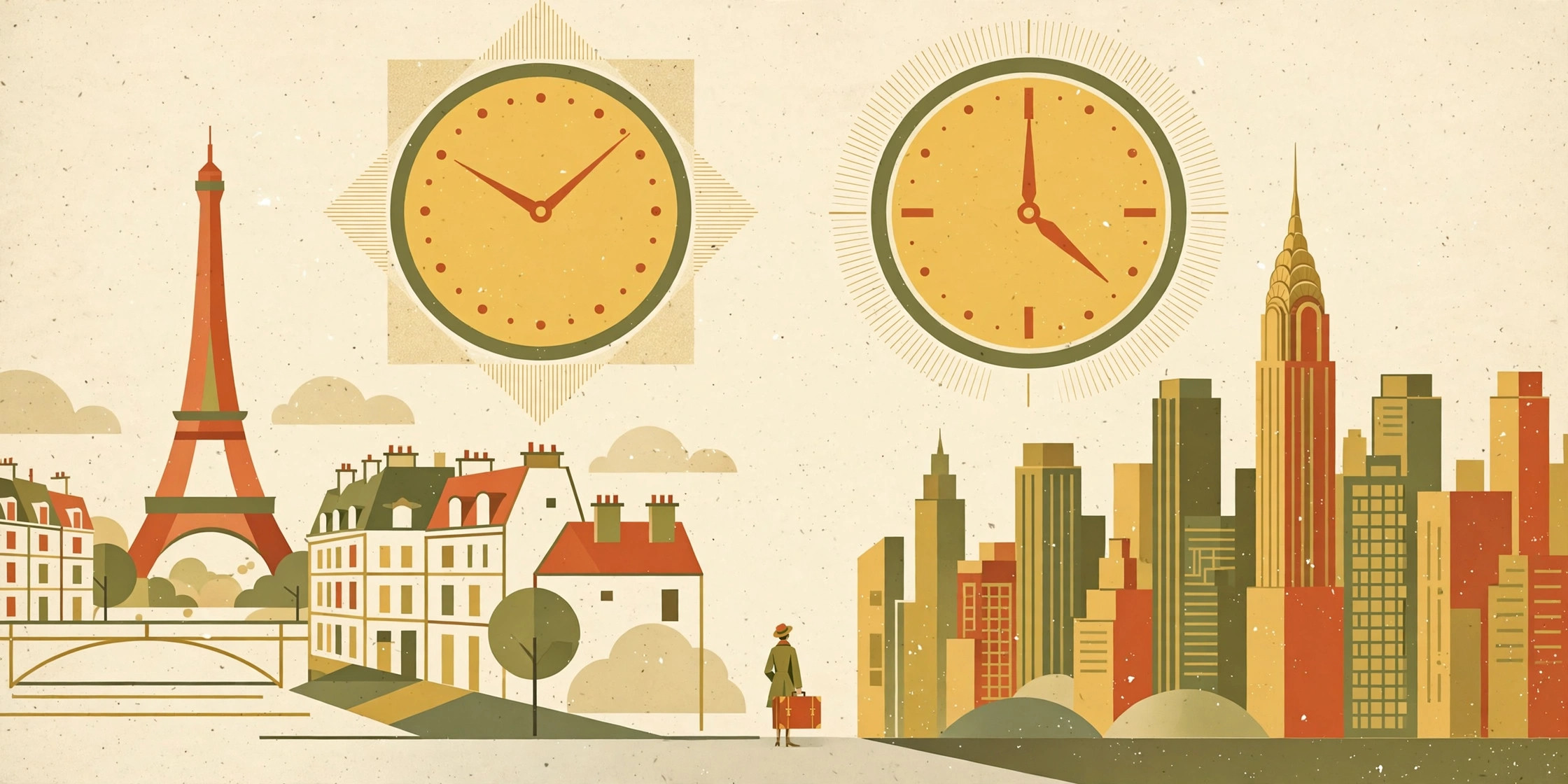
In France you kiss people hello. In America you shake their hand and keep your distance. Betsy Callahan on learning the math of the bise.
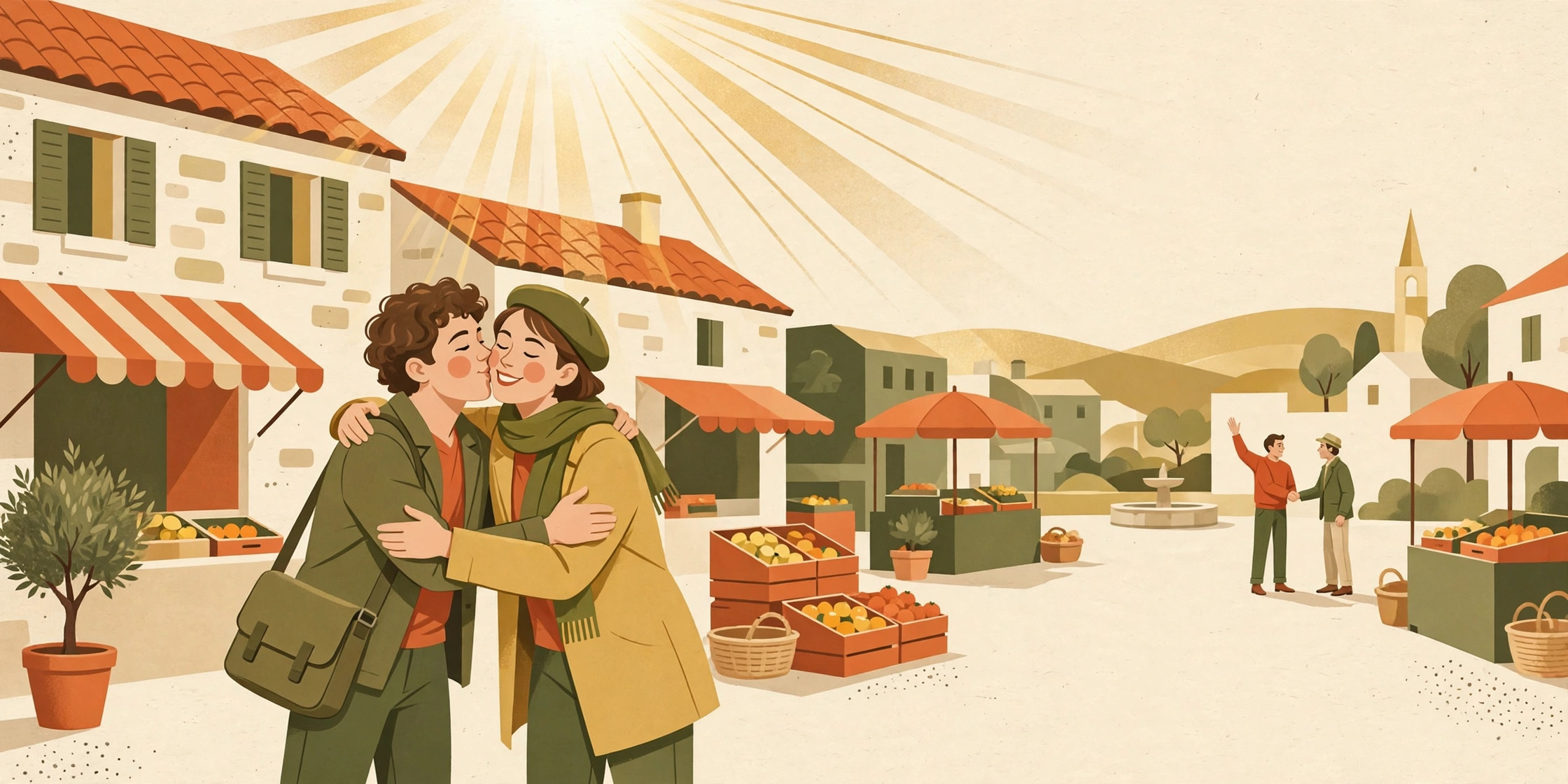
My first week in France, a neighbor came to the door with a basket of plums, and I did what any sensible American would do. I shook her hand.
The look on her face. I will never forget it. She laughed — kindly, the way you’d laugh at a child who puts their shoes on the wrong feet — and pulled me in for the bise. Two kisses. Cheek to cheek, making that little sound in the air. The plums nearly went everywhere.
That was six years ago, and I am still not sure I have the math right.
Here is what I know now: in Paris, it is two. In much of the south and southwest, it can be four. You start on the left cheek, usually. Business is a handshake, mostly. Friends are the bise. Family is the bise with feeling. Schoolchildren kiss their teachers hello, which still melts my heart every single time I see it.
What nobody tells you is that the bise is not about affection. It is about knowing where you stand with a person. The handshake says: we are formal. The bise says: we are past that. Americans think of it as intimate. The French think of it as Tuesday.
The hardest part for me was never the kissing. It was the decision. You meet someone at a party, and there is that half-second where both of you calculate: handshake or bise? One cheek or two? Go left or right? Get it wrong and you bump noses, or worse, you end up doing the awkward American hover where your hands are out and their face is already coming in. I have a PhD and I could not solve this equation for two years.
Then came the pandemic, and France briefly tried the elbow bump, the fist bump, the distant nod — and everyone hated it. The bise came back within months. You cannot keep the French from their greetings any more than you can keep them from lunch.
Here is the thing I have come to love about it, though. The American handshake keeps a full arm’s length between you. It is clean. It is safe. Nobody gets too close. The bise says: I am going to step into your space and trust you. Twice. Every time I see someone. It is a small daily exercise in not being afraid of people.
My neighbor still brings me plums. I do not shake her hand anymore. I lean in, left cheek first, like I was born here. My math is still shaky in new crowds, but at her door, I am fluent.
Advertisement