Culture
The Lunch Hour
In France, lunch is a sit-down meal with a beginning, a middle, and no apology; in America, it is fuel consumed between obligations. Both cultures eat at noon — they simply disagree about whether noon is a pause or a checkpoint.
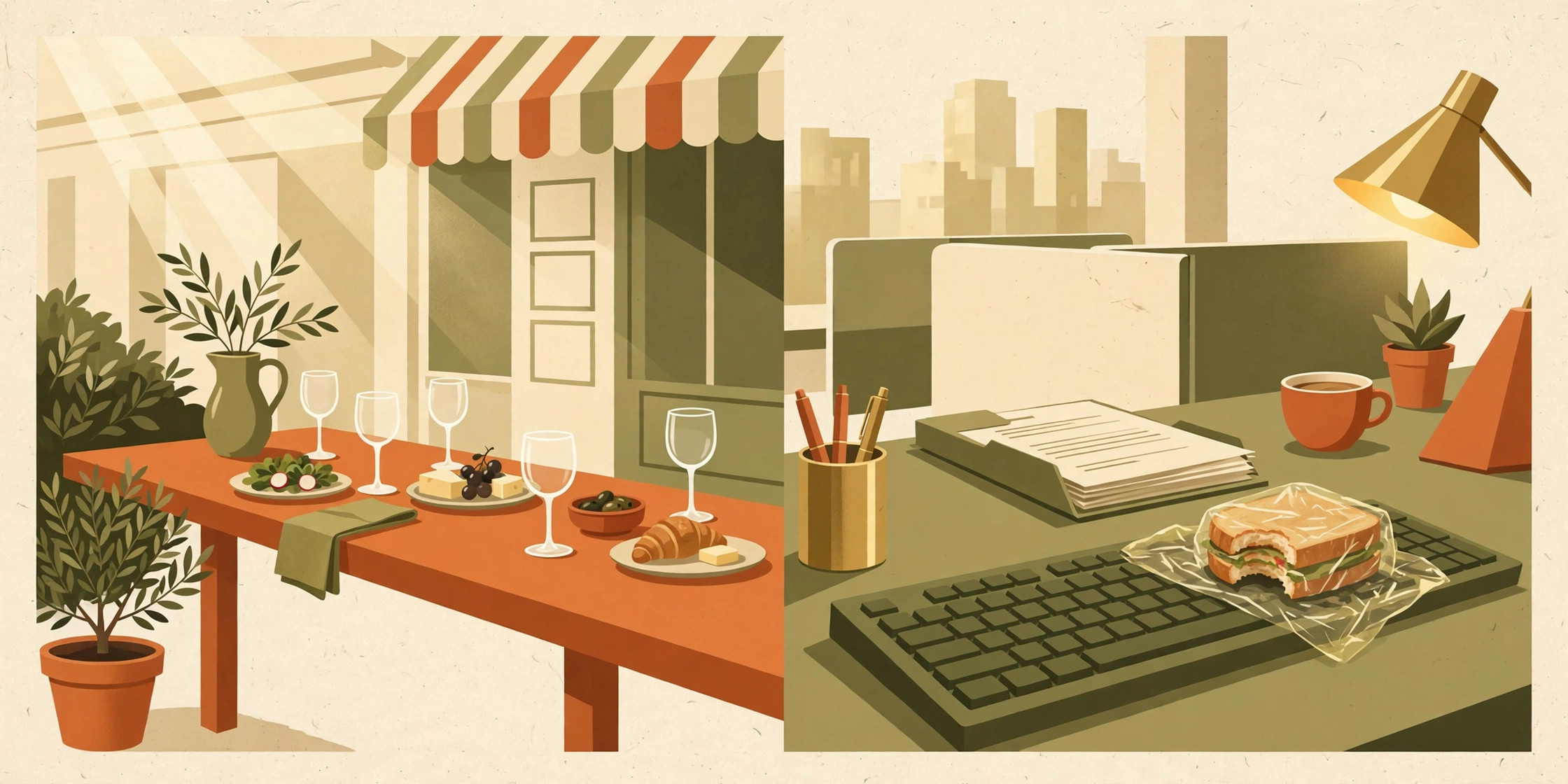
When I first moved to Texas, my office had a lunchroom with four microwaves and no chairs. That was the whole room. Four microwaves, a vending machine, and a line of people waiting to heat something in a plastic container and carry it back to their desks, where it would be eaten while staring at a spreadsheet. I stood in that doorway for a full minute, homesick in a way I had never been homesick before. In France, lunch is not the thing you eat. It is the thing that happens in the middle of the day.
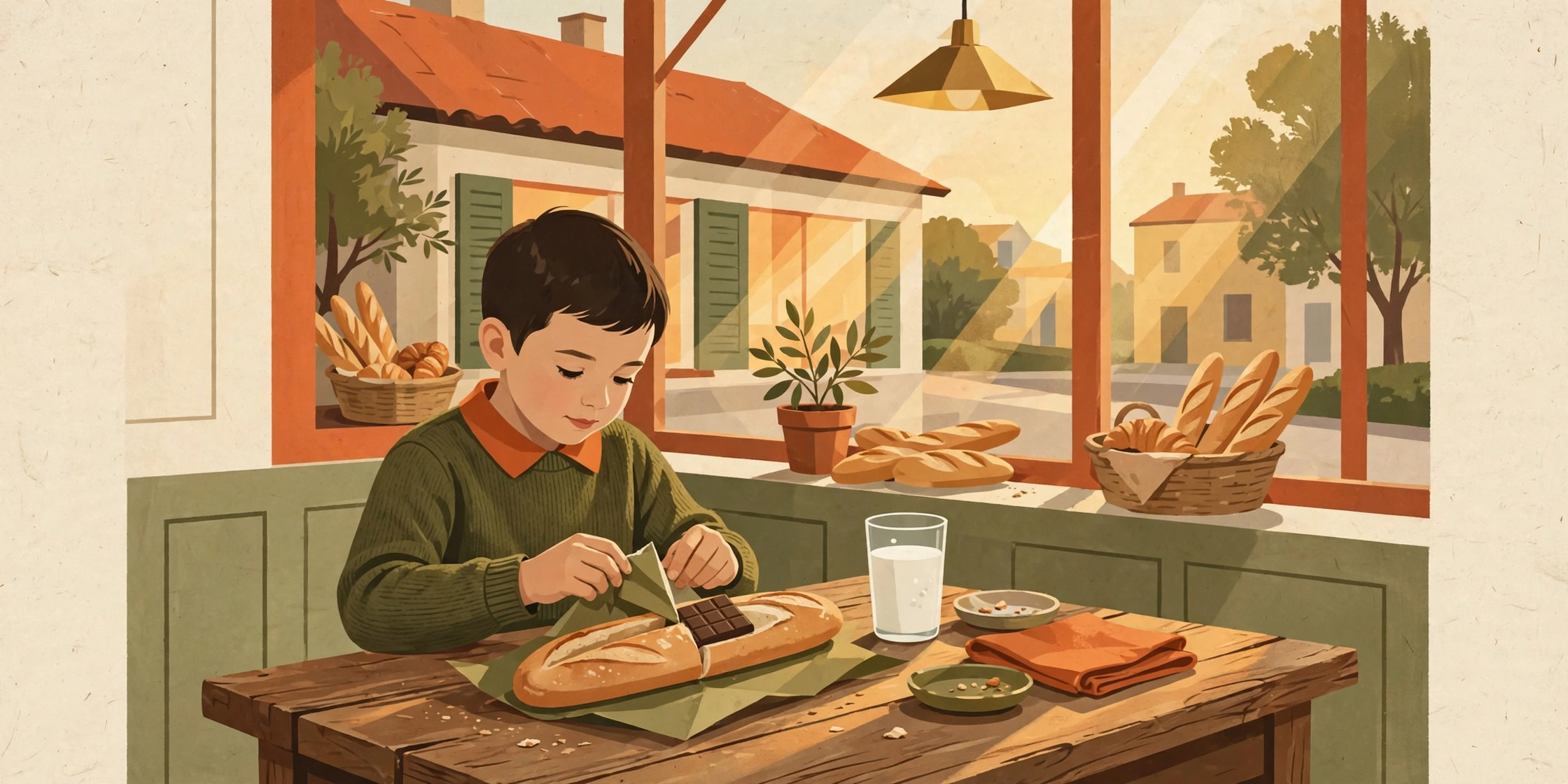
The French lunch has a structure, like a small novel: a beginning, a middle, and an end. The beginning might be soup or a salad or just bread with something on it. The middle is the plat — meat, fish, something that took longer to cook than to eat, which is precisely the point. The end is cheese, or fruit, or something sweet, plus coffee, which is drunk sitting down, never carried away in a cup with a plastic lid. The whole thing takes an hour, sometimes two. The French do not consider this indulgent. They consider it normal, the way Americans consider highways normal.
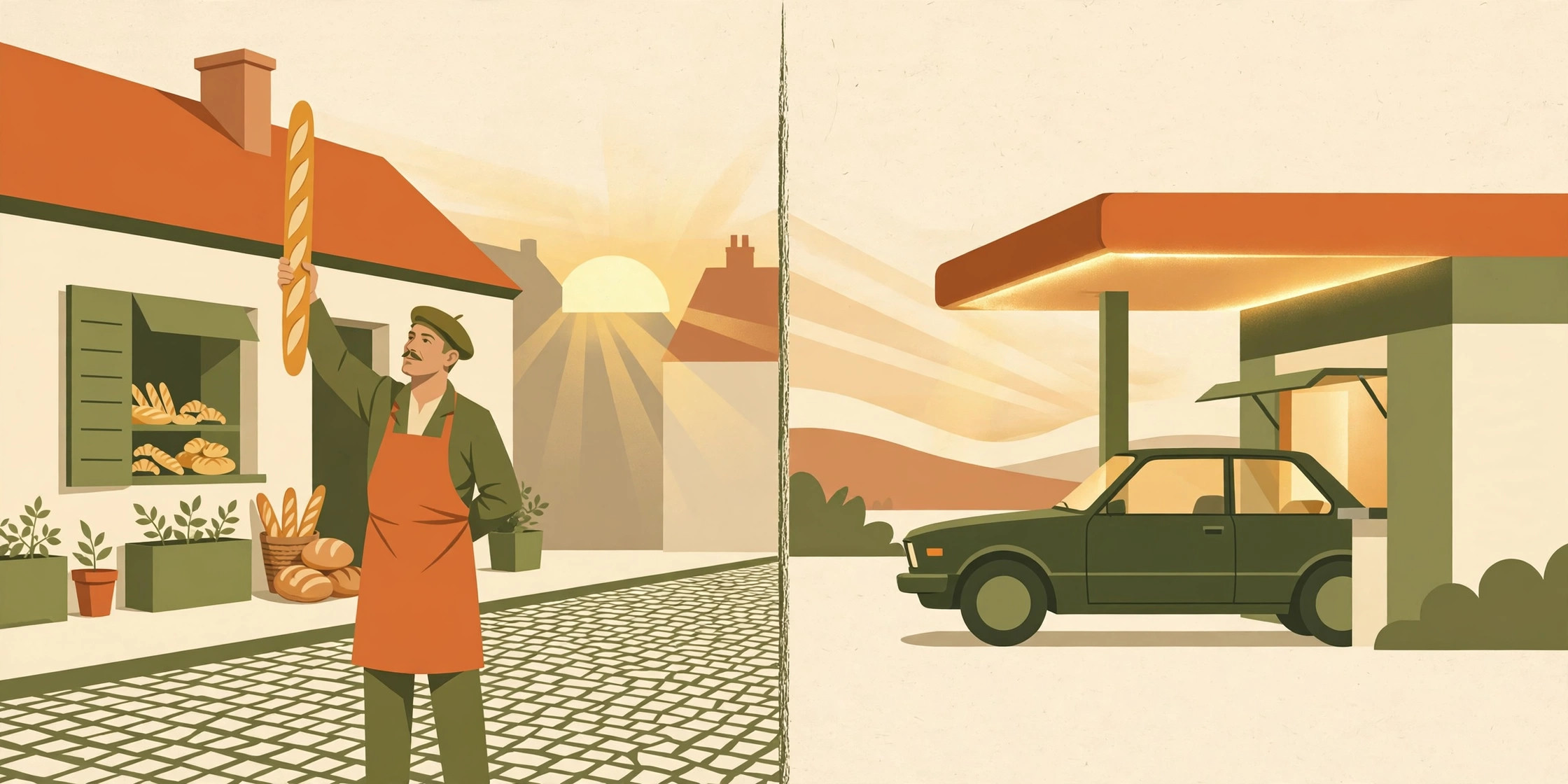
The American lunch, by contrast, is an engineering solution. The problem: the human body needs calories. The constraint: the day must not stop. The solution: food that can be held in one hand while the other hand types. The sandwich, the salad bowl, the burrito — these are not meals so much as they are caloric payloads with packaging. Americans eat lunch at work, not away from it. The French eat lunch instead of work, and they say this with a straight face: from noon to two, the country is, to a first approximation, closed.
There is a law behind this, by the way. Not a law about lunch exactly, but close: French employers are forbidden from letting workers eat lunch at their desks. The rule was suspended during the pandemic, then quietly brought back. The French government looked at the American habit of eating over a keyboard and legislated against it, the way you might ban a pesticide. Think about that. A country looked at how another country eats and said: this must be stopped by law.
And yet the Americans have their own small genius here. The American lunch is portable, democratic, and quick — it belongs to everyone, costs little, and asks nothing. There is a freedom in being able to eat whenever, wherever, in twenty minutes flat. The French lunch, for all its pleasures, demands a certain choreography: a table, a companion, a restaurant or a kitchen that can produce a hot meal on a Tuesday. It is a ritual, and rituals exclude.
The truth is that both countries are defending the same thing: dignity. The French locate dignity in the pause — in treating the meal as a small ceremony that honors the worker. The Americans locate dignity in momentum — in treating the meal as a minor errand so that the worker can get back to the real business of the day. One civilization eats to mark the middle of the day. The other eats to skip it.
I have lived here long enough now to do both, badly. Some days I sit down with a real plate and a real glass of water and take forty-five minutes, and my American colleagues look at me like I have taken up smoking. Other days I eat a sandwich at my desk and feel my French grandmother watching me from somewhere, arms crossed. Lunch, it turns out, is one of those things you never fully translate. You can learn the words. You cannot learn the hour.
Advertisement