Culture
Service Included
In France the tip is already in the bill — by law. In America the tip is the wages. An expat on the strange relief of never doing math at the table, and the strange guilt of it.
The first time I ate at a real Paris bistro, I spent ten minutes doing math on my phone. My husband watched me for a while and then said, “Stop. It’s included.”
He meant the tip. In France, it’s called service compris — service included. By law, since 1987, restaurants must include a 15 percent service charge in the menu prices. The number on the bill is the number. You pay it and you leave. If the service was lovely, you leave a euro or two on the table, a little pourboire, and the server genuinely smiles. If the service was terrible, you leave nothing, and nobody chases you down the street.
Advertisement
I had lived my whole adult life in the other system, so I didn’t believe him at first. I kept looking for the catch. There wasn’t one.
In America, the tip is not a bonus. It’s the wages. The federal tipped minimum wage has been $2.13 an hour since 1991 — thirty-five years — and the whole restaurant economy runs on the customer making up the difference. Twenty percent is the new normal. Fifteen is a statement. The card reader spins around with those three big buttons — 20%, 25%, 30% — and a “custom” button hiding in the corner like a confession booth. You stand there at a counter, for a coffee you poured yourself, doing long division under the eyes of a teenager.
Tip creep is the phrase now. You tip the delivery driver, the barista, the guy who handed you a muffin. Every screen asks. Saying no feels like a moral event. Saying yes feels like being billed for politeness.
Advertisement
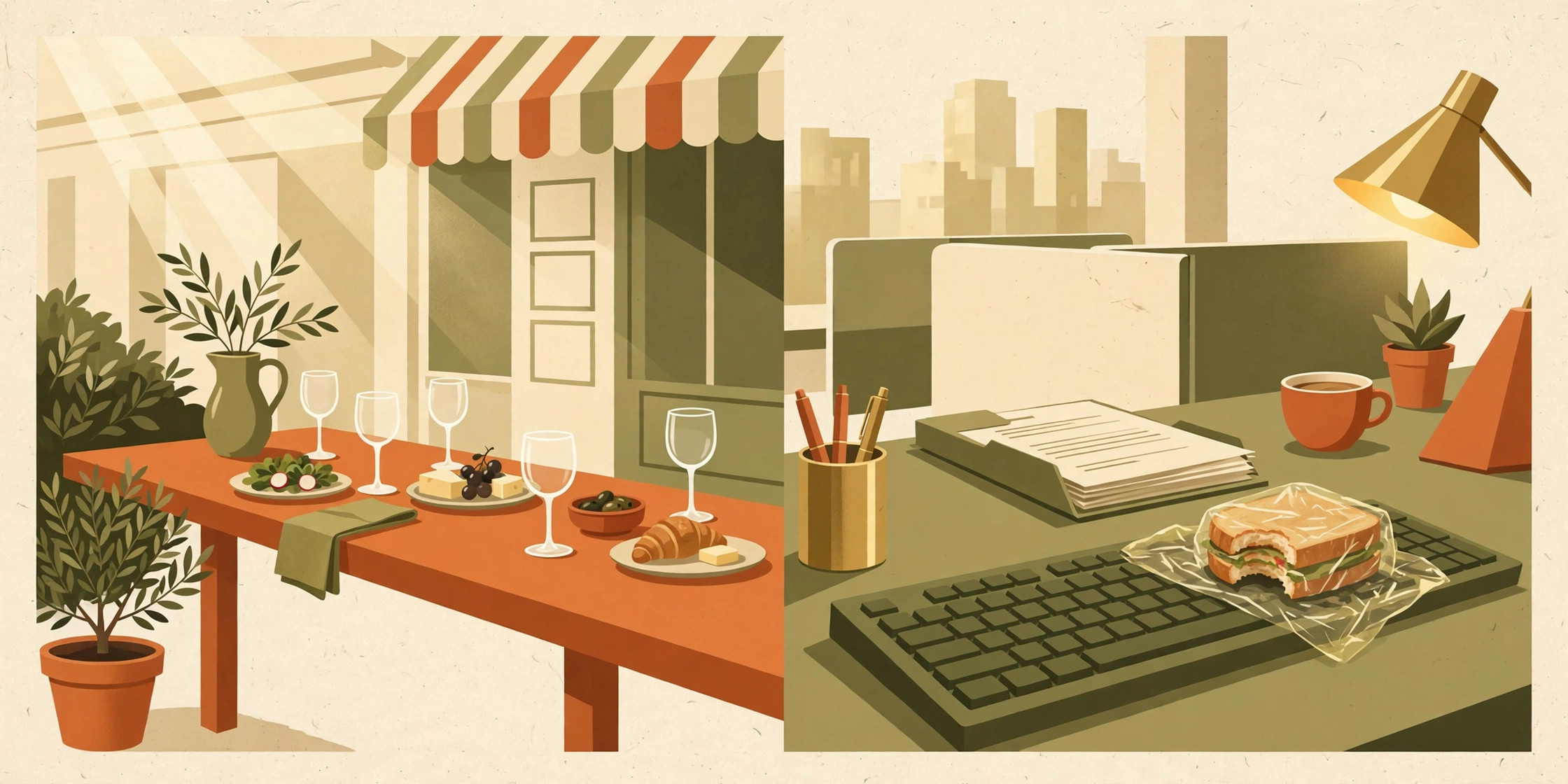
Here’s what nobody tells Americans before they move to France: the relief is physical. You finish a meal, you look at the check, and the check is just… the check. No arithmetic. No performance. No wondering whether 18 percent says “I’m cheap” or 22 percent says “I’m a sucker.” You just pay.
But there is a guilt, too, and it took me a year to name it. In America, tipping badly is a sin and tipping well is a small act of solidarity. You are, personally, paying someone’s rent. In France, that relationship doesn’t exist. The server is paid by the restaurant — properly, with a contract, with vacation — and your two euros are a gesture, not a lifeline. It’s healthier. It’s fairer. And somehow it feels colder, because the warmth in the American system was always the warmth of two people briefly, awkwardly, taking care of each other.
The French will tell you their system is more dignified. The server is a professional, not a supplicant. They’re right. The Americans will tell you tipping rewards good service and keeps prices down. They’re half right.
What I know is this: after five years in Lyon, I went home to Ohio and froze at a card reader in a sandwich shop. Twenty-five percent on a twelve-dollar sandwich. My thumb hovered. Old habits, old guilt, old arithmetic. I hit 20 and felt like a traitor in both directions.
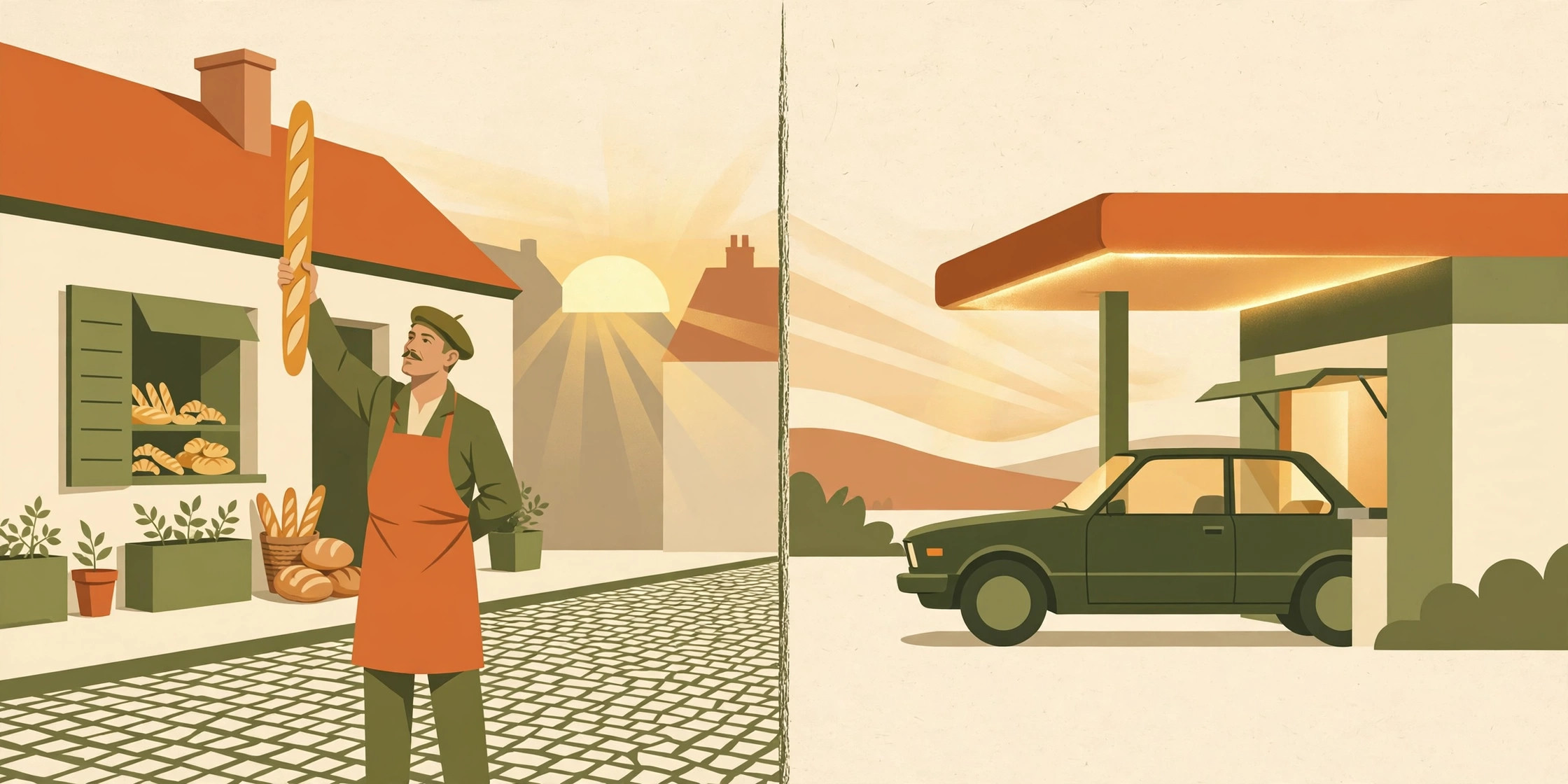
Service compris. It’s in the price. It’s in the law. The French decided a century ago that the meal should cost what it costs. America decided the meal should cost what you decide the person serving it is worth. Both systems tell you exactly what each country believes a person is.