Culture
The Sunday Market
France treats the Sunday market as a secular liturgy of pleasure; America treats the farmers market as a virtuous community project. Both leave with heavy bags — they just disagree about what the point was.
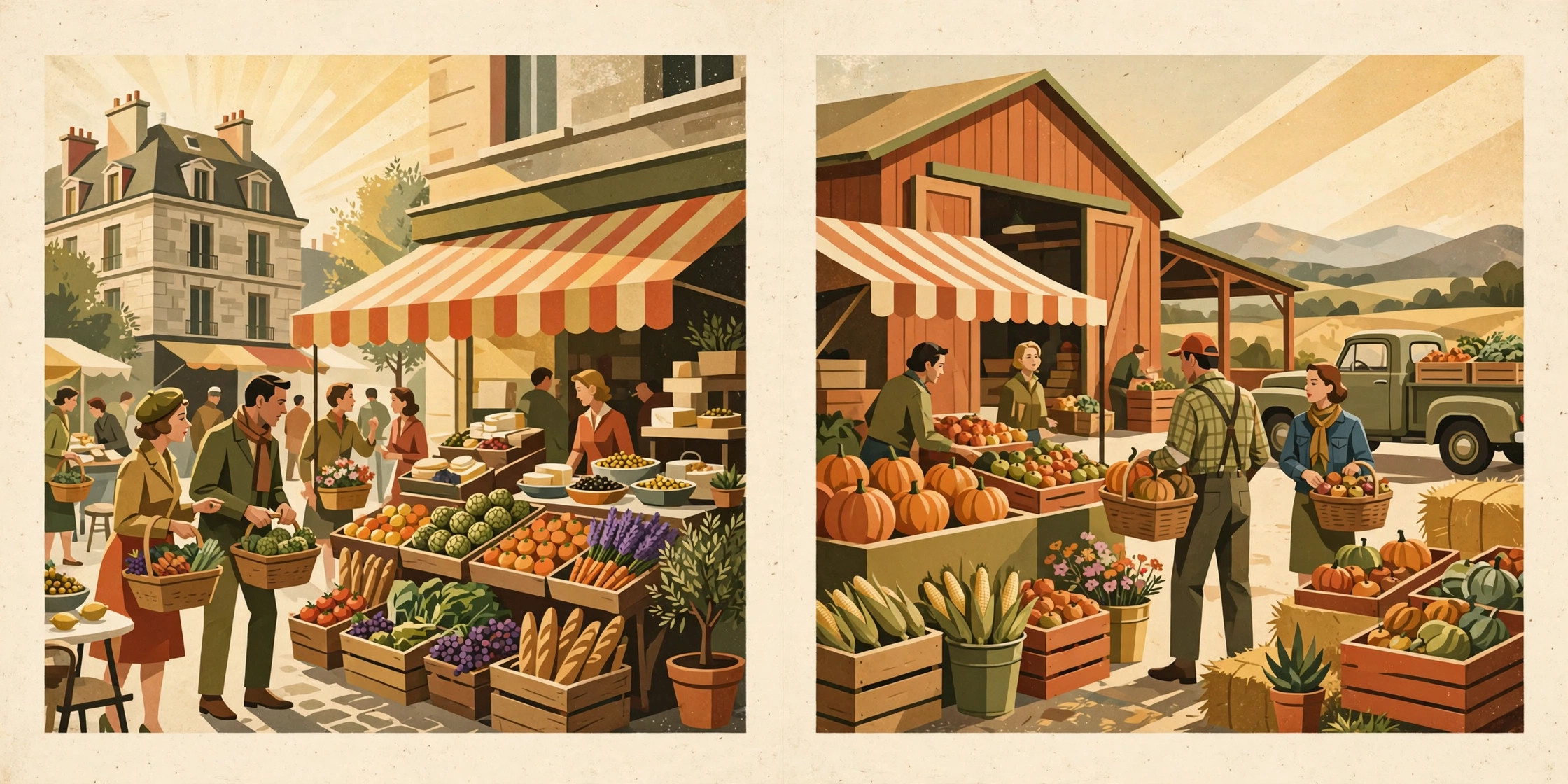
In France, Sunday morning has a sound. It is not the church bell — though the bell is ringing somewhere, dutifully, mostly to itself. It is the sound of canvas awnings snapping in the wind, of crates thudding onto trestle tables, of a hundred small negotiations conducted at full volume before ten in the morning. The French Sunday market is not shopping. It is the country’s second liturgy, and unlike the first, it is standing room only.
The comparison practically writes itself: every American city now has its Saturday farmers market, earnest and beloved, with its white tents and its handwritten signs. Both countries have decided, independently, that the weekend should begin with produce bought outdoors from people who grew it — or at least know the person who did. The instinct is shared. The execution could not be more different, and the difference is the whole story.
Advertisement
Start with the obvious: the French market is a theater, and the stall is a stage. Tomatoes are not piled; they are composed — pyramids of them, graduated by ripeness like a painter’s palette, the reddest at the apex catching the light. The cheese man arranges his rounds the way a general arranges troops. Nothing is accidental, and everything is meant to be looked at before it is bought.
The American stall is a resume. A chalkboard sign gives the farm’s name, the county, the mileage from field to tent — proof of virtue, itemized. The tomatoes sit in honest wooden pints, unarranged, because arrangement would be showing off and showing off is not the point. The point is the story: this tomato has a biography, and you are about to become part of it.
Taste, in France, is not a sales tactic; it is a sacrament of trust. The vendor extends a slice of saucisson on the tip of a knife, or cracks a walnut for you, or holds out half a strawberry with an expression that says the fruit will be judged and so will you. To refuse the taste is a small insult. To accept it and walk away is perfectly fine, provided you do so with the correct air of thoughtful deliberation.
In America, the sample comes in a tiny paper cup or on the end of a toothpick, and it is a transaction with a conversion rate. Everyone understands the etiquette: you taste, you smile, you buy the jar. The French tasting is a conversation. The American tasting is a funnel.
Then there is the rotisserie. Every French market of any standing has one — the great golden machine turning chickens the color of late afternoon, potatoes roasting in the drippings below, the smell of it reaching you three streets away and rearranging your plans. You had a menu for Sunday lunch. You no longer have a menu for Sunday lunch. The chicken has decided.
The American market answers with the food truck. A line forms for breakfast burritos or wood-fired pizza or something involving kale that tastes better than it sounds. It is delicious, and it is also a small admission: the produce alone was never going to hold a crowd for three hours. The French market needs no supporting act. The produce is the show, and the chicken is the encore.
The basket and the tote
Watch who goes, because the crowd is the content. The French market is three generations deep: grandmothers conducting inspections with the severity of customs officials, parents doing the week’s diplomacy, children negotiating for a chichi or a bunch of grapes with the focus of tiny lawyers. The wicker basket — the panier — is carried like a credential. To arrive with plastic bags is to announce that you are new here, or lost.
The French shopper has a technique, and it is never hurried. Melons are weighed in the hand and thumped with a practiced ear; the vendor, consulted, will ask whether the melon is for tonight or for the weekend and select accordingly — a small act of professional matchmaking that no supermarket will ever reproduce. The transaction takes ten minutes and contains a weather report, a recipe, and a mild disagreement. This is not inefficiency. This is the product.
The American shopper has a list. It came from a recipe — possibly one involving a grain nobody’s grandmother ever cooked — and the mission is acquisition. The tote bag — canvas, virtuous, probably from a public radio station — fills methodically: greens, eggs, the expensive jam. The browsing is brisk, the small talk friendly but bounded, and one eye stays on the parking meter, which is always ticking. There are other errands. There is always, in America, another errand.
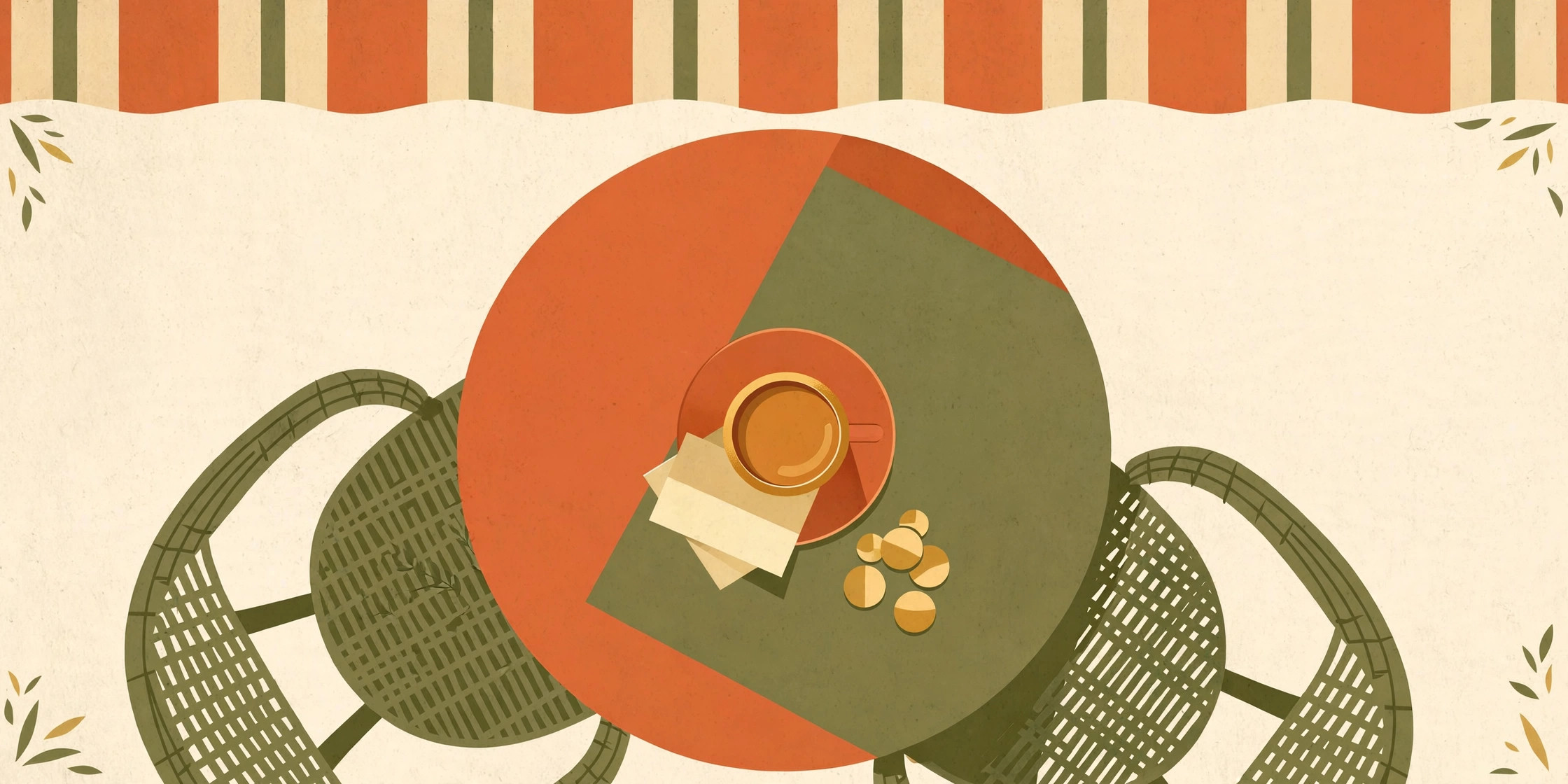
And here is the structural difference: the French market is the town’s living room. You do not simply buy and leave; you circulate. You encounter the neighbors, the mayor, the retired teacher who knows everything. The market ends, for the serious practitioner, at a café terrace with the spoils of the morning and a small glass of something, where the gossip of the stalls is processed into the news of the week. The shopping was the pretext. The pretext was delicious.
Advertisement
The American market is the town’s conscience. It is where the community goes to feel good about itself, and there is nothing wrong with that — a farmers market has revived more downtowns than any urban planning grant. But it is an event you attend, with a beginning and an end, not a room you live in. You go, you buy, you feel virtuous, you leave. The French go, and stay, and the staying is the point.
The last hour
There is an art to arriving late, and the French have perfected it. The last hour of the market is a second market entirely — the one for regulars, the ones the vendors know by name. Prices soften, the slightly bruised peach becomes a gift rather than a flaw, and the stallholders, who have been performing since dawn, finally relax into something like honesty. The whole theater drops its fourth wall.
The American market ends differently — on time, the way everything in America ends. The tents come down with military efficiency, and the unsold produce often goes to a food bank or back on the truck, which is admirable and slightly heartbreaking in equal measure. The French market dissolves; the American market concludes. One disperses like a party, the other packs up like an office.
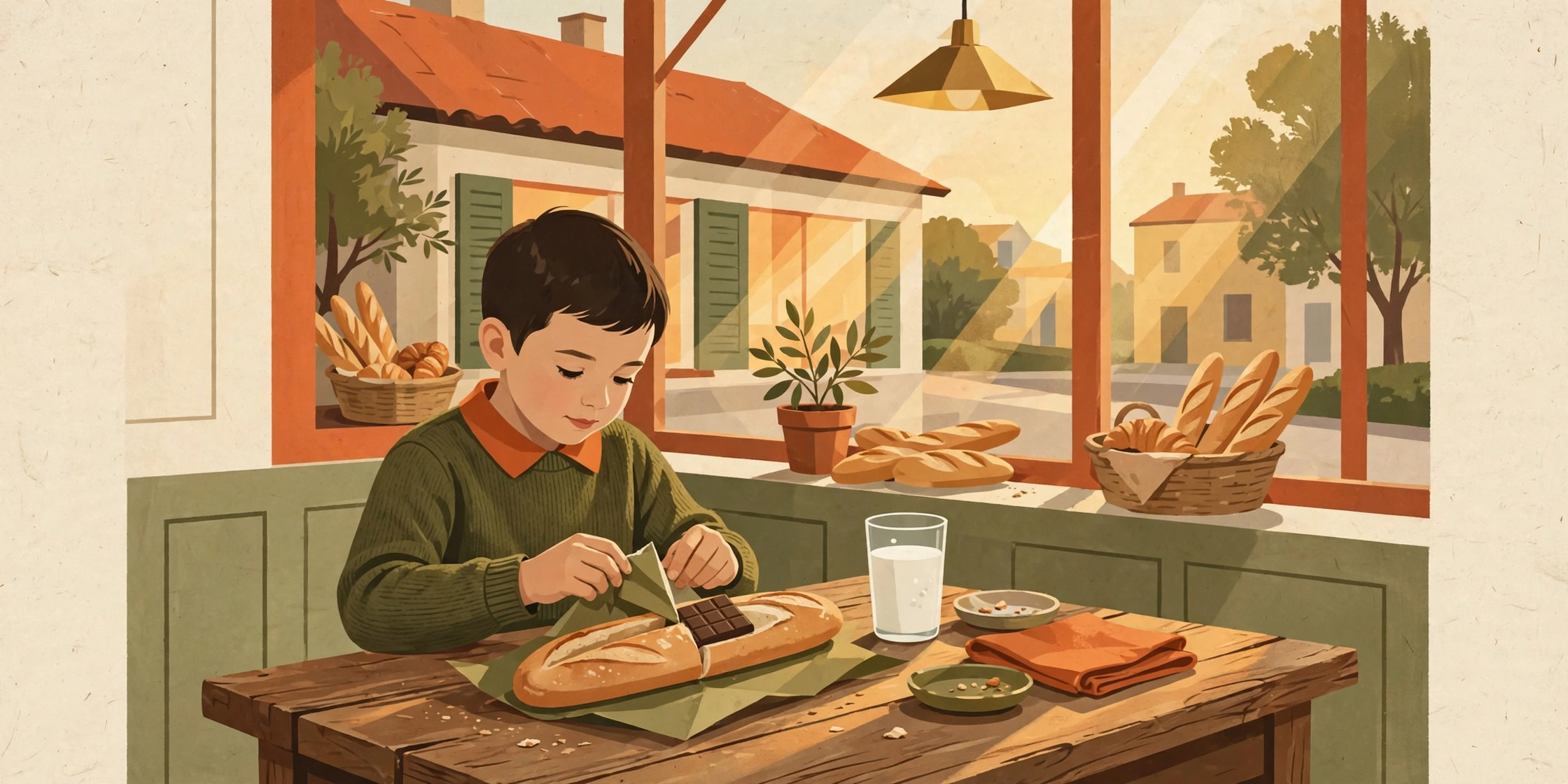
And then the walk home, which is the last ritual and maybe the finest. The baguette tucked under the arm — still warm if you timed it right — the panier heavy enough to make you switch hands twice, the chicken from the rotisserie steaming gently through the paper. Sunday lunch is now inevitable, and the whole morning was merely its first course. The American drives home with the tote in the trunk, the radio on, the errands resumed. The French walk, because the market is not over until you are home — and even then, not quite.
Virtue and pleasure
This is the philosophical fork in the road. The American market runs on virtue: organic, local, sustainable, the carbon footprint of your arugula computed and found acceptable. The signage is a moral curriculum. It is sincere, it has changed how America eats for the better, and it can occasionally make buying lettuce feel like a citizenship exam.
The French market runs on pleasure and makes no apology for it. Nobody’s sign explains the farming method; the tomato’s credentials are its color, its smell, the fact that it was picked yesterday and everyone knows it. The French do not need the tomato to save the planet. They need it to taste like a tomato — which, the French would argue while eating it over the sink, is its own kind of salvation.
The prices tell the same story from opposite ends. The French market, for all its theater, is often the cheapest way to eat well in town — the end-of-morning discounts, the vendor’s generosity with the slightly bruised, the sheer competition of twenty stalls selling the same perfect peach. The American market is, with rare exceptions, the most expensive way to buy vegetables in the county. You are paying for the farm’s survival, the story, the virtue — and the heirloom tomato, which costs what it costs because it is worth it, probably, don’t think about it.
In France, the market is a pleasure that happens to feed you. In America, it is a virtue that happens to be delicious. Both countries leave carrying heavy bags and feeling like better people — they simply disagree about which part was the point.
The agora
What each market reveals about its country is almost too neat. France trusts appetite — the deep, democratic belief that pleasure is a legitimate organizing principle for public life, and that a town that eats well together stays together. The market is subsidized, protected, scheduled into the week like a public utility, because beauty and flavor are considered infrastructure.
America trusts effort. The farmers market is a project, a cause, a thing good people build on purpose — and the earnestness is real and admirable. But nothing about it is taken for granted. It must justify itself with missions and metrics, because in America even pleasure needs a business plan.
The pétanque court has been watching all of this for a century, and it renders its verdict every Sunday afternoon. The market crowd and the boulodrome crowd are the same people: the melon-thumper becomes the boule-weigher, the vendor’s banter becomes the commentary of the mène, the apéro that followed the shopping flows naturally into the apéro that follows the game. In France, the market and the pétanque terrain are the two great democratic theaters, and admission to both costs nothing but your presence.
The ideal, as always, is transatlantic. Take the French eye — the pyramid of tomatoes, the tasting as trust, the unhurried circulation — and the American conscience — the named farm, the young grower, the downtown revived. Put the baguette under one arm and the canvas tote over the other shoulder. Shop like the French on Sunday morning, and like the Americans the rest of the week: with appetite first, virtue a close second, and always, always room for the rotisserie chicken.