Culture
The Movie Theater
In France you go to the cinéma; in America you go to the movies. Same screen, different religion — reserved seats, popcorn buckets, subtitles, and the great debate over talking during the film.
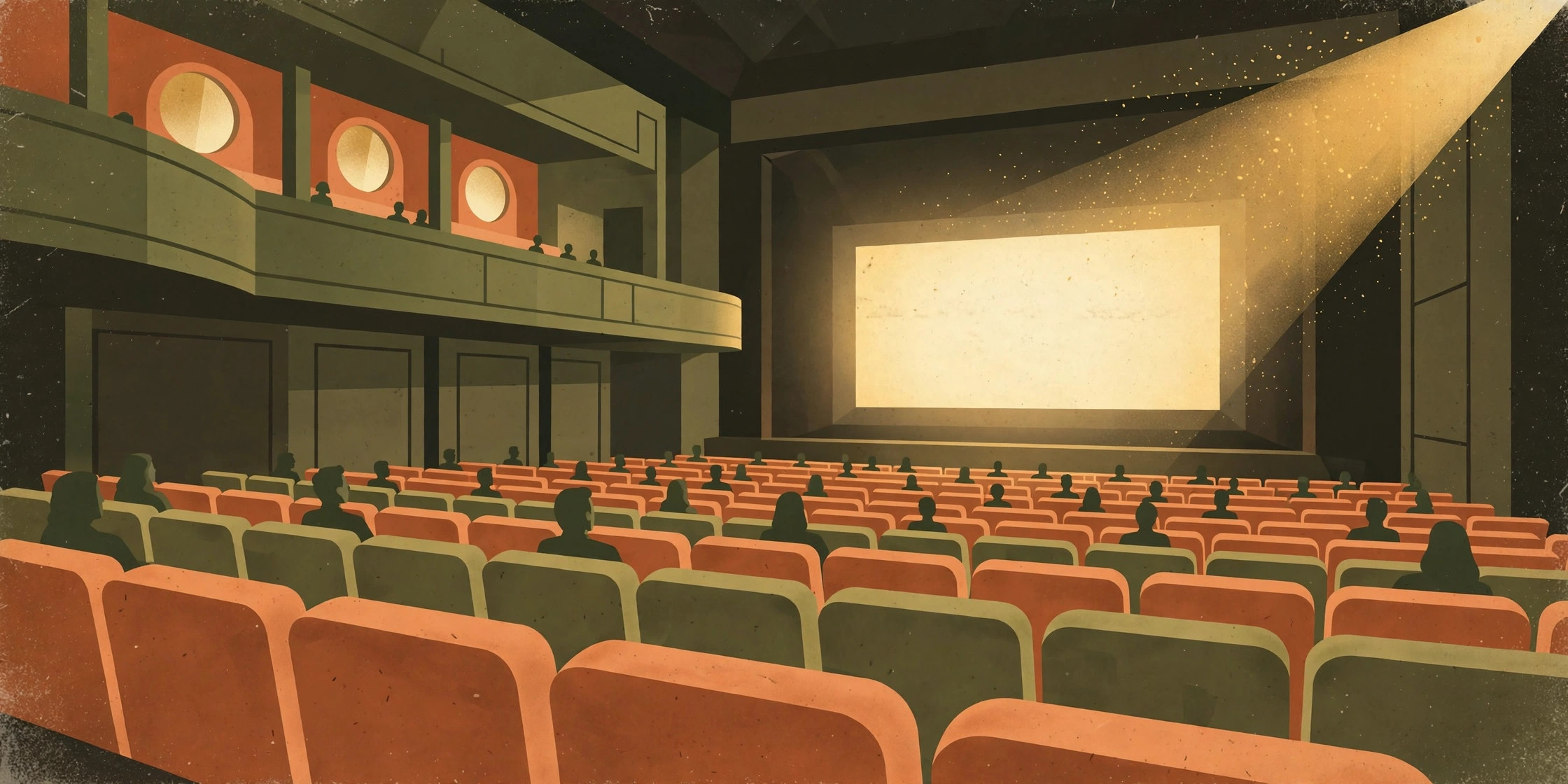
The first time I saw a movie in France, I did everything wrong. I arrived early, bought my ticket at a little window, walked into a dark room with no assigned seat — and was gently, wordlessly shamed by an entire row of French people when I sat down in a spot that was, apparently, theirs, even though the ticket said nothing of the sort.
In America, the seat situation is a science. You buy online, you pick your exact chair — row H, seat 12 — and you arrive ten minutes after the posted start time because everyone knows the first twenty minutes are trailers and advertising. In France, the ticket says placement libre, and the first lesson of French cinema is that the person who arrives first sits in the middle, and the person who arrives second sits next to them, and everyone else fills in the gaps like mortar.
Advertisement
The vocabulary tells you everything. Americans go “to the movies.” The French go “to the cinema” — au cinéma — and the difference is not just grammar. The movies are an activity, like going to the mall. The cinema is an art form, like going to the opera, except everyone is allowed in and nobody dresses up.
France treats film the way America treats the Super Bowl: as a national institution worth protecting. The French box office is one of the most chauvinistic in the world — a huge share of tickets sold are for French films, and the state subsidizes the industry through a system that taxes every ticket sold to fund the next generation of filmmakers. An American multiplex is a business. A French salle is a small piece of cultural policy.
Then there’s the popcorn. American theaters sell popcorn in containers the size of carry-on luggage, alongside candy, nachos, and drinks you could swim in. Concessions are half the business model — the theater makes almost nothing on the ticket and everything on the butter. French cinemas sell a small cone of popcorn, maybe some Haribo, and that’s it. The French do not eat a meal while watching a film. The film is the meal.
Advertisement
Subtitles are another small civilization gap. The French watch foreign films in version originale — V.O. — with subtitles, and dubbing is considered a minor violence against the artwork. Most American audiences will simply not read subtitles; dubbing and avoidance are the norm. When a French friend says a film was better en V.O., she is also saying something about herself. It is a badge.
The phone situation flips the stereotypes. You would expect the chatty Americans and the disciplined French, but in a dark theater on either side of the Atlantic, the rules are the same and enforced by the same glares. One difference: in France, the audience talks back to the screen — laughing, groaning, applauding — with a freedom that would get you shushed in Minneapolis. The French cinema is a social place. People react out loud. The film is a conversation.
Hollywood versus Cannes is the same divide at industrial scale. Hollywood is an export machine — the American film industry’s business is the world. Cannes is a consecration machine — the festival’s business is telling the world what counts as art. An American studio asks: will it play in Ohio? A French producer asks: will it play at Cannes? Both are questions about power. They just measure different currencies.
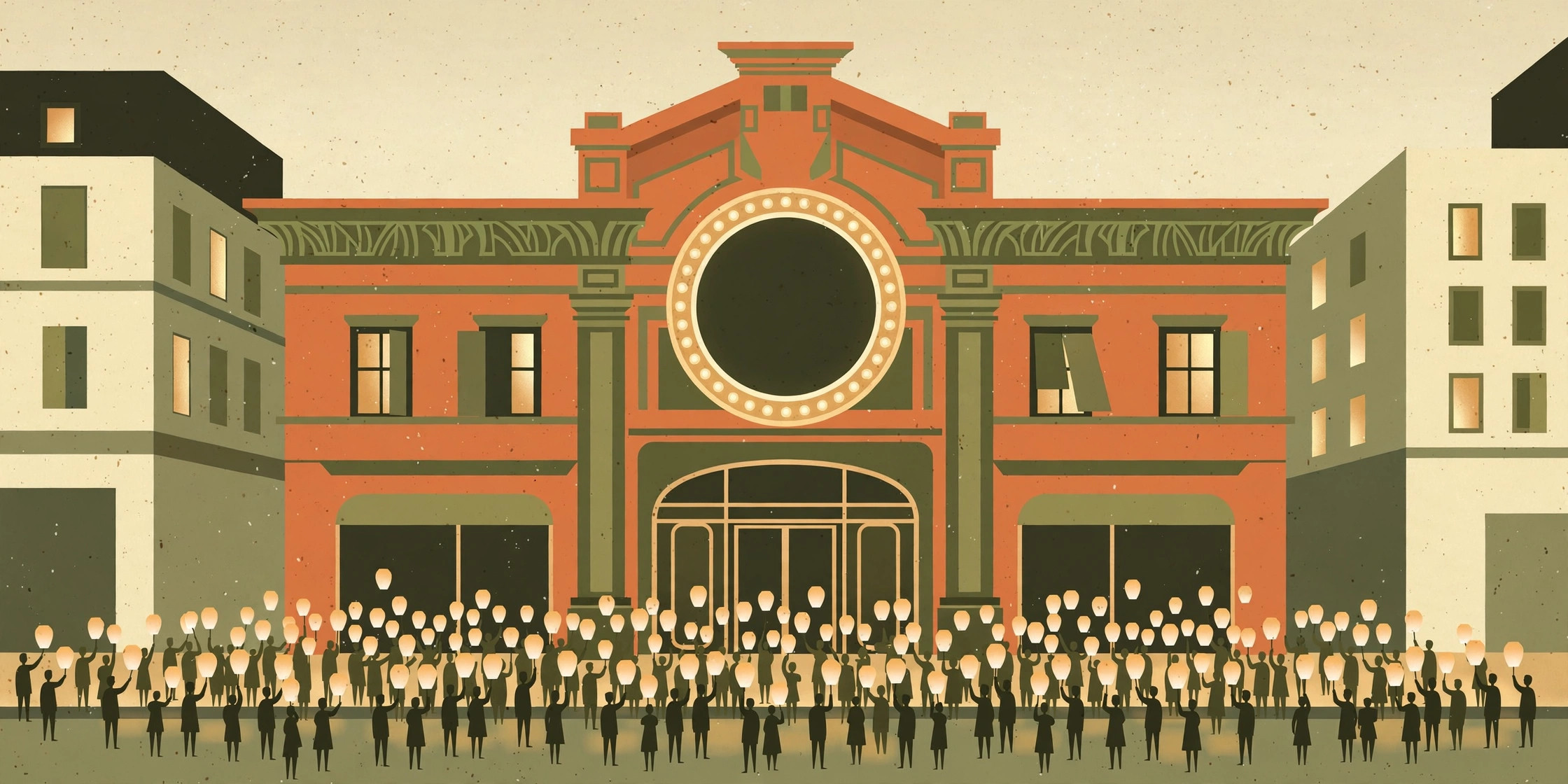
The strangest thing, though, is what the two countries agree on. Both keep the cinéma d’art et d’essai alive — the art house, the small theater with one screen and a poster wall — even as streaming was supposed to kill it. In Brooklyn and in Bordeaux, the same kind of room survives: old seats, a manager who writes the program notes by hand, a loyal audience of people who need the dark and the quiet and the company of strangers. The French call it la salle obscure. The dark room. Nobody streams that.
So no — I never learned to arrive late in France. I arrive early, I take the middle seat, and I buy the small cone of popcorn. And when the lights go down and the audience starts reacting like the film is happening to them, I think: this is what the Americans forgot and the French kept. The movie is not the product. The room is.