Culture
The Pharmacy
In France, the pharmacy is where you go when you feel sick. In America, it's where you go when you need batteries. Marion Ellis on the green cross and the long aisle.
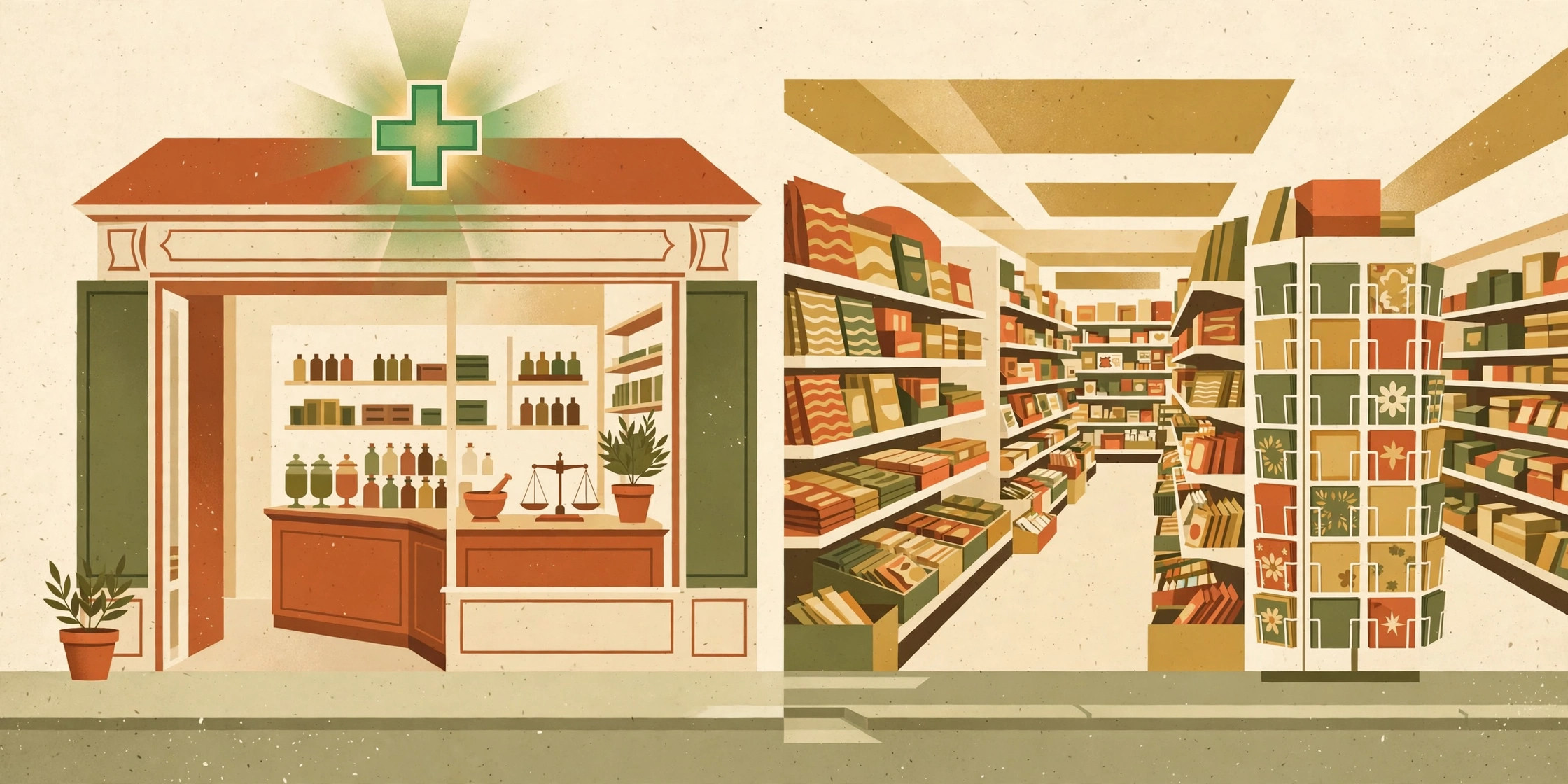
The first time I walked into a French pharmacy, I thought I’d made a mistake. No greeting cards. No candy aisle. No wall of shampoo the size of a bus. Just a clean, bright room, a green cross glowing outside, and a pharmacist behind the counter who looked at my sore throat like it was her personal business.
It was. In France, the pharmacist is a health professional, not a retailer. You walk in, you describe what’s wrong, and she listens. Really listens. Then she tells you what to take, how to take it, and when to see a doctor instead. This consultation is the job, not a favor. People trust their pharmacist the way Americans trust their mechanic — the person who actually knows what’s under the hood.
The American drugstore works in reverse. The pharmacy counter is in the back, behind the photo kiosk and the seasonal candy. You can buy a beach chair, a birthday card, and a prescription in one trip, which Americans consider efficient and the French would consider insane. The pharmacist is somewhere behind glass, on the phone with your insurance company. The store sells medicine the way it sells everything else: stacked high, on sale, with a loyalty card.
Both systems get you your pills. But they ask different questions. The French pharmacy asks: what is wrong with you? The American drugstore asks: what else can we sell you while you’re here?
I miss the loyalty card sometimes. Points are points. But when my daughter had an earache in Lyon, the pharmacist spent ten minutes with us, sold us drops for a few euros, and told us exactly when to worry. No appointment. No copay. No beach chair.
The green cross doesn’t sell anything you don’t need. That took me years to understand. It wasn’t a store at all. It was a clinic with a door that stays open.
Advertisement