Glossary
Carreau
The perfect shot in pétanque: the thrown boule strikes the opponent's boule dead-on, knocks it away, and stays exactly where it was. Part physics, part theater — and the word every tireur dreams of hearing.
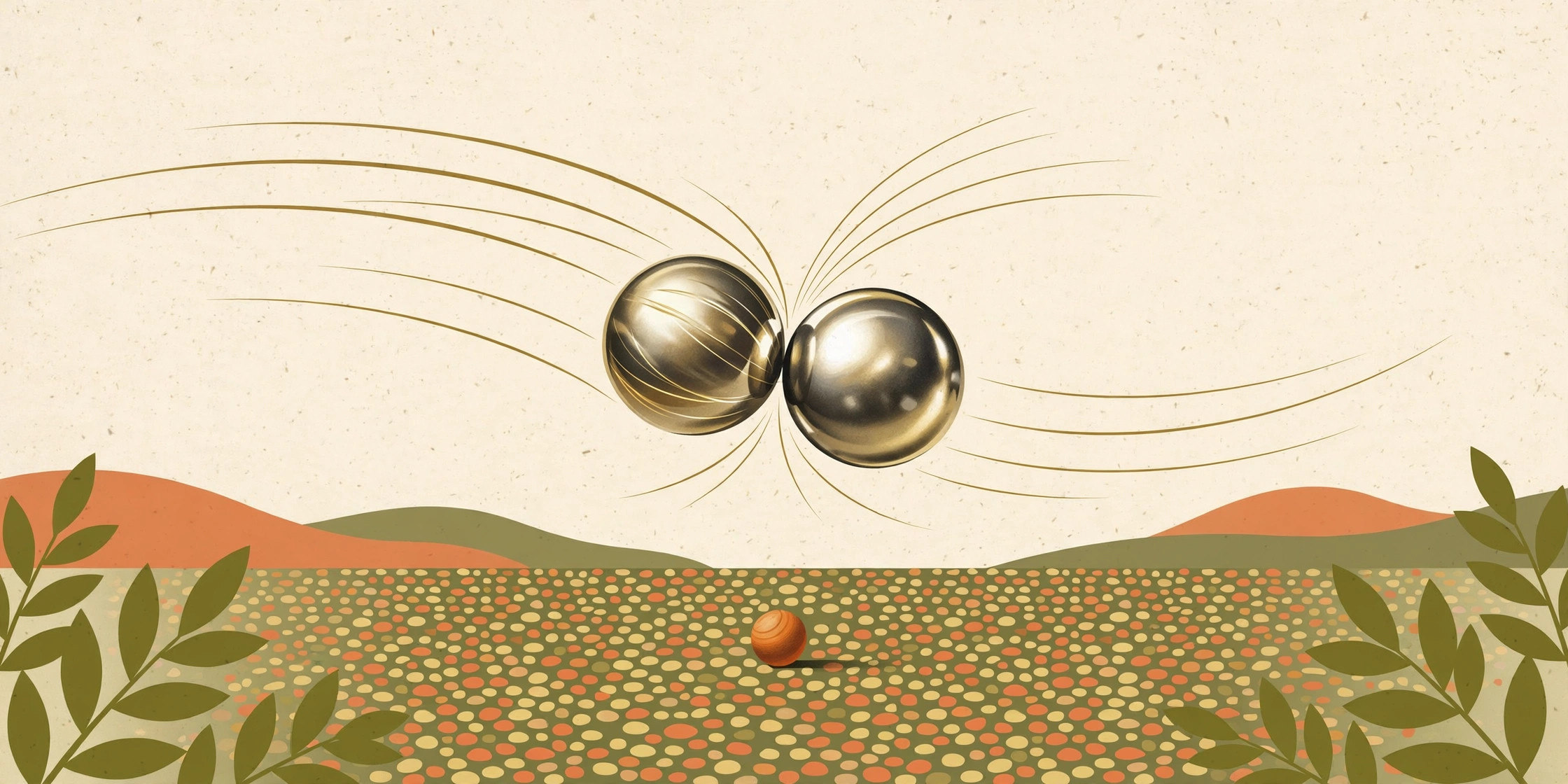
Carreau (n.m.) — in pétanque, the perfect shooting throw: the thrown boule strikes the opponent’s boule full-on, ejects it from the game, and remains in its place, as if the two had simply exchanged identities. The highest ambition of the tireur, the shot that ends arguments, the word that makes a whole terrain fall silent for half a second.
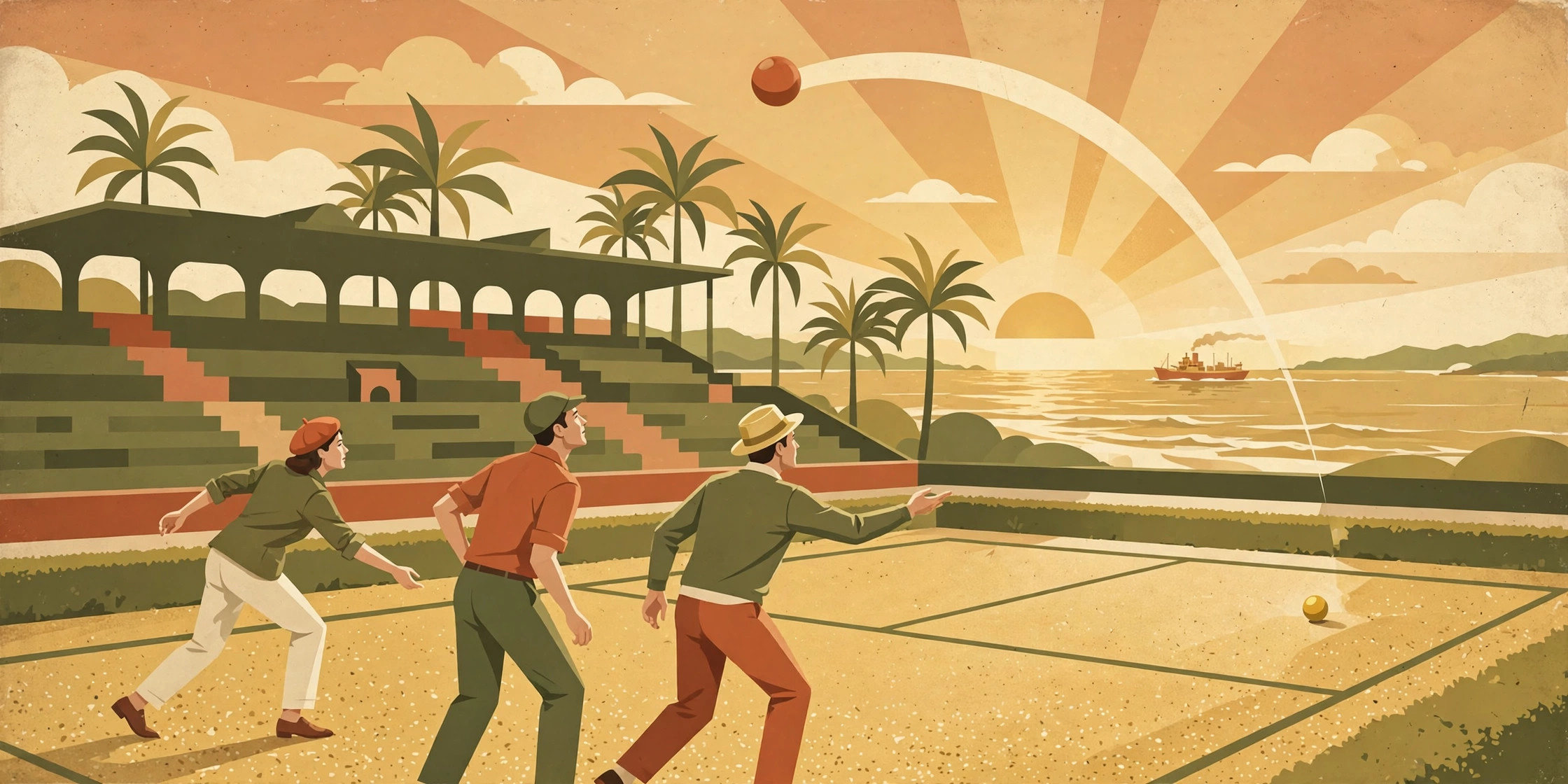
To understand the carreau, you must first understand the two tribes of pétanque. The pointeur places; the tireur removes. The pointer is the patient one, crouching low, rolling his boule to rest near the cochonnet with the tenderness of someone setting down a sleeping child. The tireur is the other one — the one who steps into the circle, rises up, and hurls a kilogram of steel in a high arc toward a boule the size of an orange, forty feet away, with the serene confidence of a man defusing a bomb. When the tireur misses, everyone is philosophical. When he hits, everyone is a witness.
Advertisement
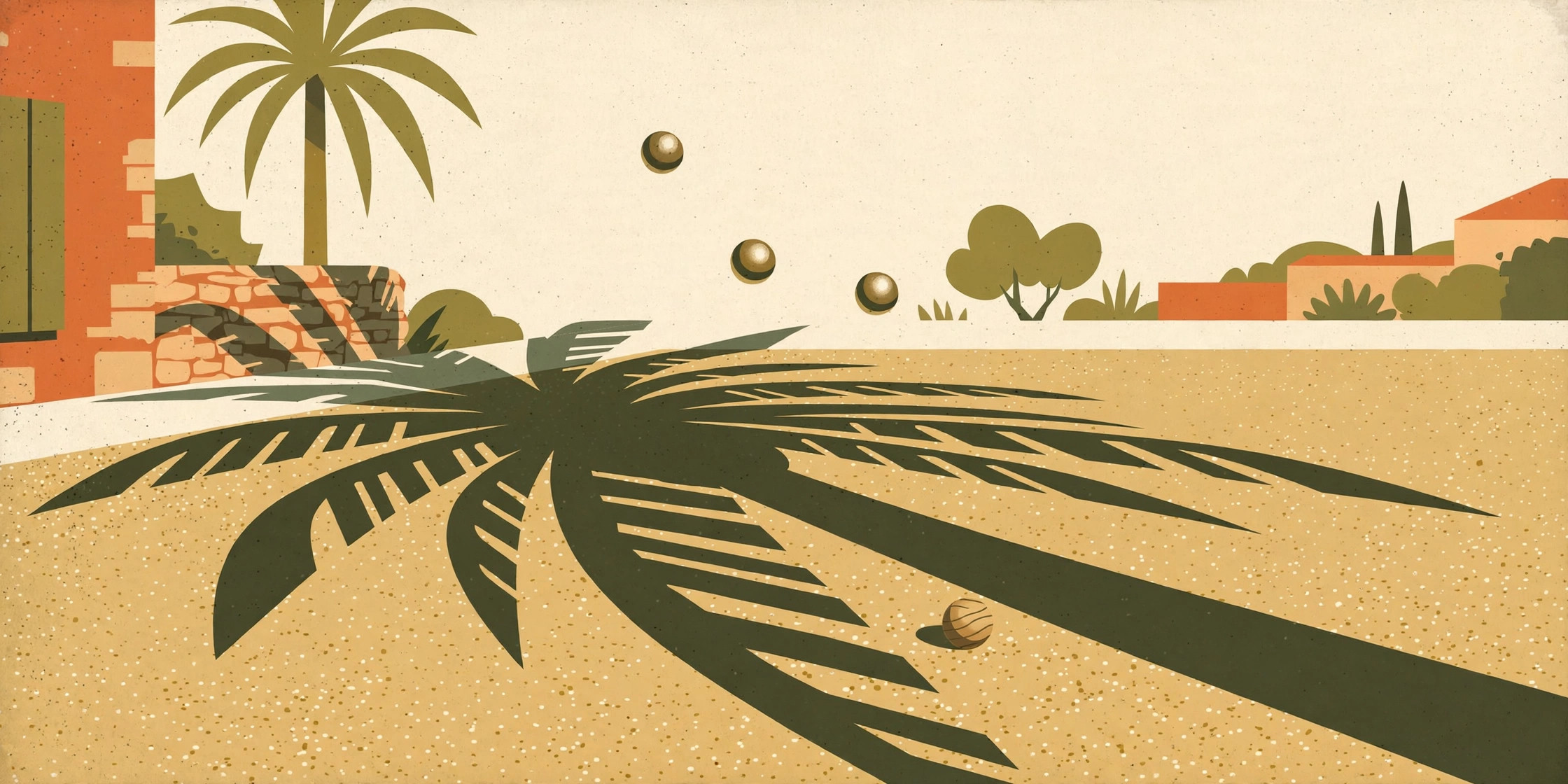
The carreau is the hit in its purest form. Most successful shots knock the opponent’s boule away and roll on somewhere — useful, but messy, like winning an argument by shouting. The carreau does not roll on. It hits, it stops, it stays. The opponent’s boule departs; yours remains, occupying the exact coordinates of the deceased, as if to say: this spot was always mine. It is the difference between removing a problem and replacing it with yourself. Generals dream of such maneuvers. Tireurs merely execute them, usually on a Tuesday, usually without warming up.
The physics of perfection
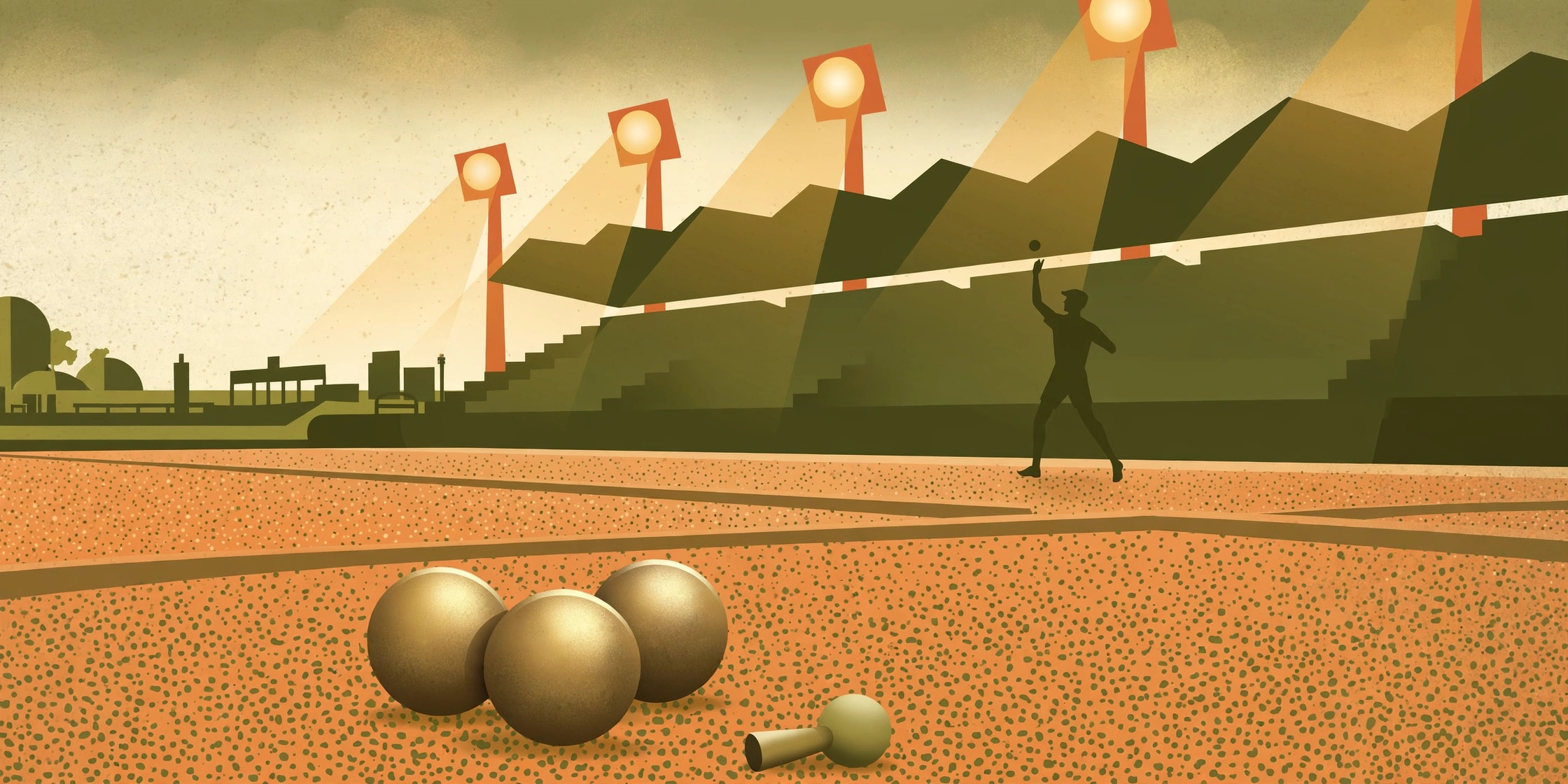
The carreau is, technically, a collision problem. The thrown boule must arrive on a line that passes through the center of the target boule — the plein fer, the full iron — with enough energy to eject the target and little enough leftover momentum to die on the spot. Too much pace and your boule follows the victim into exile; too little and the target merely wobbles, unimpressed. The margin is cruelly small, which is why the carreau is rare at the village level and merely uncommon at the championship level, where the great tireurs produce them with a regularity that looks like sorcery and is, in fact, ten thousand hours of practice.
The French have catalogued the near-misses with the precision of naturalists. A carreau that knocks the target out but rolls a few inches past is still celebrated — close enough to count in every way that matters socially. A shot that hits the target on the edge, the demi-carreau, is the consolation prize: the opponent’s boule is gone, but yours has wandered off to contemplate its life choices. And then there is the carreau en place versus the carreau that also moves the cochonnet — the latter being either a catastrophe or a miracle, depending entirely on whose cochonnet it was and where it went.
The sound is part of it. Two steel boules meeting plein fer produce a crack — le clac — that every pétanque player knows in their bones. It is the sound of the game at its most honest: no spin, no luck, no terrain, just two spheres and Newton’s laws. Spectators who have been chatting through the whole mène go quiet for the tireur’s throw, because everyone understands, without being told, that something irreversible is about to be attempted. The carreau is the only shot in pétanque that has its own silence.
Advertisement
The theater
Because the carreau is as much theater as physics. Watch a great tireur prepare: the weighing of the boule in the hand, the small backward step, the gaze that travels the arc twice before the arm moves. He is not aiming at a boule. He is aiming at a memory — the thousands of carreaux he has thrown before, the muscle’s stored knowledge of exactly how much arm, how much arc, how much iron. The throw itself is almost an afterthought. The decision was made a minute ago, in the stillness.
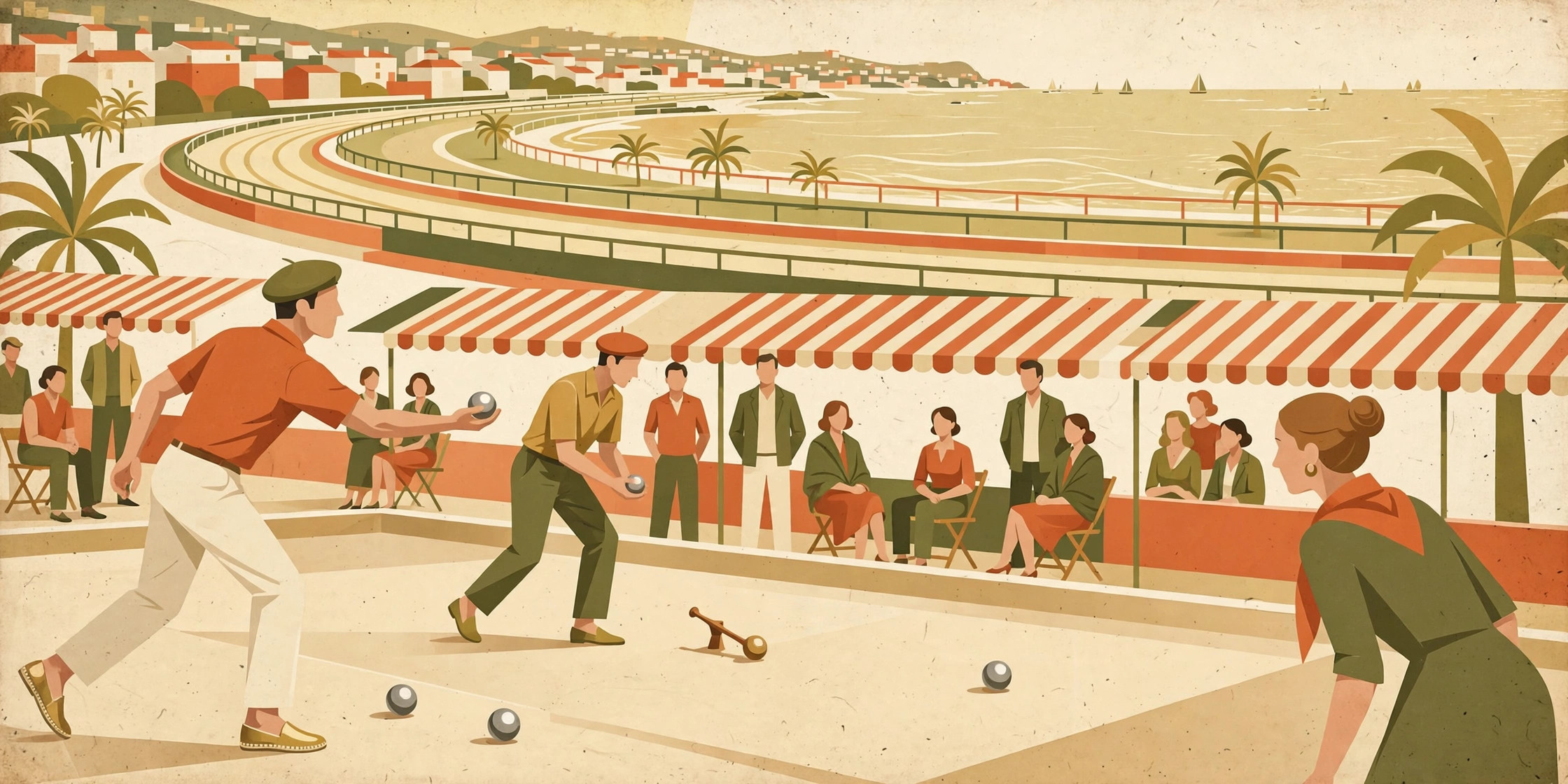
And then the reaction, which follows a script older than the players. The shooter’s teammates nod with the restraint of people who expected this. The opponents walk to the new lie, measure nothing — there is nothing to measure, the boule sits where the other sat — and return to the circle with the particular walk of the philosophically resigned. Someone, inevitably, says “carreau” aloud, the way you would say “checkmate,” and someone else, inevitably, answers “il est beau,” he is beautiful. The boule is a he. Of course he is.
The Americans discovering pétanque tend to love the carreau immediately and for the wrong reason. Raised on home runs and slam dunks, they see the big throw, the crash, the ejection, and they read it as power — the tir as pure aggression. The French tireur will gently correct them: the carreau is not the most violent shot, it is the most precise one. Anyone can throw hard. The carreau is thrown exactly hard enough. It is violence with a measuring tape. This is why the greatest tireurs are often the quietest men on the terrain — the fury is all in the geometry.
The metaphor, since you asked
This website has spent a year arguing that pétanque is a language for talking about everything else, so let us not stop now. The carreau is the perfect image of the decisive intervention — the move that does not merely defeat the opposing position but occupies it. In politics, the carreau is the argument that does not refute the other side’s point but takes its place so completely that everyone forgets there was ever another point. In diplomacy, it is the sanctions package that removes the adversary’s leverage and installs your own in the same socket. In love, God help us, it is the gesture that displaces the rival so totally that the beloved cannot remember what the terrain looked like before.
France and America, between them, have attempted most of history’s carreaux. The Marshall Plan was a carreau: it struck the ruins of European poverty plein fer and stayed in their place, American-shaped, for a generation. The French digital services tax is a pointeur’s boule, not a carreau — placed, not thrown — which is why Washington keeps answering with tirs. The diesel ultimatum of this week: a tir, certainly, but a carreau? Only if the American position ends up occupying the exact spot where the European one stood. The mène is still being measured.
The pointer accumulates. The tireur decides. But only the carreau replaces.
On the village terrain, of course, none of this matters. What matters is the Tuesday evening, the circle, the high arc of the boule against the plane trees, the clac that stops conversation, and the walk back to the circle past your opponents, who are already saying il est beau. The carreau is the rarest thing in pétanque and the most democratic: anyone can throw one, on any terrain, on any evening, once in a life or once in a mène. The great champions throw them by the dozen. The rest of us throw them by the decade, and remember each one — the light, the arc, the sound, the silence after — with a clarity we grant to almost nothing else. That is the carreau: the shot that stays, in the place where it landed, and in the memory of everyone who saw it.