Glossary
Le Cercle
The throwing circle: the ring drawn on the ground from which every pétanque player must play. Thirty-five to fifty centimeters across, both feet inside, and the whole mène starts here.
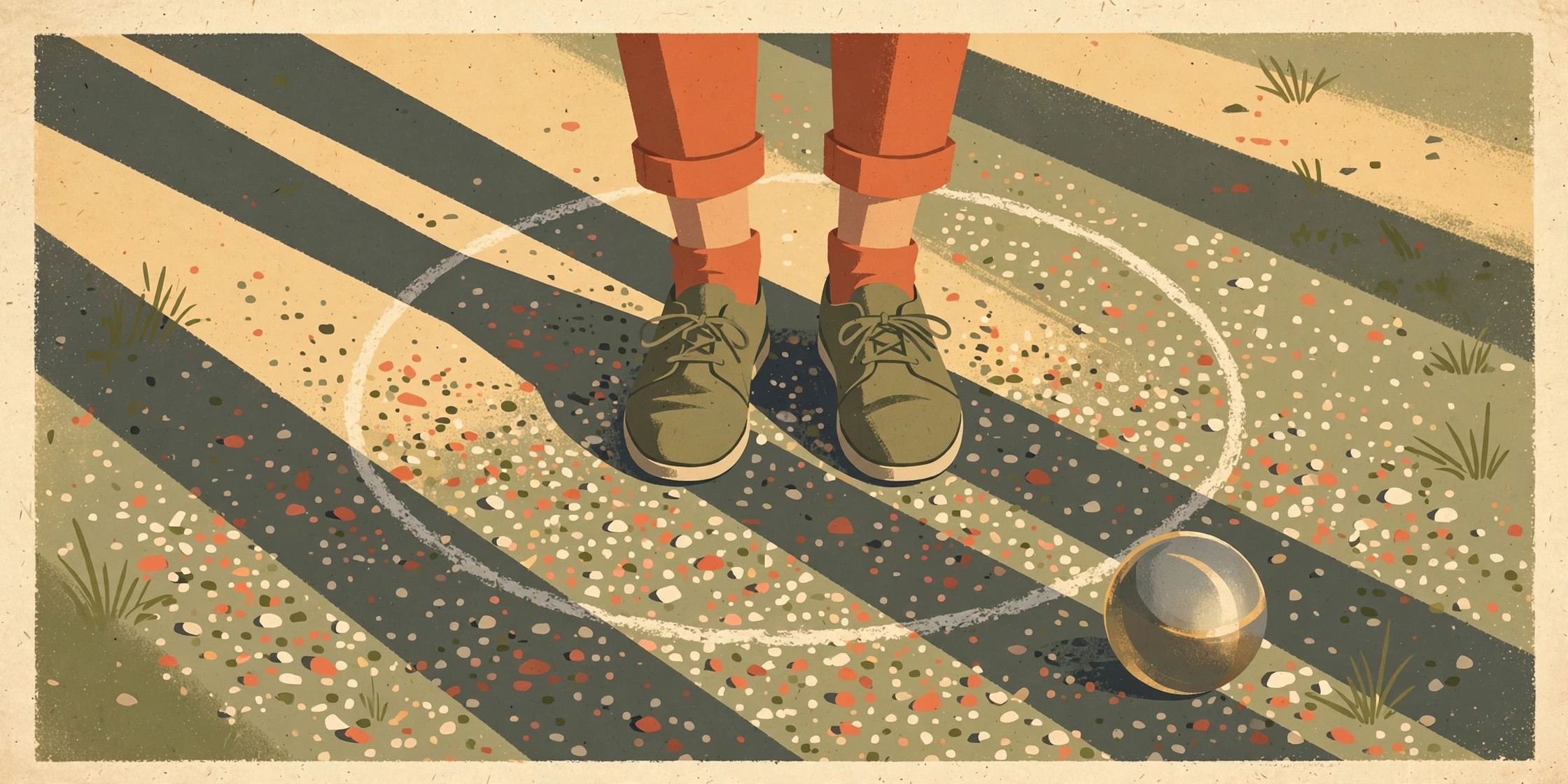
Cercle (n.m., French for “circle”) — in pétanque, the ring from which each player throws. Drawn on the ground or laid down as a plastic ring, roughly 35 to 50 centimeters across, it is ground zero of the mène: both feet must stay inside, without stepping on the edge, until the thrown boule has touched the ground.
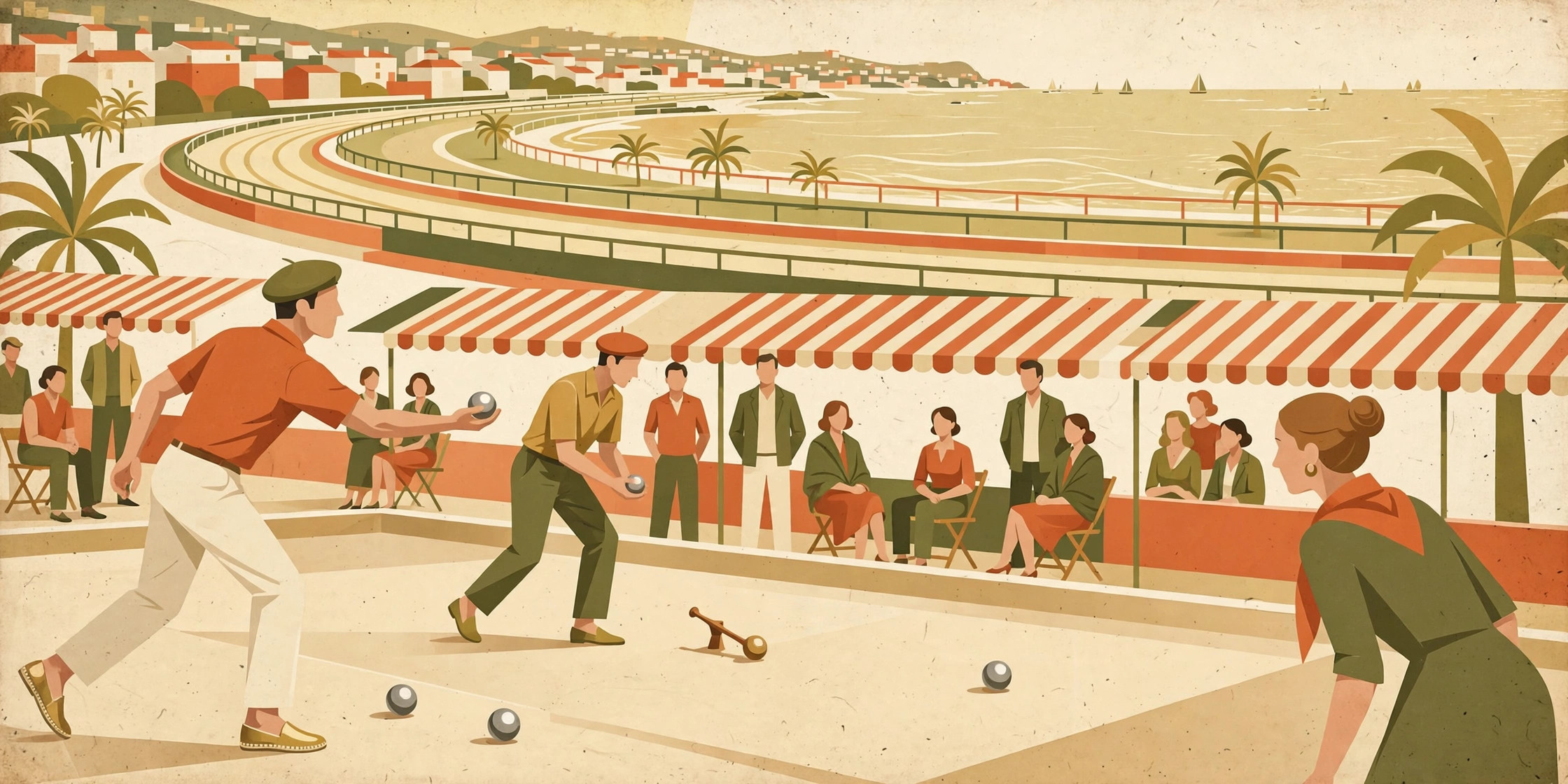
The circle is the smallest institution in sport. It has no stands and no bleachers, yet the whole ritual of pétanque fits inside it. You trace it with a sharp gesture, check it with the toe of your shoe, and step into it the way you step onto a stage. The rule is inflexible: a foot outside during the throw, and the boule is void. Beginners learn this the hard way, called to order by a polite silence or a less polite remark.
There is a poetry of stillness in the circle. The terrain is acres of gravel, the cochonnet may lie ten meters away, but the player is nailed to this little ring. From it depart the most delicate pointings and the most violent shots. The contrast is the essence of the game: the gesture is free, the footing is prisoner.
And then there is the moment when the circle is erased. The mène is over, the points are counted, and someone scuffs the ring out with a foot — a small cloud of dust, and the institution is gone. The next mène will begin elsewhere, around the new cochonnet, with a new circle. Pétanque has no fixed field: it has only this ephemeral ring, drawn and erased dozens of times an afternoon, and that is perhaps why it looks so little like a stadium and so much like a village.
Advertisement