Glossary
Mène
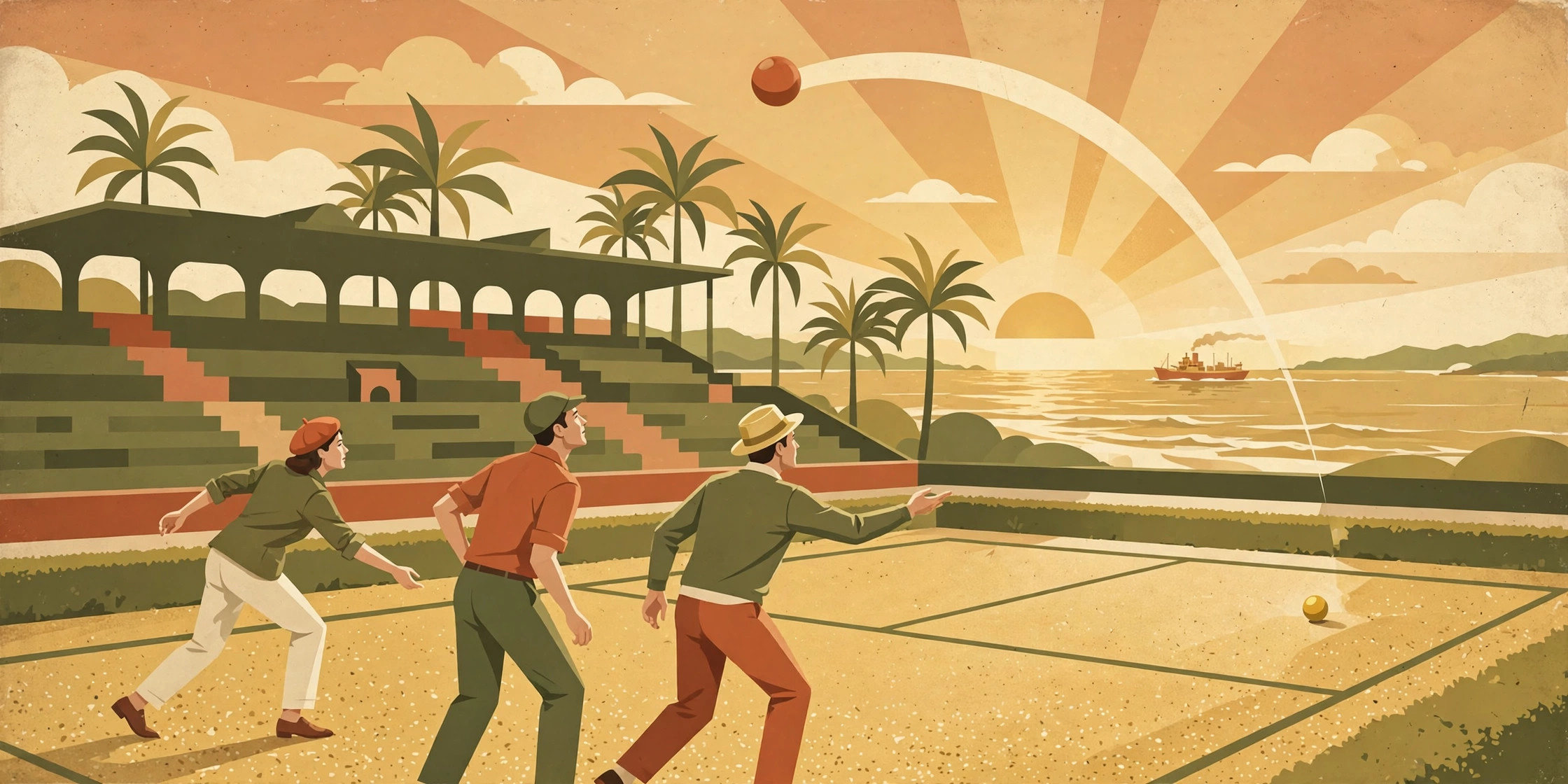
A single round of play — from mener, to lead. Every mène has a leader, and the lead changes hands the way power does.
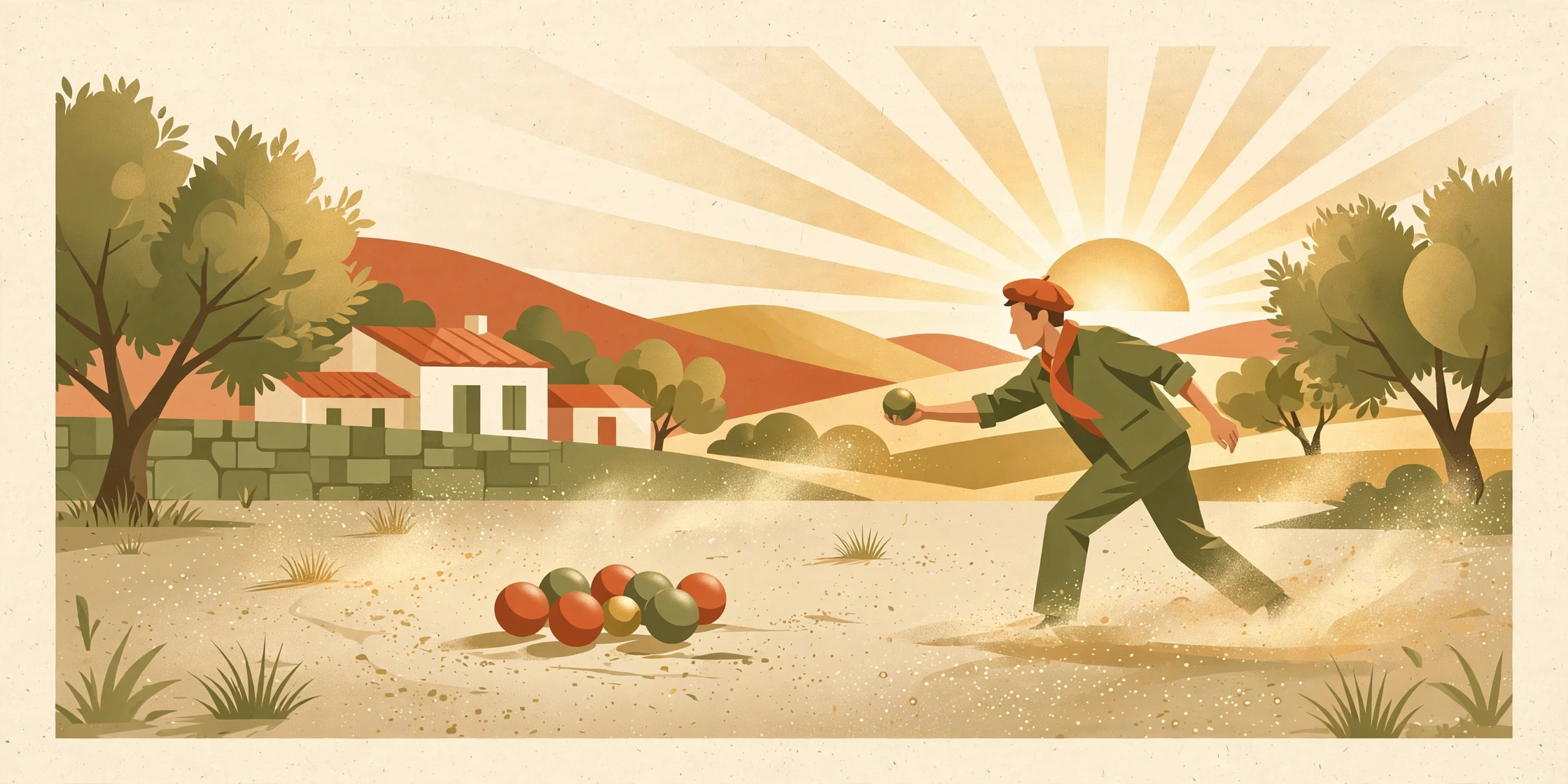
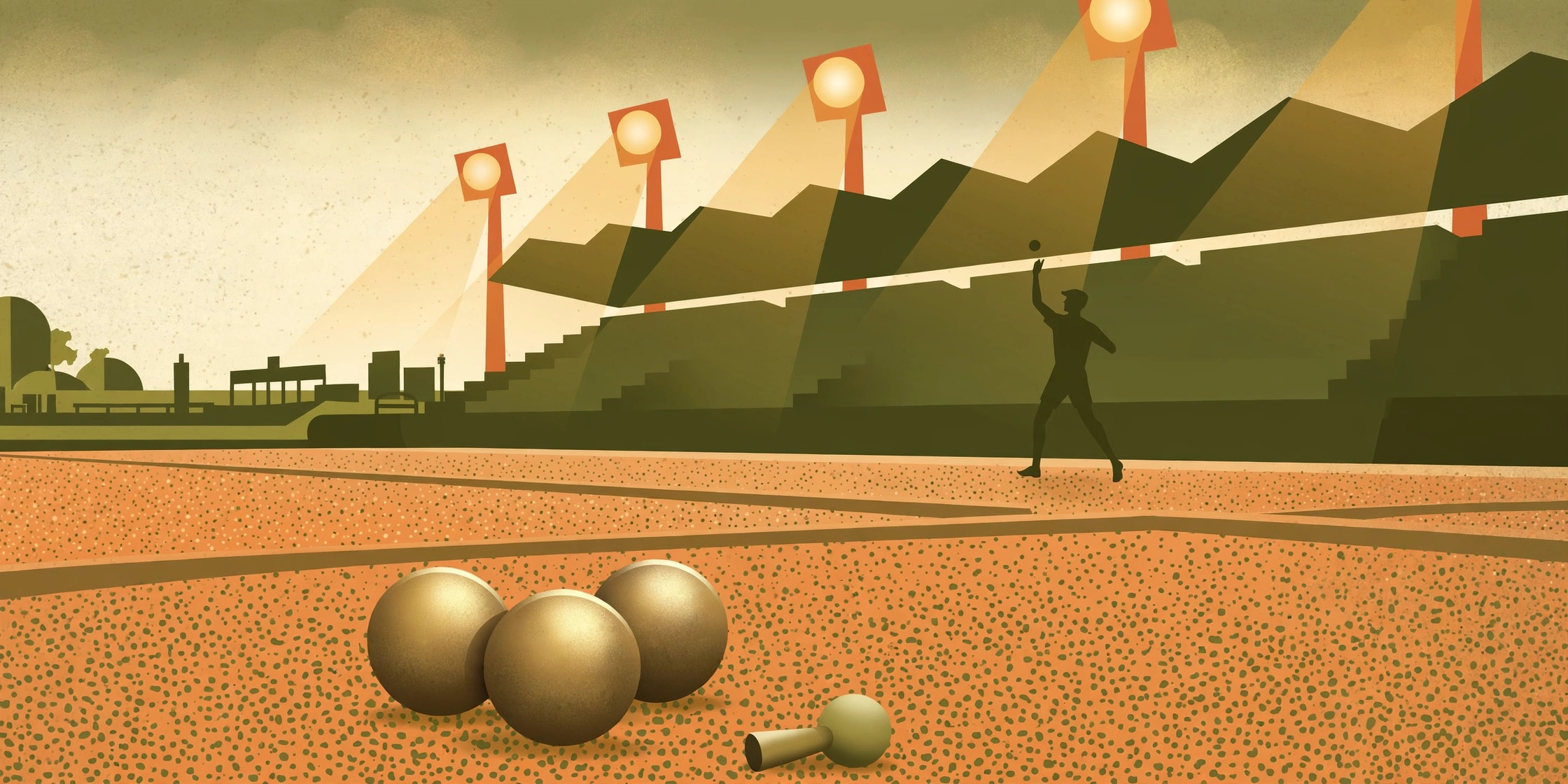
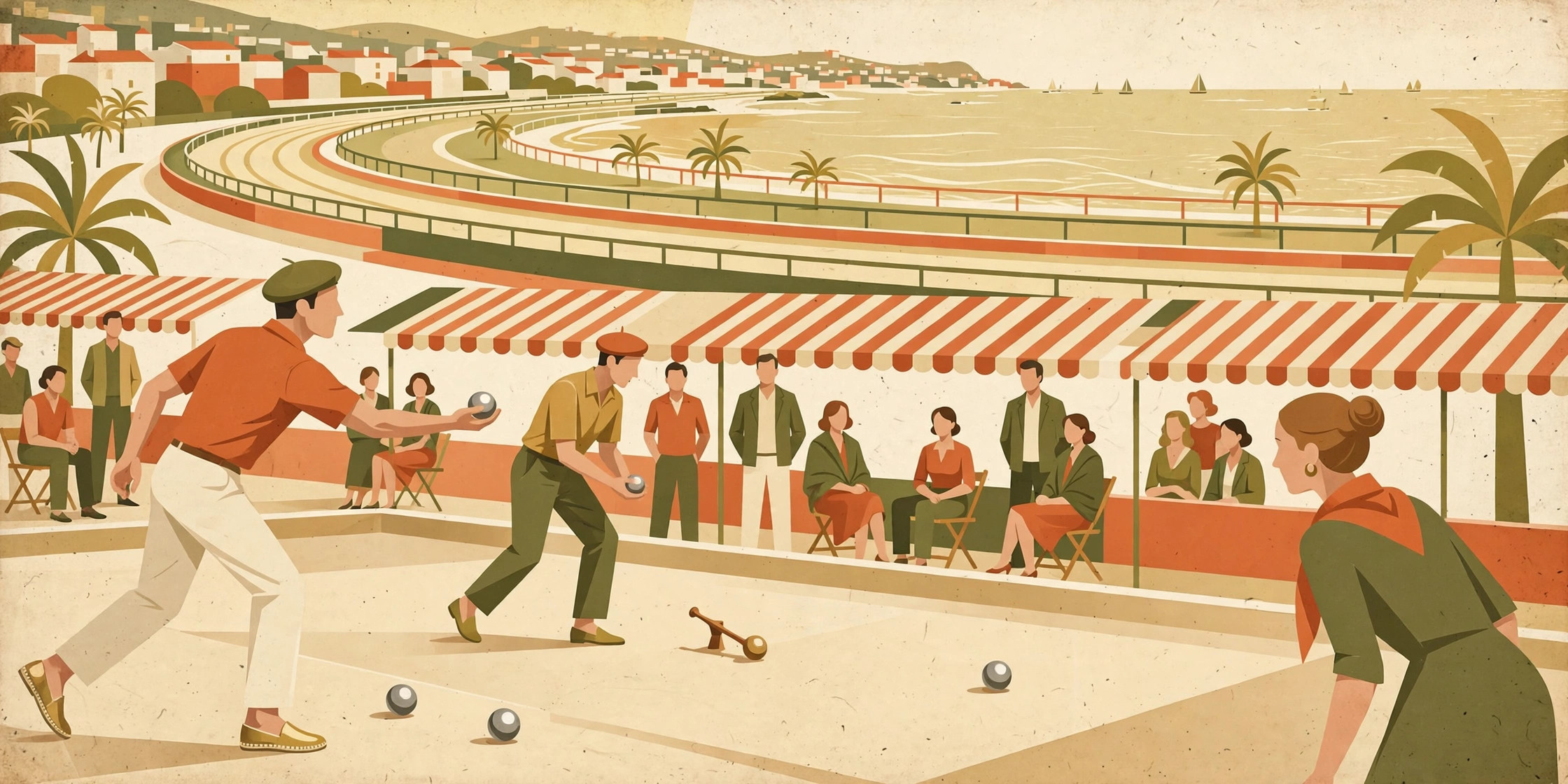
Mène (pétanque) — a single round of play, from the verb mener, to lead. Each mène begins with the throw of the cochonnet and ends when all boules are thrown and the points are counted. A game is played in mènes the way a story is told in chapters: each one complete, each one changing what the next one means.
The etymology is doing quiet work. In every mène, someone mène — someone leads. The team that holds the point leads the round, and the team that doesn’t must answer: point closer, or shoot. Leadership in pétanque is never permanent. It lasts exactly until someone throws a better boule, and then the lead changes hands without ceremony, the way majorities do.
Americans encountering the word for the first time often hear it as “men” and assume something martial. It is the opposite: the mène is the unit of patience. Thirteen points win the game, and each mène awards only a few, so no single round decides anything. You can lose five mènes in a row and still win the game. French politics, with its two-round elections and its cohabitations, is built on the same arithmetic: the round you lose is never the election.
Pickleball, tellingly, has no mène. It has rallies and side-outs, a vocabulary of momentum rather than chapters. The rally is continuous; the mène is episodic. One game asks who is winning right now? The other asks who leads this round, and for how long?
Every mène has a leader. None of them keep the job.
Advertisement