News & Politics
A Year's Grace
The European Commission proposed a one-year delay to its methane rules for oil and gas imports after pressure from France and the United States. Climate groups call it a betrayal; industry calls it reality.
On Wednesday, the European Commission proposed something the Commission rarely proposes: to go slower.
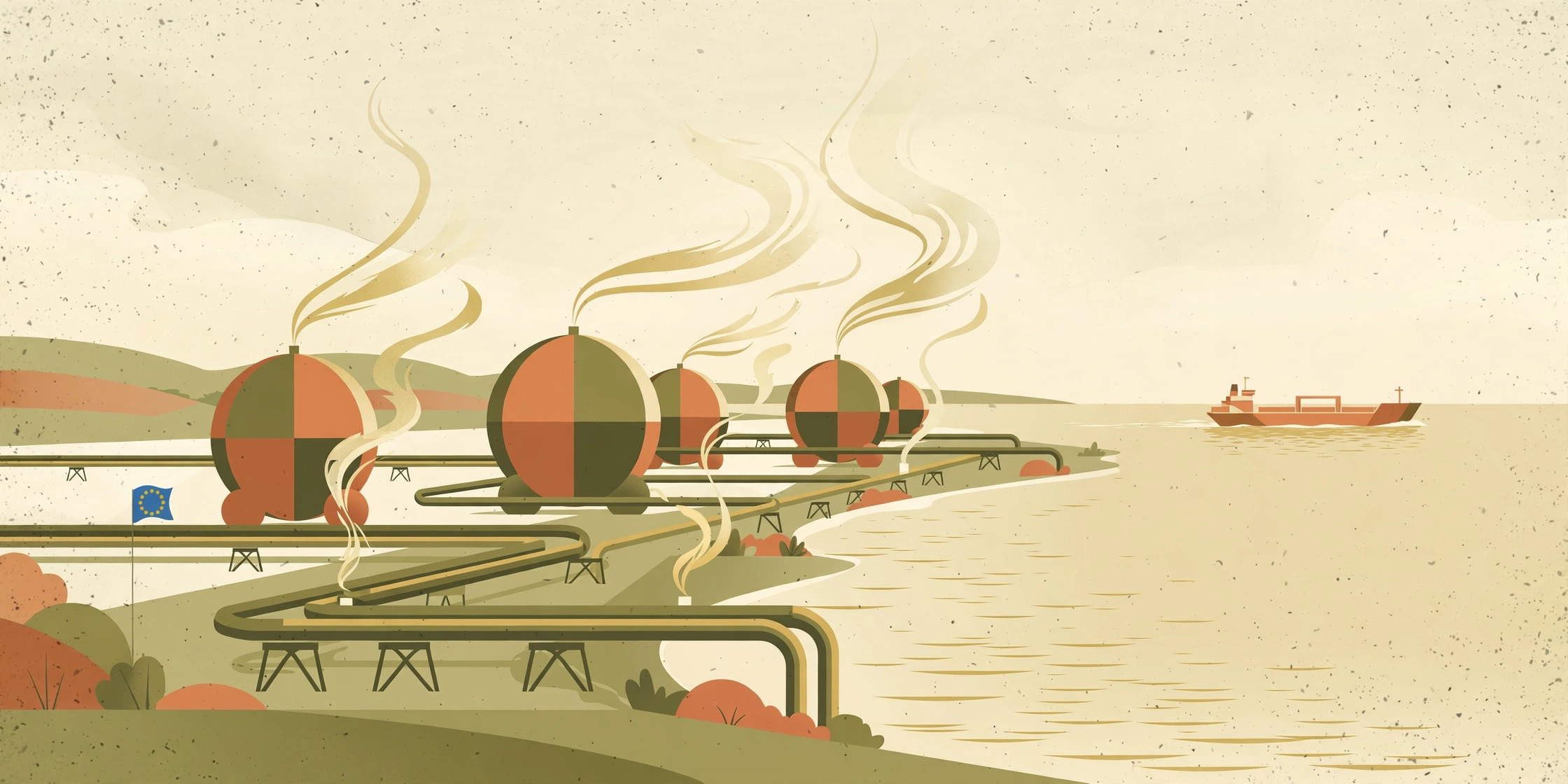
The target is the EU’s methane law for oil and gas imports — the world’s first rule requiring foreign suppliers to monitor and report the methane leaking from their wells, pipelines and terminals. The rules were due to take effect on January 1, 2027. Under the proposal, importers of oil and gas would have until May 31, 2029 to prove that their 2028 imports complied with monitoring and reporting standards equivalent to Europe’s. In practice: a one-year delay for the import provisions, the part of the law that bites foreign suppliers.
Advertisement
The Commission’s stated reason was blunt. The postponement, it said, was designed “to help avoid additional pressures on the security of supply of imported fossil fuels in the current geopolitical context.” Translation: after the Iran war disrupted global energy supplies and heightened fears about fuel availability this winter, nobody in Brussels wants to pick a fight with the people selling Europe its gas.
The pressure came from both sides of the Atlantic — and both halves of it are on the record.
France went first. Last month, President Emmanuel Macron wrote to European Commission President Ursula von der Leyen to request the delay, warning the rules could create legal risks for Europe’s fuel importers. A president writing a personal letter to Brussels on behalf of importers is not how the Commission usually gets its ideas. It is how it gets its instructions.
The United States came with the stick. The US is Europe’s biggest liquefied natural gas supplier, and in June Washington warned the EU that the methane law could disrupt fuel deliveries — a position backed by companies including ExxonMobil. Read that carefully: the country selling Europe its gas said the climate rule might interfere with the deliveries. It did not need to say what would happen if Brussels ignored the warning. The implication was the message.
So here is the arithmetic of Wednesday: France provided the request, America provided the leverage, and the Commission provided the announcement. The methane rules — the flagship, the world-first, the law the EU held up as proof that somebody was serious about the second-largest contributor to climate change — slipped a year because the two countries that consume and supply the gas both wanted it to slip.
The case for the delay
The defenders of the move have an argument, and it is not frivolous.
Europe’s energy situation is genuinely tight. The Iran war scrambled supply routes and heightened winter fuel fears. The methane provisions, as written, require importers to verify that foreign suppliers — in Texas, in Qatar, in Algeria — monitor and report emissions to EU-equivalent standards, starting with imports in 2028. Industry groups and several governments say the compliance chain is not ready, that the legal exposure for European importers is real, and that enforcing it now risks the exact supply crunch the law was meant to prevent in reverse: a climate rule that makes winter more expensive and less secure.
France’s letter made the legal point explicit. Macron warned von der Leyen of “legal risks” for Europe’s importers — the kind of language that means lawsuits, penalties and contracts torn up. In Paris, the calculation was not about methane at all. It was about who pays when a rule meets a market that cannot yet comply.
And the American position, however self-interested, was not invented. If the rules really did threaten LNG deliveries mid-winter, the Commission would own the consequences. A regulator that causes a supply crisis does not survive to regulate the next one.
Advertisement
The case against
The critics have an argument too, and it is not frivolous either.
The EU’s methane regulation was designed to tackle emissions that leach from leaky oil and gas infrastructure worldwide — emissions the Commission itself calls the second-largest driver of climate change after carbon dioxide. Methane traps far more heat than CO2 over the short term. The import provisions were the entire point: Europe does not produce most of its gas, so a law that only covers domestic production is a law that covers nothing. Delay the imports, and you delay the law.
Climate groups heard Wednesday’s announcement as the latest entry in a pattern: every flagship climate rule, when it finally touches the supply chain, gets delayed, softened or carved up. They point to the sequence — a letter from Paris, a warning from Washington, a “proposal” from Brussels that matches both — and see regulatory capture wearing a Commission lanyard.
The legal-risk argument, they say, was always going to be made by somebody. That is what legal-risk arguments are for: the powerful make them when rules approach their interests. The Commission’s job was to weigh that against the physics of methane. On Wednesday, the physics lost.
Two republics, one convenience
This is the part worth watching from both Paris and Washington, because the methane story is not really about methane. It is about what happens when France’s strategic interests and America’s commercial interests agree.
France wanted flexibility for its importers and its energy security planners. The United States wanted flexibility for its LNG exporters and its oil majors. Neither side made a climate argument — not really. The French argument was about legal exposure. The American argument was about deliveries. The climate argument was made by the law itself, and the law, on Wednesday, had no lawyer in the room.
That is the discomfort the both-sides framing cannot dissolve. The critics on the left say the delay proves the green transition bends whenever fuel suppliers lean on it. The defenders on the right — and in the industry — say it proves the Commission is finally learning to govern in the world as it is, where winter comes whether or not the compliance chain is ready.
Both can be true at once. That is usually the sign you have described the problem correctly.
What happens next
The proposal is a proposal. The one-year delay still has to survive the EU’s legislative process — member states and the European Parliament — and the methane provisions were controversial enough to attract amendments on both sides. The climate camp will try to narrow the delay; the industry camp will try to widen it. Macron’s letter and Washington’s warning have not settled anything. They have set the opening positions.
And the dates are worth writing down. The rules would have applied from January 1, 2027. Now importers get until May 31, 2029 to demonstrate 2028 compliance. A year of grace. In the interim, the methane keeps leaking — from the wells in Texas that ExxonMobil operates, from the pipelines that feed the LNG tankers, from the infrastructure nobody has yet been forced to report on.
The Commission called the delay a way to avoid pressure on supply security. The climate groups called it a surrender dressed up as scheduling. The methane, for its part, is indifferent to the vocabulary. It just keeps rising — a year older, a year leakier, while Brussels debates the calendar.
In pétanque, when a team needs a year to get ready, you give them the year. Nobody argues. But the cochonnet does not move while you wait. In climate policy, it does.