News & Politics
France's Budget Fight: 236 Votes, One Deficit, and a Country Holding Its Breath
The rejection motion failed, the revenue debate is open, Mélenchon has a counter-plan, students are still blocking schools, and the IMF is watching. A dry look at the numbers behind France's autumn of discontent.
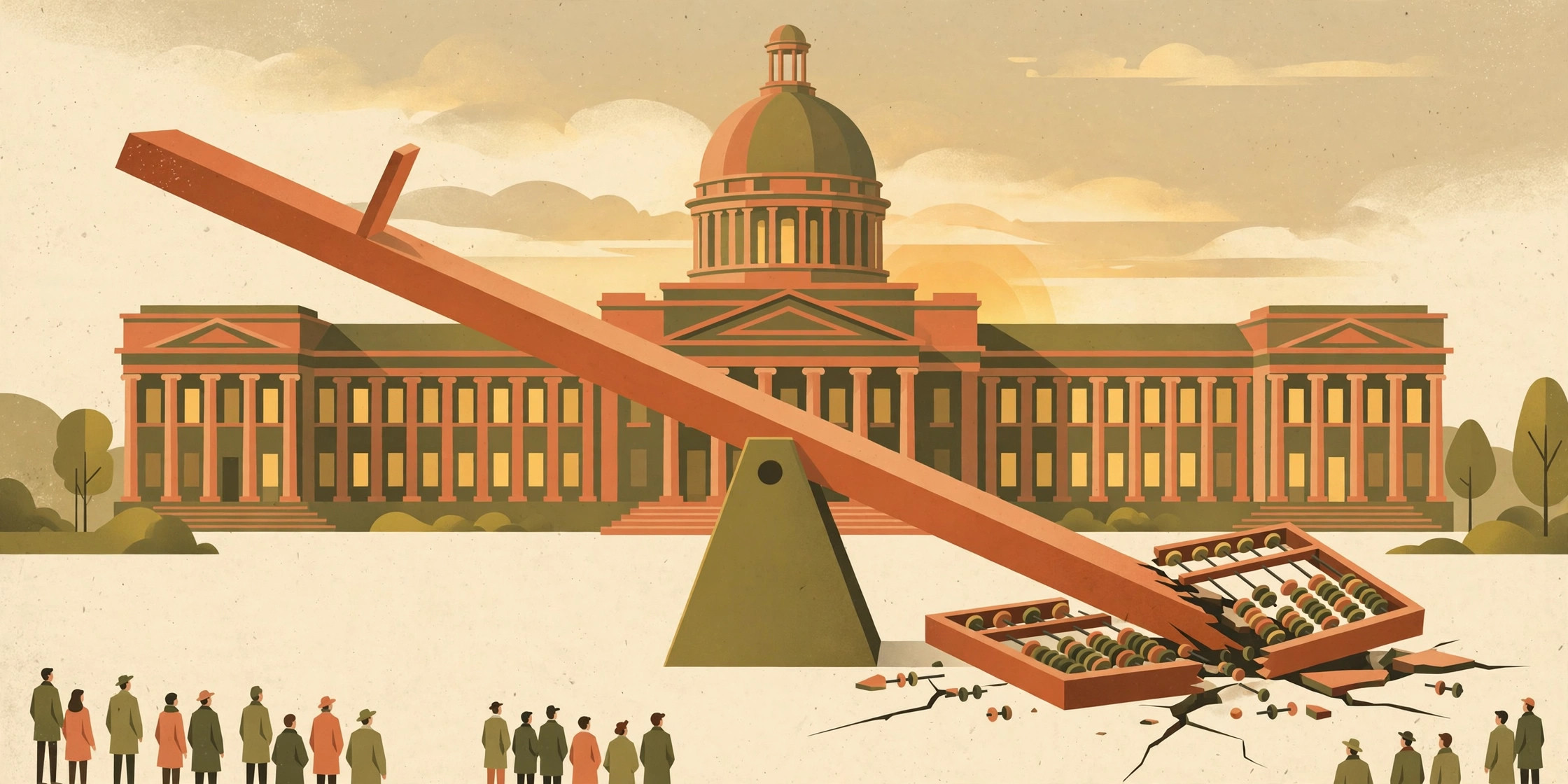
On the night of October 13, the National Assembly voted down a motion to reject the 2027 budget. The count: 236 against, 149 in favor. The motion failed, the debate moved on, and the revenue section of the bill opened for discussion. That is the procedural fact. Everything around it is politics.
The number that matters most to the government is not 236. It is 5 percent. That is the deficit line the government says it will hold, backed by 43 billion euros in new measures. The message from the cabinet is conditional openness: it will accept a “compromis” on the budget, but only one that keeps the arithmetic intact.
Advertisement
The number that matters most to the opposition is simpler: who votes with whom.
The far right voted against the rejection motion. National Rally deputy Jean-Philippe Tanguy explained the logic plainly: “pour aller au débat” — to get to the debate. In other words, the RN wants the bill examined, amended, and fought over in the open, not killed at the door. For a party positioning itself as a future governing force, there is an argument in being seen inside the room rather than outside it.
The left reads it differently. To hear La France Insoumise tell it, the government’s refusal to be toppled by the rejection motion was purchased with concessions to the RN — a charge the government rejects, but one that has real political weight. If the RN is voting with the government to keep the debate alive, the left asks, what did the RN get in return? The answer, so far, is procedural rather than substantive. But the question will not go away.
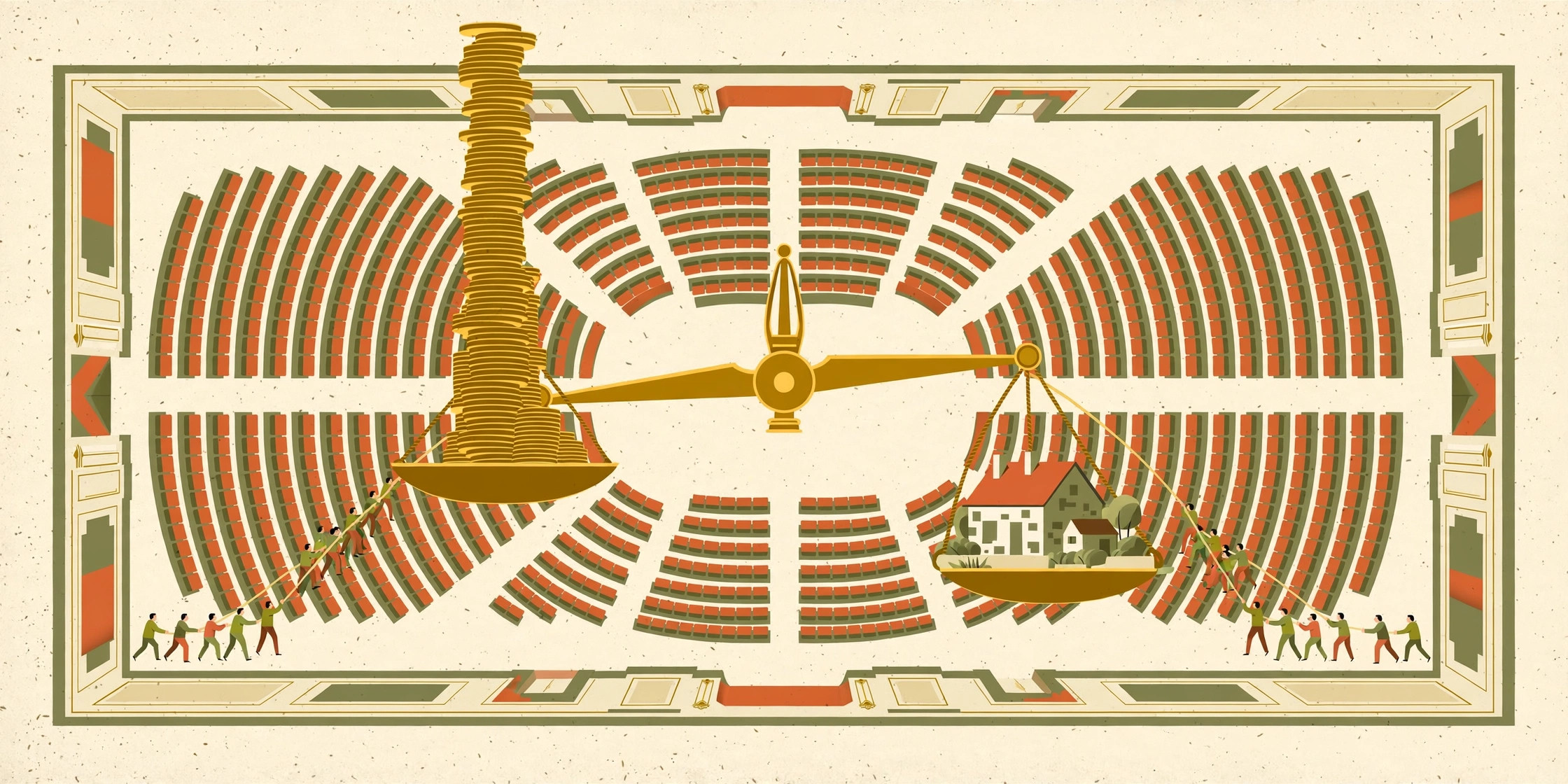
On Wednesday, Jean-Luc Mélenchon stepped to the podium at a press conference and presented LFI’s alternative program. The figures are large and precise: 106 billion euros in new revenue, 82 billion in spending, 25 billion in debt reduction. The instruments: a fortified wealth tax expected to bring in 10 billion, the removal of the flat tax on capital income, the minimum wage raised to 1,700 euros net, indexation of pensions and benefits, free school canteens, and a rise in the civil-servant pay point.
Set aside, for a moment, whether you agree with any of it. What Mélenchon presented is a complete fiscal architecture — not a protest motion, but a rival budget. The left’s argument is that the money exists and the government is choosing not to collect it. The government’s argument is that the arithmetic does not survive contact with the bond market.
Which brings us to the markets. Speaking in Bangkok on Wednesday, IMF chief Kristalina Georgieva said France will need time to regain market confidence. The yield on the French 10-year bond is hovering near 5 percent. And in a line that stung in Paris, she described the advanced economies as the “worst students” on fiscal discipline. The subtext: France’s problem is not unique, but it is visible, and investors are watching the autumn unfold vote by vote.
The Socialists, for their part, are making the fiscal-justice case in their own register — less theatrical than Mélenchon’s, but aimed at the same target: a budget they say asks too little of the wealthy and too much of everyone else. Their votes will matter when the revenue section comes to its own test.
Meanwhile the streets have their own calendar. Student protests continued this week: late Wednesday morning, around 160 schools were blocked. The education minister, Geffray, responded with numbers of his own: of the 3,000 replacement teachers promised, 2,000 have been assigned since Friday, plus 170 contract staff recruited. The scale of the disruption, he suggested, should be kept in proportion: of 3,700 lycées nationwide, a third were never disrupted at all.
But the damage figures are harder to wave away. Thirty-seven schools have been partially burned since the movement began. And the human toll, as reported by Prime Minister Lecornu in the Senate on Wednesday, is heavy on all sides: 937 police and gendarmes injured, 248 students, and 149 education staff — the heaviest toll falling on ministry personnel. Forty police and gendarmes were injured on October 13 alone. The Alliance police union says it will file a complaint against the state for endangering lives.
The justice ministry’s count: about 8,000 people taken into custody since the start of the movement, 2,735 prosecuted, 26 in pre-trial detention — including 9 minors. Whatever one thinks of the protests, those are not small numbers. They describe a confrontation that has moved well past the stage of symbolic marches.
Advertisement
Today, October 15, the three lycée organizations — USL, Renouveau lycéen, and Lycéens! — are to be received by Geffray and by the higher-education minister, Philippe Baptiste. No outcome can be reported yet; the meeting is the news. What matters is whether dialogue produces anything the blocked schools can take back to their courtyards.
Then Saturday, October 17: a joint call to demonstrate with the gilets jaunes, timed for the start of the Toussaint school holidays. The symbolism is deliberate. The gilets jaunes are the ghost at every French budget debate since 2018, and invoking them is a way of saying: this could get bigger.
Two dates now structure everything. October 20: the vote on the revenue section. November 17: the vote on the full bill. Between now and then, every amendment, every concession, every walkout will be read as a signal about the final count.
What, concretely, will the revenue debate be about? In broad terms, it is a fight over where the 43 billion comes from. The government’s position is that the deficit must come down to 5 percent of GDP without breaking the economy’s back — and that it is willing to negotiate the details. The opposition’s position, in various shades, is that the distribution of the effort is wrong. That is the polite version of the argument. The impolite version is what gets said on television.
This is where the left’s two tracks diverge interestingly. Mélenchon offers a complete alternative budget — a rival vision of the state, funded by taxing wealth and capital income, spending on wages and public services, and still shaving 25 billion off the debt. The Socialists offer something narrower: amendments and arguments aimed at shifting the burden upward. One is a revolution in accounting; the other is a negotiation. Both will be counted in the same vote tallies, and that is a tension the government is happy to exploit.
The far right’s game is subtler. By voting against the rejection motion “pour aller au débat,” the RN bought itself a front-row seat and a talking point: we are the responsible opposition, engaging with the text. Le Pen’s party has spent years sanding down its edges for exactly this kind of moment — the moment when a budget negotiation makes it look like a party of government rather than a party of protest. Whether the other parties treat it that way is another question. The left, at least, does not.
And the markets? Georgieva’s warning is the one nobody in Paris can answer with a speech. A 10-year yield near 5 percent is the market’s way of pricing political risk, and every week of parliamentary chaos is a data point. The government’s 5-percent deficit line is not just a policy choice; it is a signal to investors that France has a plan. The risk, from the government’s side, is that the plan does not survive the Assembly. The risk, from the left’s side, is that the plan survives and the country pays for it in public services.
There is also the question nobody asks out loud in the hemicycle but everyone asks in the corridors: what happens if the numbers don’t add up on November 17? France has been here before, and the constitution has tools for it. But using them carries its own political price, and the price gets steeper every time. For now, all sides are playing the parliamentary game straight. How long that lasts depends on the revenue vote.
The students, meanwhile, are not waiting for November 17. Their movement has its own logic and its own tempo, and the October 15 meeting with the two ministers is the first real test of whether the government can talk it down. The numbers Geffray brought — 2,000 replacements assigned, 170 contracts recruited — are meant to show a government that is responding. The blockades are meant to show students who are not convinced. Somewhere between those two positions, 160 schools were closed on a Wednesday morning.
Saturday’s joint demonstration with the gilets jaunes is the wild card. The gilets jaunes have not been a coherent force for years, but as a symbol they remain potent: the memory of 2018, when a fuel tax turned into a national crisis, hangs over every budget debate. Scheduling the march for the first day of the Toussaint holidays is no accident — it is when families are free, students are out of school, and the streets are available. Whether it draws hundreds or tens of thousands will tell Paris something important about the temperature of the country.
Step back and the picture is this. The government has a deficit target and a conditional offer of compromise. The left has a fully costed alternative and a charge of backroom dealing with the far right. The far right has a seat at the debate table and a posture of constructive opposition. The markets have a warning and a yield curve. The students have blocked schools and a meeting with two ministers.
Nobody in this story is obviously bluffing, and nobody is obviously winning. The rejection motion failed 236 to 149, and that settled almost nothing. The real votes — October 20, November 17 — are still ahead. France’s autumn will be decided in committee rooms and on the streets at the same time, which is to say, the French way.