News & Politics
The Piggy Bank
France's Europe minister went on television and said the 4.6-billion-euro fine extracted from Google should count as a 'new revenue stream' for the EU budget. The White House called it extortion. The digital-services tax fight has entered a new round.
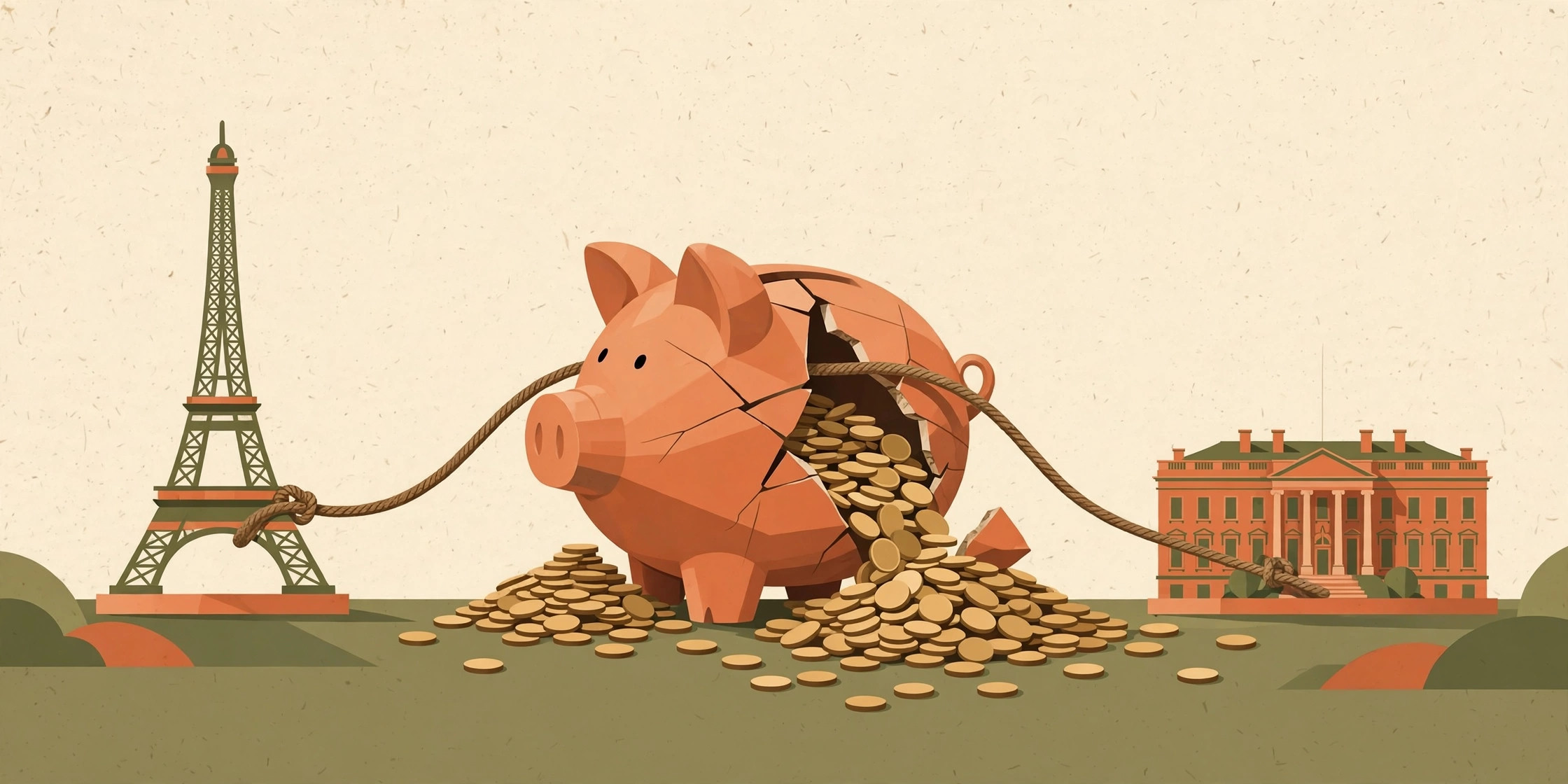
It was said out loud, on live television, which is what made it news. Benjamin Haddad, France’s Europe minister and a close ally of Emmanuel Macron, appeared on France Info on September 29 and suggested that the European Union should treat the money it squeezes out of American tech giants as a budget line.
The money in question: 4.6 billion euros, roughly $5.2 billion, from Google. The European Commission imposed the fine back in 2018, in the long-running Android antitrust case. Google fought it through every court available and lost its final appeal. In July of this year, the money was paid.
Haddad’s proposal: that sum is a windfall. It should be booked as revenue for the EU’s central budget, and it should lower what each of the 27 member states pays in dues. His words: “This is a new revenue stream for the European Union — 4.6 billion euros — that should automatically lower the contributions of all member states.” The context is the negotiation of the EU’s next seven-year spending plan, a roughly 2-trillion-euro package. Every finance ministry in Europe would like to pay less into it. Fines on Silicon Valley, Haddad argued, could help.
The White House response came quickly and used a word usually reserved for organized crime. A spokesperson likened the idea to extortion. The message from Washington: the EU is not enforcing the law, it is shaking down American companies to fund itself.
Strip away the rhetoric and the mechanics are straightforward. The European Union has spent a decade building an enforcement apparatus aimed squarely at American technology firms — antitrust cases, content rules, and France’s 3-percent digital services tax on the revenues of companies like Google, Apple, Meta, and Amazon. Washington has spent the same decade treating each move as a tariff by another name. This is the same fight that produced the wine-tariff ultimatum: Trump’s threat of 100 percent duties on French wine and champagne unless Paris drops the digital tax. Haddad’s television appearance did not start that fight. It told the other side, on camera, exactly what the fine money is for.
There is a real legal question buried under the insult. When a regulator fines a company and the treasury books the cash, is that justice or taxation? The EU’s answer has always been: both, and the law requires it. The American answer, increasingly, is: you can call it law, but when a minister goes on television and calls the fines a revenue stream, we will treat the words as the policy.
The practical effect is likely to be measured in the next round of trade talks, not in courtrooms. The Google money is already paid; the fight now is over the Digital Services Act, the digital services tax, and whatever the Commission fines next. Haddad has given the Trump administration something it did not have before: a sound bite, delivered by a friendly government, in which Europe’s fines policy is described not as law enforcement but as fiscal policy.
Diplomats prefer these things to remain unsaid. On September 29, on France Info, they were said. The piggy bank is full. The question is what it costs to open it.
Advertisement