News & Politics
What They Want, What He Says
France's student protests now have two competing explanations: an education crisis, say the students and the French left; a warning about immigration and disorder, says Donald Trump and the right on both sides of the Atlantic.
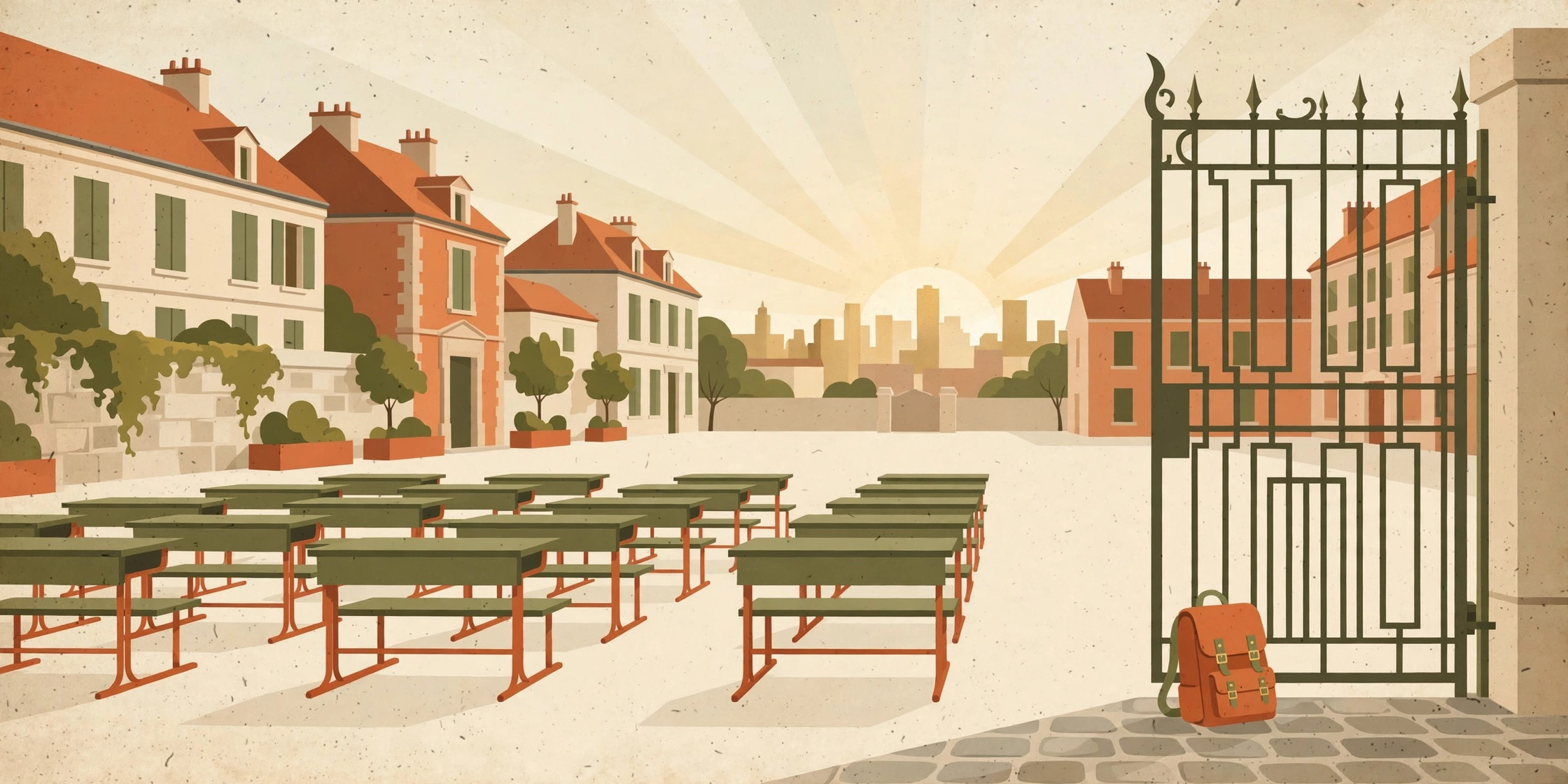
Three weeks in, the French lycée protests have produced two completely different stories about what is happening in the streets — and which one you believe now depends largely on where you stand.
The basic facts are not much disputed. Since mid-September, students have blockaded schools and marched over teacher shortages, classes of 32 to 35, crumbling buildings, and the Parcoursup admissions system. On Tuesday, the Interior Ministry counted 256,000 demonstrators nationwide; organizers claimed 450,000. More than 6,100 people have been arrested, the large majority of them minors. At least 215 teenagers, 85 school staff, and more than 700 police officers have been injured. Education Minister Édouard Geffray says at least 24 schools have been burned or ransacked; damage in the Paris region alone is estimated at 7 million euros. Prime Minister Sébastien Lecornu has called it the school system’s “heaviest toll in decades” and suspended classes until Friday.
Version one: an education revolt. The students’ ten published demands are all about schools — abolish Parcoursup, an emergency plan for buildings, mass hiring, smaller classes, nurses and social workers. The far-left La France Insoumise has backed the movement; Jean-Luc Mélenchon denounces police savagery, and the far-left mayor of Saint-Denis, Bally Bagayoko, who joined the marches, said violence “can become legitimate at a certain point.” From this side, the villain is a government that answered with tear gas and stun grenades — one of which cost a 15-year-old his hand — and a 2027 budget that cuts 1,500 teaching posts.
Version two: a warning about immigration and disorder. On Tuesday evening Donald Trump posted on Truth Social: “What’s happening in France is nothing less than out of control mass migration. This isn’t about schools, this is about Islam wanting to take over a once great Country!” His ambassador to the UN, Mike Waltz, echoed him, blaming open borders and unchecked immigration policy for frustration “boiling to the surface.” Former Trump official Theo Wold told Fox News the new violence was “a consequence of mass immigration.” Conservative commentator Lisa Boothe argued the unrest began in heavy immigrant areas and that the influx is draining school budgets. On Fox News, Nile Gardiner called it “a nightmare vision of Europe’s future.”
The French right has its own version of that argument. National Rally president Jordan Bardella posted footage of a policewoman chased and beaten in Paris as proof of what France has become “after decades of laxity and mass immigration.” Marine Le Pen called the images unbearable, demanded exemplary sentences, and proposed a new anti-riot law. Republican presidential candidate Bruno Retailleau accused LFI of being “fascinated by violence” and trying to organize an insurrection — and floated banning the party.
Caught between the two, the government speaks a third language: order. Justice Minister Gérald Darmanin says the movement has no unified national demands because it grew from local grievances. The prime minister’s office now describes the events as “urban violence” stoked by LFI. After Trump’s post, Emmanuel Macron stepped in personally, asking his ministers for more explanation and empathy; the Interior Ministry has suspended the use of stun grenades pending an inquiry.
So there are now three Frances in this story: the students’ France of broken windows and missing teachers; Trump’s and the right’s France of borders and street battles; and the government’s France, trying to hold both at arm’s length. With a French presidential election next spring and American midterms weeks away, none of the three descriptions is likely to soften soon.
Advertisement