News & Politics
The Boarding
France boarded a sanctioned tanker in the Indian Ocean this week. Moscow calls it piracy. Paris calls it enforcement. Martin Doyle on a helicopter boarding, a false flag, and the shadow fleet both sides are fighting over.
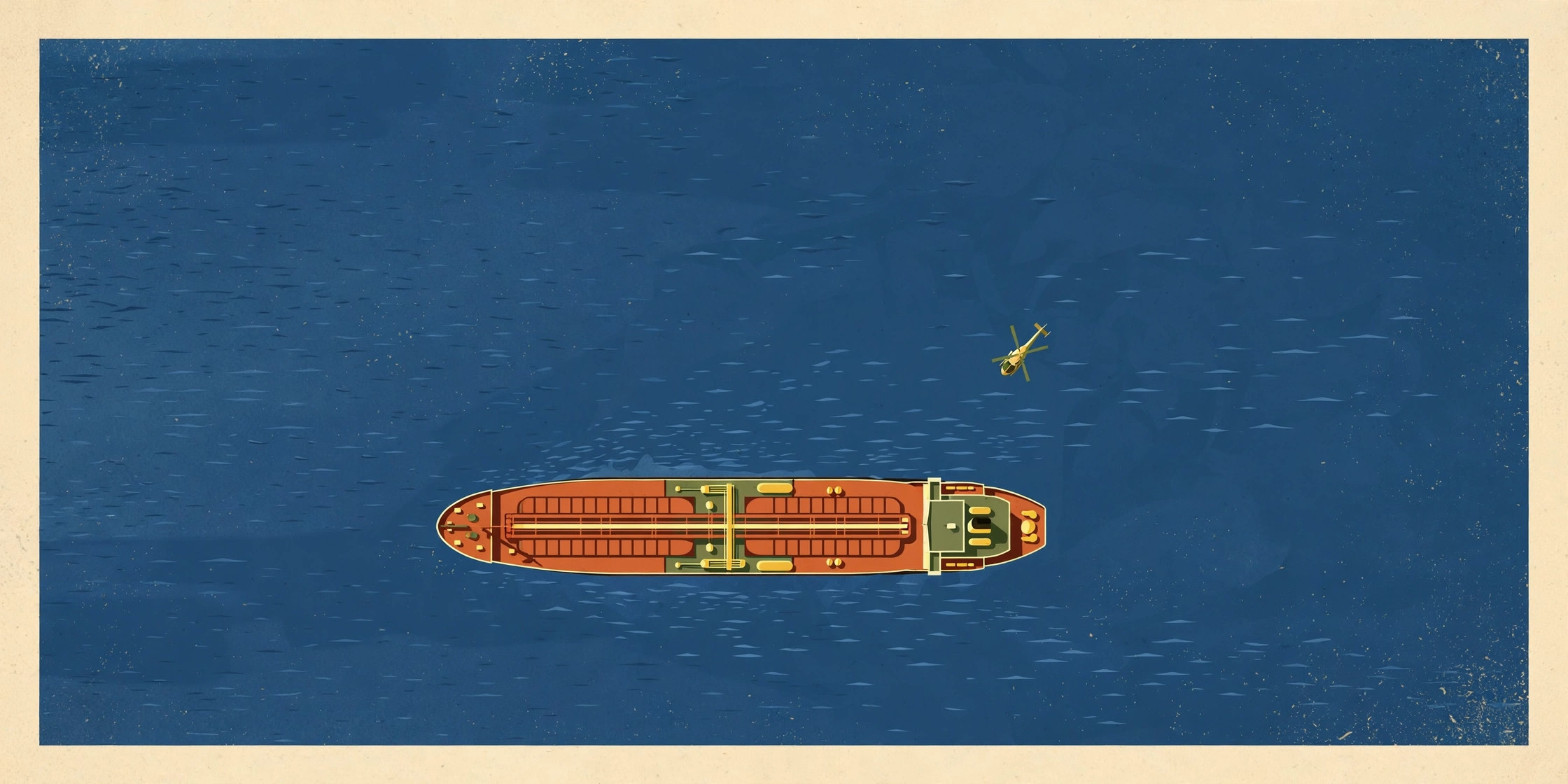
On Monday evening, the French president posted a video. It showed French military personnel descending from helicopters onto the deck of a tanker, in open ocean, hundreds of miles from land.
The location, per President Emmanuel Macron: about 450 nautical miles south of Réunion, the French island territory east of Madagascar. The vessel, France said, was suspected of sailing under a false flag and taking part in illicit fuel transport. French forces boarded it and were escorting it for further checks.
Advertisement
That is the French version. Here is the other one.
Russia, whose oil trade the tanker is linked to, calls the seizure piracy. Moscow’s argument, made before about similar interceptions, is that boarding a vessel on the high seas without the flag state’s consent violates the freedom of navigation. From that side, the video is not enforcement. It is a state seizing a merchant ship by force.
Both sides are describing the same event. They are not describing the same rules.
The ship at the center of it belongs to a category that has become one of the central facts of the sanctions era: the shadow fleet. The term covers tankers that carry oil — mostly Russian oil — while working to obscure their ownership, cargo, and movements. They typically sail under the flags of various nations, lack mainstream insurance or safety certification, and change names and registrations. Western governments say the fleet exists to skirt the sanctions imposed after Russia’s invasion of Ukraine. The ships keep the oil moving. The oil keeps the money moving.
Advertisement
This particular vessel was already on the sanctions lists: it had been hit by American, British, and European Union sanctions in 2024. Ship-tracking data showed it partially loaded, last seen off the coast of Madagascar on October 12, its previous port listed as Guanta in Venezuela. Its Hong Kong-based manager, Zheng Xin Marine, could not be reached for comment.
That is why the French action matters beyond one ship. France did not board a random tanker. It boarded a vessel that the United States, Britain, and the European Union had all already sanctioned. Paris acted where Washington’s sanctions pointed — and did it publicly, with the president himself posting the footage on the evening of the boarding. The message was not quiet. It was meant to be seen: “France is determined to combat the shadow fleet, wherever it may be in the world.”
The enforcement side has a case that goes beyond sanctions. The shadow fleet, critics say, is a safety hazard as well as a sanctions problem. Ships without standard insurance, sailing under flags they may not be entitled to, carrying oil through busy waters: if one of them spills, the cleanup bill and the environmental damage fall on whoever is nearest. From this view, boarding a suspected false-flag vessel is not aggression. It is the law of the sea working as intended.
The other side has a case too. The law of the sea gives flag states — the countries whose flags ships fly — primary authority over their vessels on the high seas. Boarding a foreign ship is an exception, not the rule, and the exceptions are narrow. If countries begin boarding each other’s merchant shipping on suspicion alone, the argument runs, the oceans get more dangerous, not less. Russia’s “piracy” charge is political language, but the underlying worry — that high-seas enforcement can slide into confrontation — is shared by maritime lawyers who have no sympathy for Moscow at all.
There is also the question of what happens next. A seized tanker has to go somewhere. A crew has to be dealt with. A flag state, real or claimed, may protest. A court may get involved. None of that was settled on Monday night. The video ends. The legal process begins.
Step back, and the boarding fits a pattern that has been building all autumn. Energy is the thread running through the France–America story this season: emergency stockpile releases, diesel prices, sanctions, shipping. France and the United States agree on the goal — choke off the revenue that funds the war — and argue, sometimes sharply, about the methods. Monday’s boarding was France choosing a method of its own: direct, public, naval.
Whether it holds up — in court, in diplomacy, on the water — is the question now. The shadow fleet will not disappear because one ship was boarded. But the rules of the game just got a little clearer, and a little harder. Everyone on the water saw the video. That was the point.