News & Politics
The Overcapacity Pact
Fourteen economies signed a US-led statement against industrial overcapacity this week. France signed too. China calls it protectionism. Sam Kessler on the pact that names its target without naming it.
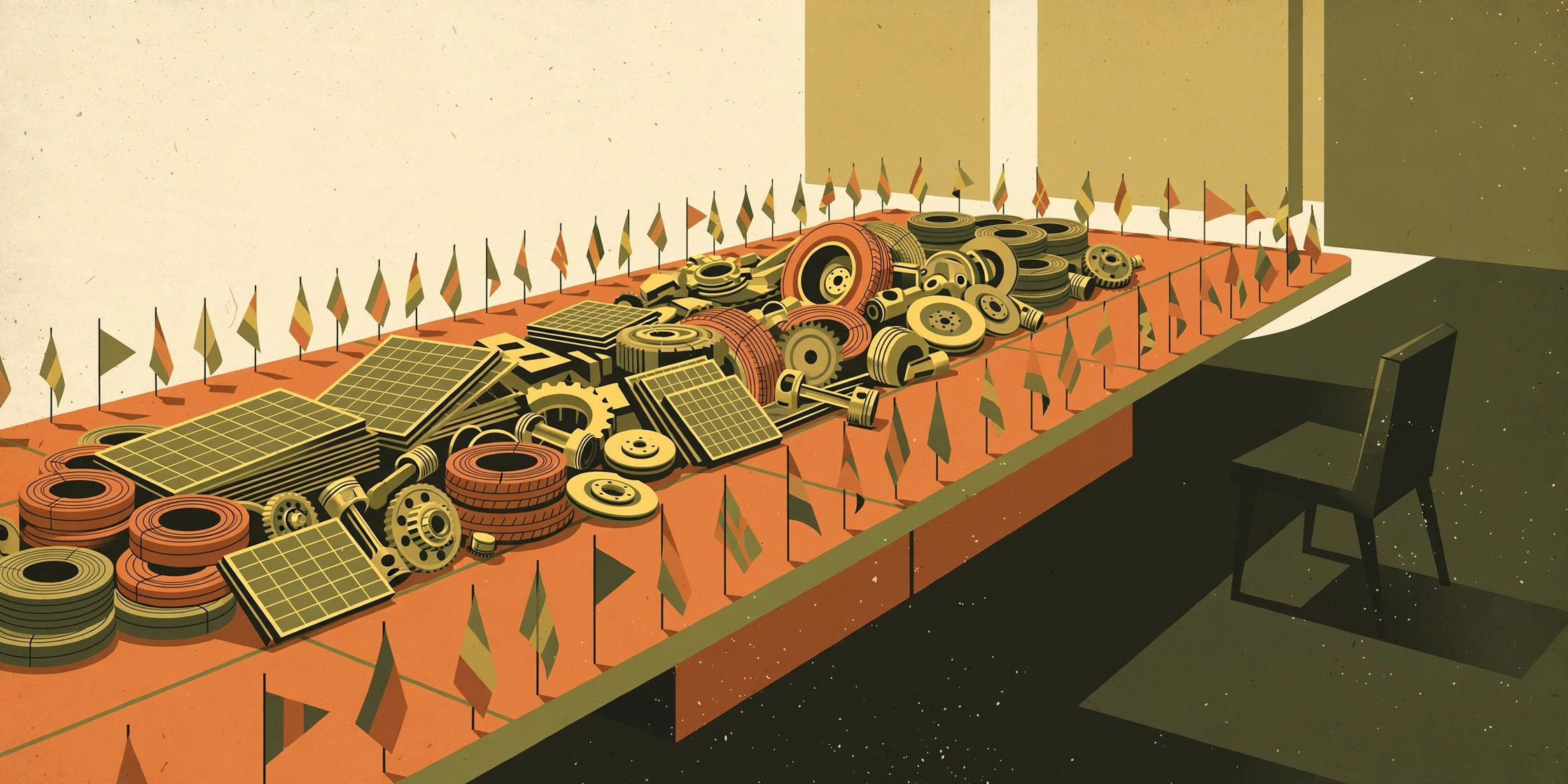
On Wednesday, fourteen economies put their names to a statement about a country that the statement never names.
The joint declaration, led by the United States, calls on countries to eliminate “structural excess capacity” in industry and to end the “non-market policies and practices” that cause it. It was signed by the trade ministers of Argentina, Australia, Canada, France, Germany, India, Italy, Japan, South Korea, Mexico, Poland, Turkey and Britain, plus the European Union. It was agreed by senior officials on the sidelines of an OECD Trade Committee meeting — a week after a US-led gathering of G20 trade ministers in Milwaukee failed to reach consensus on the same subject.
The target is understood by everyone involved. US Trade Representative Jamieson Greer has argued for years that state-subsidized Chinese industry produces far more steel, solar panels, electric vehicles and other goods than China can consume, and that the surplus floods world markets at prices domestic producers in every other country cannot match. The statement warns that, absent action, “an increasing number of countries are taking action to defend their industries, workers, and economies” — a sentence that reads as both diagnosis and threat.
Notably absent from the signatures: China, Brazil, Indonesia, Russia, Saudi Arabia and South Africa.
Beijing’s response was the familiar mirror image. China rejects the claim that its industrial policy creates excess capacity, and accuses Western countries of using the charge as cover for protectionism. From the Chinese point of view, what Washington calls overcapacity is simply competitive advantage — cheaper inputs, scale, and a state willing to invest in manufacturing the way the United States once did.
Both arguments have purchase. Chinese subsidies are real, and the export surges are measurable; European and American factory towns have the closed plants to prove it. But “non-market policies” is a flexible accusation — every advanced economy subsidizes something, from American farm supports to European aerospace loans, and the line between industrial policy and market distortion has always been drawn by whoever is losing.
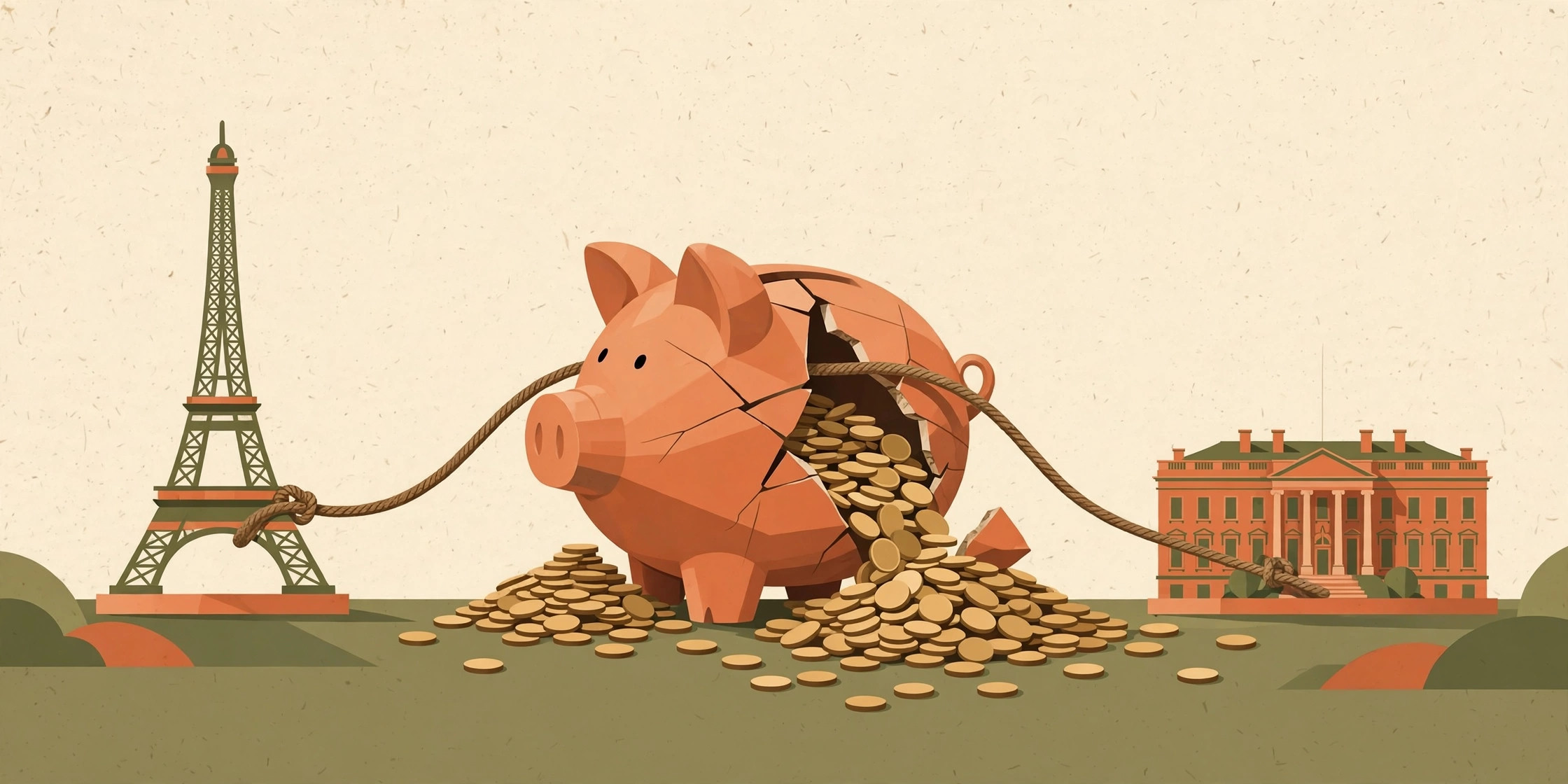
France’s signature is the detail worth watching. Paris has spent the last week in an unusually public set of disagreements with Washington — over a disinformation conference in Vilnius, over diesel reserves, over the terms of the alliance itself. Yet on trade with China, France signed the American text. The French calculation appears to be that Chinese overcapacity is a shared European problem regardless of who writes the statement: French steelmakers and car manufacturers face the same Chinese export wave as their American counterparts.
That is the quiet story underneath the week’s louder transatlantic quarrels. France and the United States can fight bitterly over process, panels and petroleum while quietly agreeing on the biggest economic question of the decade. The pact names no names. It doesn’t need to. Everybody in the room knew whose factories it was about.
Advertisement