News & Politics
The Hundred-Percent Tir
Washington is threatening 100% tariffs on French wine and champagne to force Paris to drop its tax on American tech giants — the biggest tir in a trade mène that has been running since 2019.
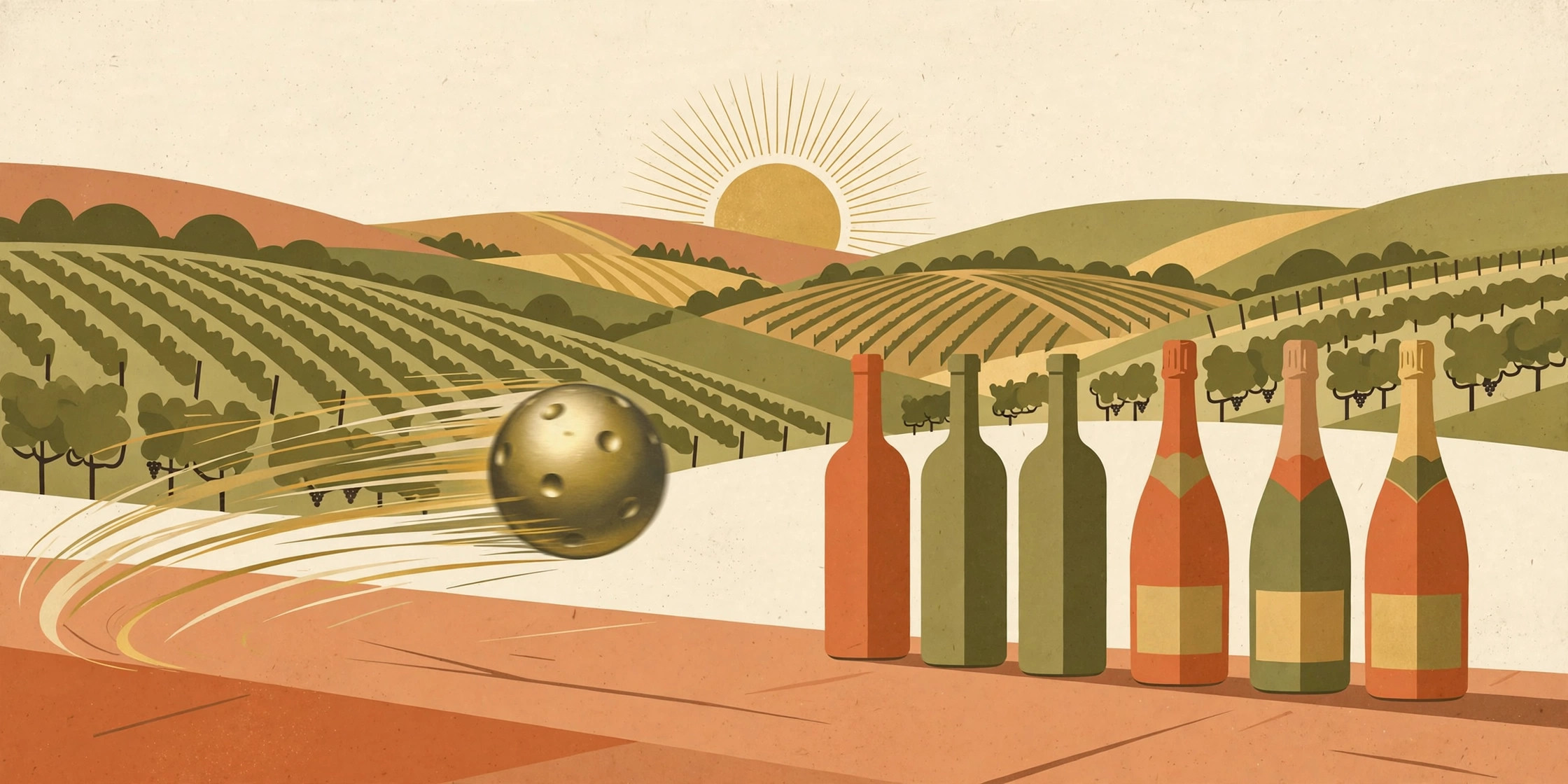
There is a shot in pétanque you almost never see, because it violates the etiquette of the game: aiming your throw not at the opponent’s boule but at the thing they love most — the bottle on the side table, the picnic, the afternoon itself — so that they move their own boule just to make you stop. On September 20, Washington aimed at the bottle. A one-hundred-percent tariff on every wine and champagne coming out of France, doubling the price at the border overnight, unless Paris repeals its tax on Google, Apple, Meta, and Amazon.
The ultimatum was blunt: kill the digital services tax, or the wine pays. France’s three-percent levy on the gross revenues earned within its borders by the largest American technology companies has been in force since 2019. As taxes go it is a pointer’s shot — small, precise, placed exactly where the money lands — and it has irritated Washington out of all proportion to its size for seven years.
Advertisement
The French side of the ledger is not small. Wine and spirits shipped to the United States are worth more than two billion dollars a year, roughly one French bottle in five sold anywhere in the world. A 100% duty does not trim that trade; it amputates it. French exporters condemned the threat as severe economic damage to an export-driven sector already struggling with shrinking harvests and existing tariffs, and American industry groups warned of steep price surges for U.S. consumers and a forced restructuring of the importers and distributors who live on the trade.
This is not the first mène. On the eve of the G7 summit in France this past June, Donald Trump issued the same threat in an interview with the New York Post, saying he had personally urged Emmanuel Macron to remove the three-percent levy. “All [Macron] has to do is get rid of the sales tax, and he wouldn’t have that kind of pressure,” he said, adding that without action from Paris, “I have no choice but to charge a 100% tariff on all champagnes and all wines coming out of France.” It was the tir announced in advance — the shooter telling you exactly which boule he intends to obliterate.
Macron’s answer, given on TF1, was pure pointeur: “Tariffs don’t do anyone any good, especially tariffs between G7 countries.” Asked whether he would back down, he replied, “No, because that is not how it works.” A pointer does not withdraw his boule because the other player is shouting. He crouches lower, studies the terrain, and places the next one even closer to the cochonnet.
To understand the terrain, you have to walk it back to 2019. France was the first country in the world to impose a digital services tax, and Washington’s fury was immediate: an American trade investigation, and by December of that year a threat of tariffs up to 100% on $2.4 billion of French goods — wine, cheese, handbags, porcelain, the greatest-hits catalogue of Frenchness. Both sides eventually agreed to let global tax negotiations run their course, and in 2021 more than 130 countries signed onto a 15% global minimum tax. Paris said its national tax would go once the global deal lived. The global deal has been limping ever since. The French tax never left the circle.
That is the thing about a well-pointed boule: it stays. The digital tax applies to companies with more than €25 million in French revenue and €750 million worldwide, and it reportedly generated around $700 million last year, overwhelmingly from Silicon Valley’s giants. Seven years of pointing, and the boule is still kissing the jack. So Washington has gone back to the only response it trusts — the big iron throw, the tariff, the tir — and aimed it, once again, at Bordeaux.
Then, on September 29, Paris handed Washington the perfect piece of ammunition. France’s Europe minister, Benjamin Haddad, went on France Info television and suggested the European Union treat its fines on American tech companies as, effectively, a revenue stream. The €4.6 billion antitrust fine Google finally paid in July, after losing its last appeal in the long Android case, was “a new revenue stream for the European Union,” Haddad said — “4.6 billion euros — that should automatically lower the contributions of all member states” to the EU budget. He called it a windfall, twice, with evident satisfaction. In pétanque terms, he picked up the boule, weighed it in his hand, and announced to the whole terrain that he was playing for the prize money.
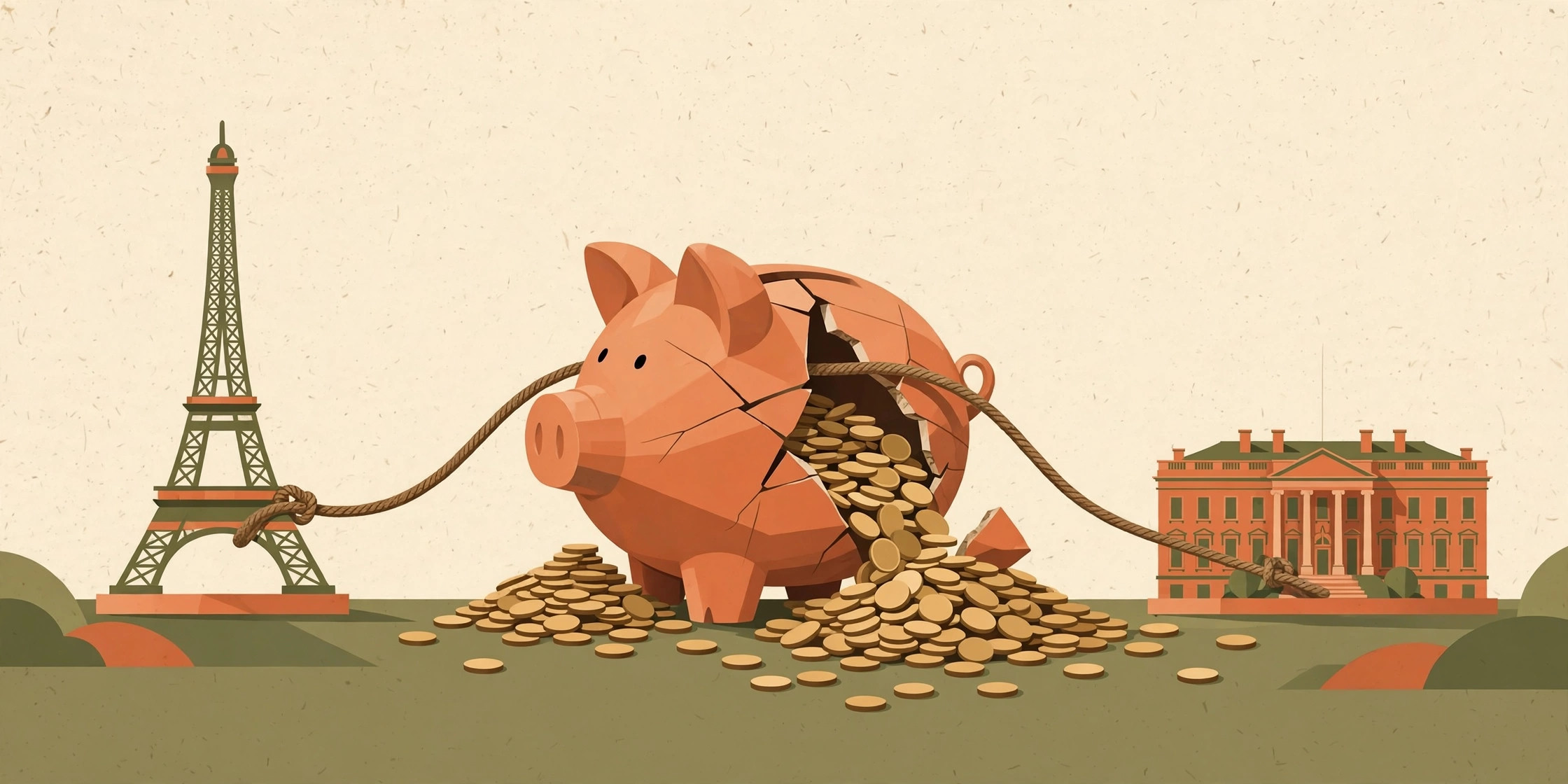
The White House did not miss it. Spokesman Kush Desai issued a statement the same day: “President Trump has unequivocally warned trading partners against imposing digital services taxes, fines, and other forms of extortion on America’s leading technology sector.” Extortion. When your opponent says out loud that the fines are a piggy bank, the word practically serves itself.
And the ledger behind the rhetoric is long. Brussels has extracted some $11.7 billion in penalties from Google alone over nearly two decades of antitrust, privacy, and tax cases. In 2024, Apple lost an eight-year legal battle when the European Court of Justice ordered it to pay €13 billion in back taxes to Ireland. To Washington, this is not regulation; it is a shakedown with paperwork. To Paris and Brussels, it is simply the rules of the terrain: if you do business on our ground, you play by our règlement.
Advertisement
Brussels, it should be said, keeps its own throwing iron oiled. The European Union has spent recent years building an anti-coercion instrument precisely for moments like this — a legal mechanism for answering economic pressure with economic pressure — and its traditional retaliation playbook is a connoisseur’s tour of Americana: bourbon, motorcycles, jeans, goods chosen not for their trade weight but for their electoral geography. A tir can be returned. The question, as ever in pétanque, is whether answering iron with iron improves your position or just litters the terrain.
Here is where the allegory earns its keep, because the two capitals are not even playing the same game. France points. Its instinct, in trade as in everything, is placement: the precise tax, the carefully drafted directive, the fine calibrated to the infraction — boules nestled one after another around the cochonnet of European sovereignty. America tires. Its instinct is the strike: the tariff, the sanction, the thunderclap announcement that clears the whole end. Pointing accumulates; shooting decides. Seven years into this mène, neither style has dislodged the other, which is why the throws keep getting bigger.
Notice, too, the particular cruelty of the chosen target. A tariff cannot repeal a tax. No duty on champagne has ever deleted a line from the French tax code; the two instruments do not touch. So the tir is deliberately aimed at the wrong boule — at the winegrowers of Bordeaux and Champagne, at the American importers and restaurant lists, at the consumer in Ohio who will pay double for a Burgundy — in the hope that the pain migrates uphill to the Élysée. It is the schoolyard logic of the tir: hit what they love until they move what you hate.
The gravel displaced by these throws is real. French producers are lobbying just to reduce the existing 15% tariff on wines and spirits entering the United States, and they are doing it with harvests shrinking behind them. American importers face the prospect of rebuilding supply chains around a trade war, and American drinkers face the bill. Earlier this year, in a separate dispute, Trump floated a 200% tariff — a number so large it stops being a policy and becomes a gesture, the shooter winding up so theatrically that everyone on the terrain stops to watch.
Underneath the tirs, the quiet game continues — the dink of it all. Trade officials on both sides describe negotiations as ongoing, tense, unresolved: the soft shots, the small placements, the patient work near the net that never makes the news. The 15% status quo holds for now. Nobody has thrown the 100% yet; the threat itself is doing the throwing. In pickleball, as in diplomacy, the dink is the shot you play when you want to stay in the rally without giving your opponent anything to smash.
What makes this mène different from 2019 is the candor. Haddad’s “windfall” remark broke the fourth wall of European regulation: the fines were always, officially, about fair competition and the rule of law, never about the money. The moment a minister calls them a revenue stream on live television, the American narrative — extortion — writes itself, and every future fine arrives pre-stained. A pointer who announces he is playing for cash has told the shooter exactly where to aim.
There is also a team dimension the scoreboard hides. France is not really playing singles here; it is the designated pointer for a team of twenty-seven. The digital tax was French, but the fines are European, and Haddad’s proposal would convert Google’s penalty into a discount on every member state’s EU dues — the whole squad benefits from one well-placed boule. Washington, meanwhile, defends its champions the way a team defends its best shooter: the tech giants are American boules, and an attack on them is an attack on the side.
And then there is the clock. A brandished tir is a wasting asset: every week the 100% stays on the table without being thrown, markets adjust, importers stockpile, and the shock value leaks away like air from a punctured boule. That is why the autumn matters — the threat must either become a throw or become background noise, and both capitals know it. The negotiators’ dinks are getting quicker. Somebody will have to step into the circle.
So what would a carreau look like in this game? It would be the shot that doesn’t just score but substitutes — the move after which nobody remembers the old argument. Perhaps it is the global minimum tax, finally implemented, quietly replacing the French DST with something Washington helped write: France’s boule removed, America’s boule sitting exactly where it was, everyone agreeing the position has improved. Or perhaps it is the reverse: a tariff so devastating that Paris discovers the digital tax costs more than it earns, and withdraws it with a shrug, as if the idea had never been French at all.
The pointer places. The shooter strikes. The carreau replaces — and the crowd only remembers the improvement.
For now, the circle is redrawn and both players are still in it. The cochonnet — a workable settlement on taxing the digital economy, on keeping allies’ wine affordable and allies’ companies accountable — sits in the middle of the terrain, untouched, gleaming, absurdly small for all the iron being thrown at everything around it. The next throw is Washington’s. The whole terrain is watching to see whether it aims at the jack, or at the bottle on the side table again.