Pétanque
Club Night
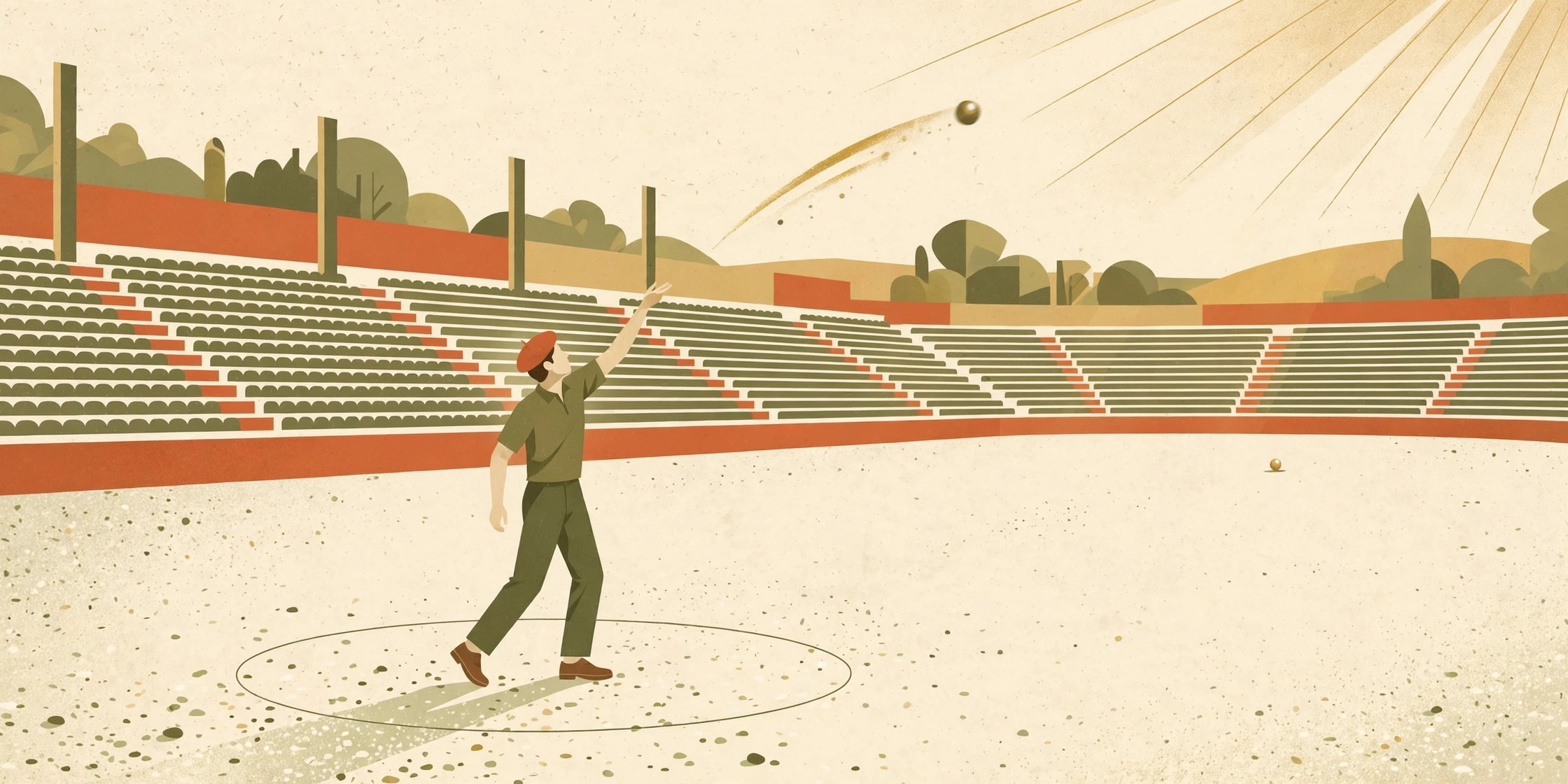
Every Saturday, in towns all over France, the boulodrome fills up for the concours — the weekly club tournament that is half competition, half neighborhood reunion. In America, the equivalent ritual is the ladder night. Same hunger, different scoreboard.
Listen, people think practice makes the player. Wrong. Saturday makes the player. The weekly tournament — the concours at the boulodrome, the ladder night at the pickleball courts — is where you learn everything that matters, because you learn it with strangers watching.
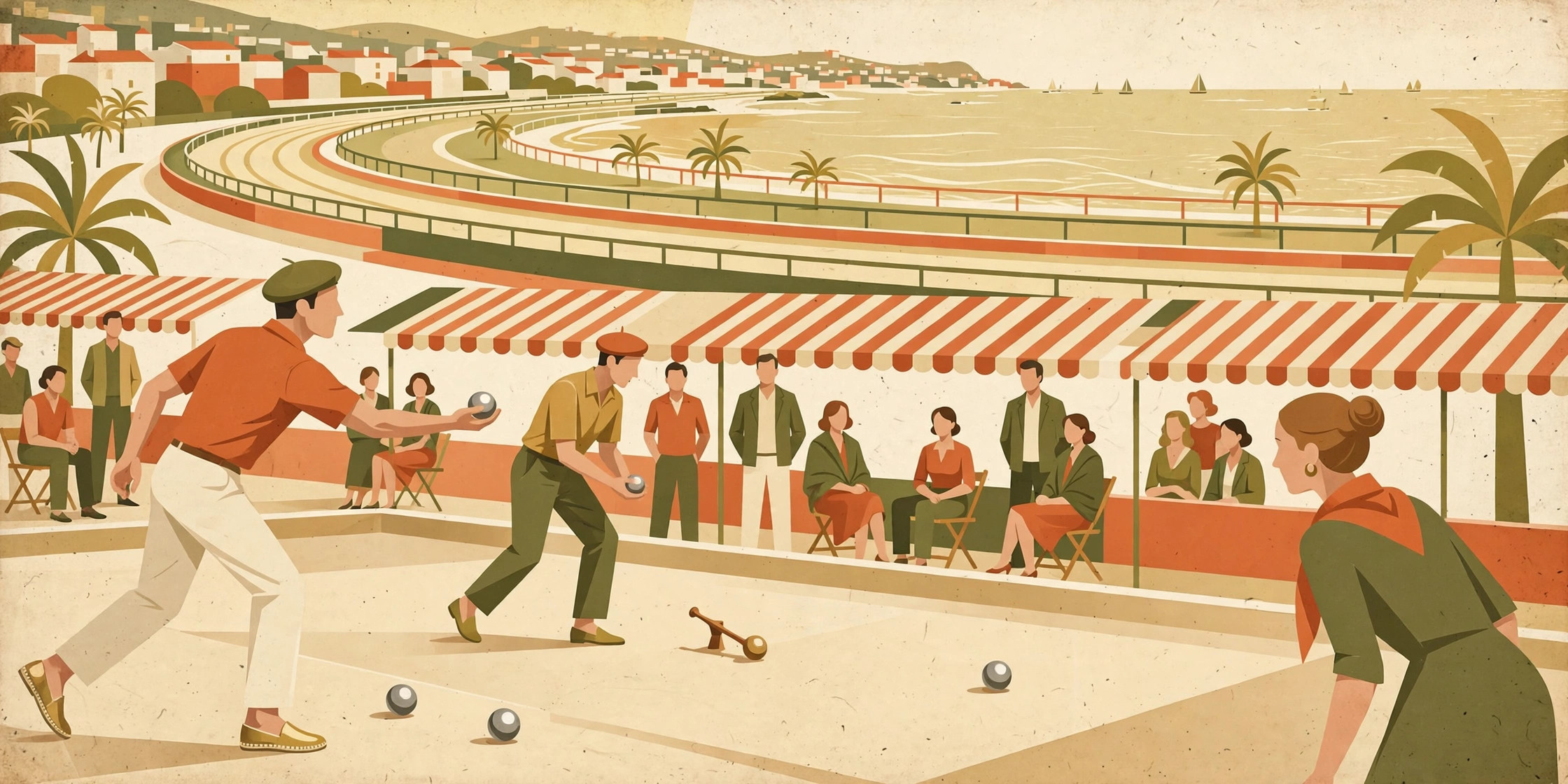
Here is how it works in France. Saturday afternoon, the boulodrome fills up. Players show up in teams of two or three, pay a small entry fee, and get thrown into a draw. Winners keep winning until they lose; losers get a second chance in the consolation bracket, which everyone pretends not to care about and everybody plays like the finals. The whole thing runs for hours. People bring folding chairs. Somebody always brings a cooler. Kids run between the terrains. Old guys argue about a point with the seriousness of constitutional scholars.
The game being played is serious. Pétanque tournaments have rules, umpires, real stakes — the entry fees pool into prize money, and reputations are built and broken on these gravel afternoons. But the game is also the excuse. The concours is where the club renews itself: new players get absorbed, old rivalries get their weekly fuel, and everyone learns who can be trusted with the last end of a tight match. You can practice your pointing alone for a month. You cannot learn nerve alone. Nerve is a social product. It is manufactured on Saturday afternoons.
Now fly across the Atlantic and walk into an American pickleball facility on ladder night. Different uniform — athletic shoes instead of dusty loafers, a plastic paddle instead of steel — but the same animal. Players check in, get sorted into foursomes, play a round, and move up or down the ladder based on the score. Win and you climb toward the strong players. Lose and you slide down toward the beginners. It is brutal and it is honest. Nobody is arguing with an umpire. The ball is either in or out, and everyone moves on.
What I love about both rituals is that they solve the same problem from opposite ends. The French concours solves it with ceremony: a draw, brackets, a buvette, the sense that this afternoon counts. The American ladder night solves it with machinery: a system so clean it needs no argument, where your ranking is your résumé and you re-earn it every week. One is a festival. The other is an algorithm. Both get you out of the house, both put you under pressure, and both make you better in ways a drill never will.
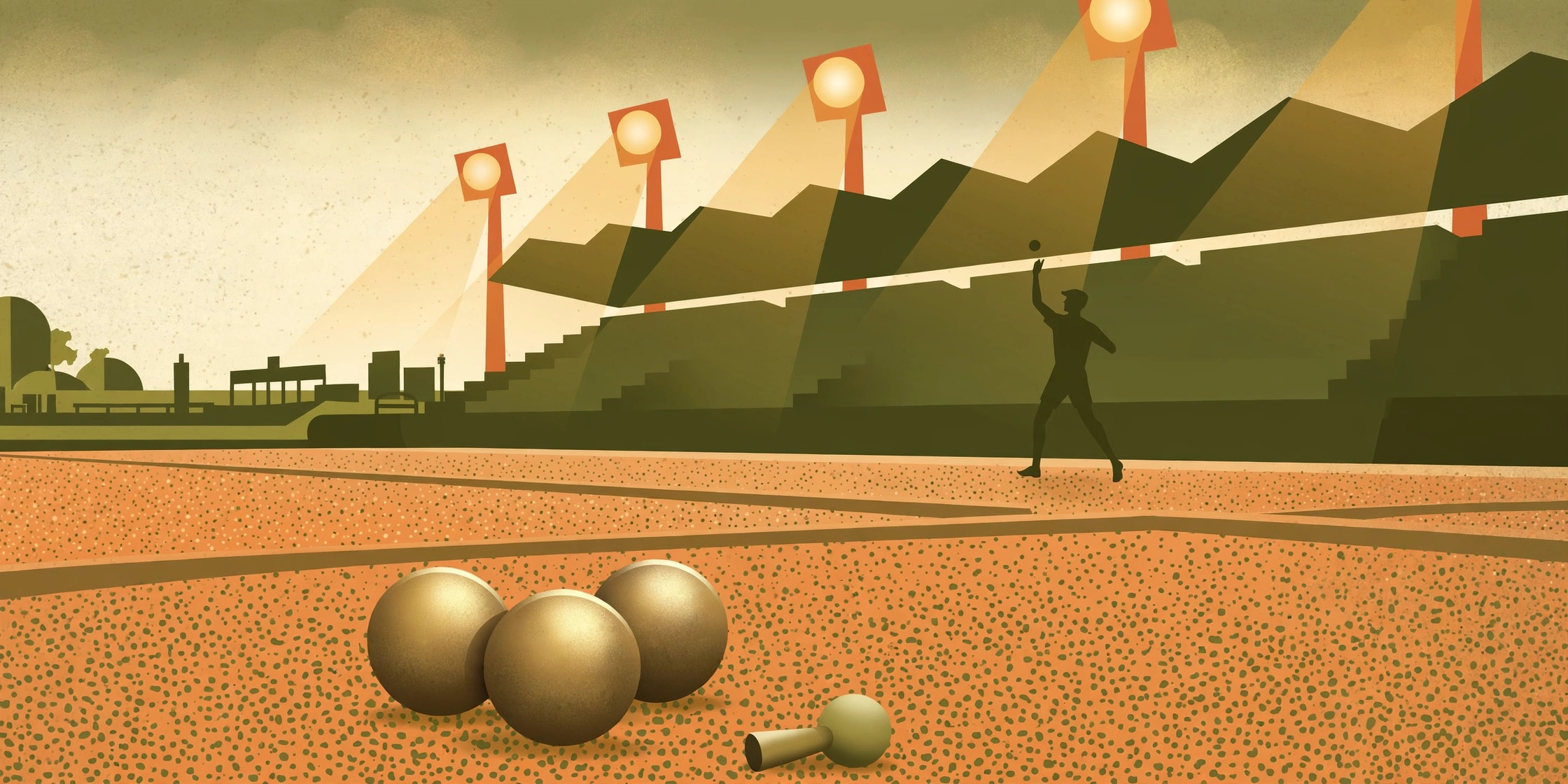
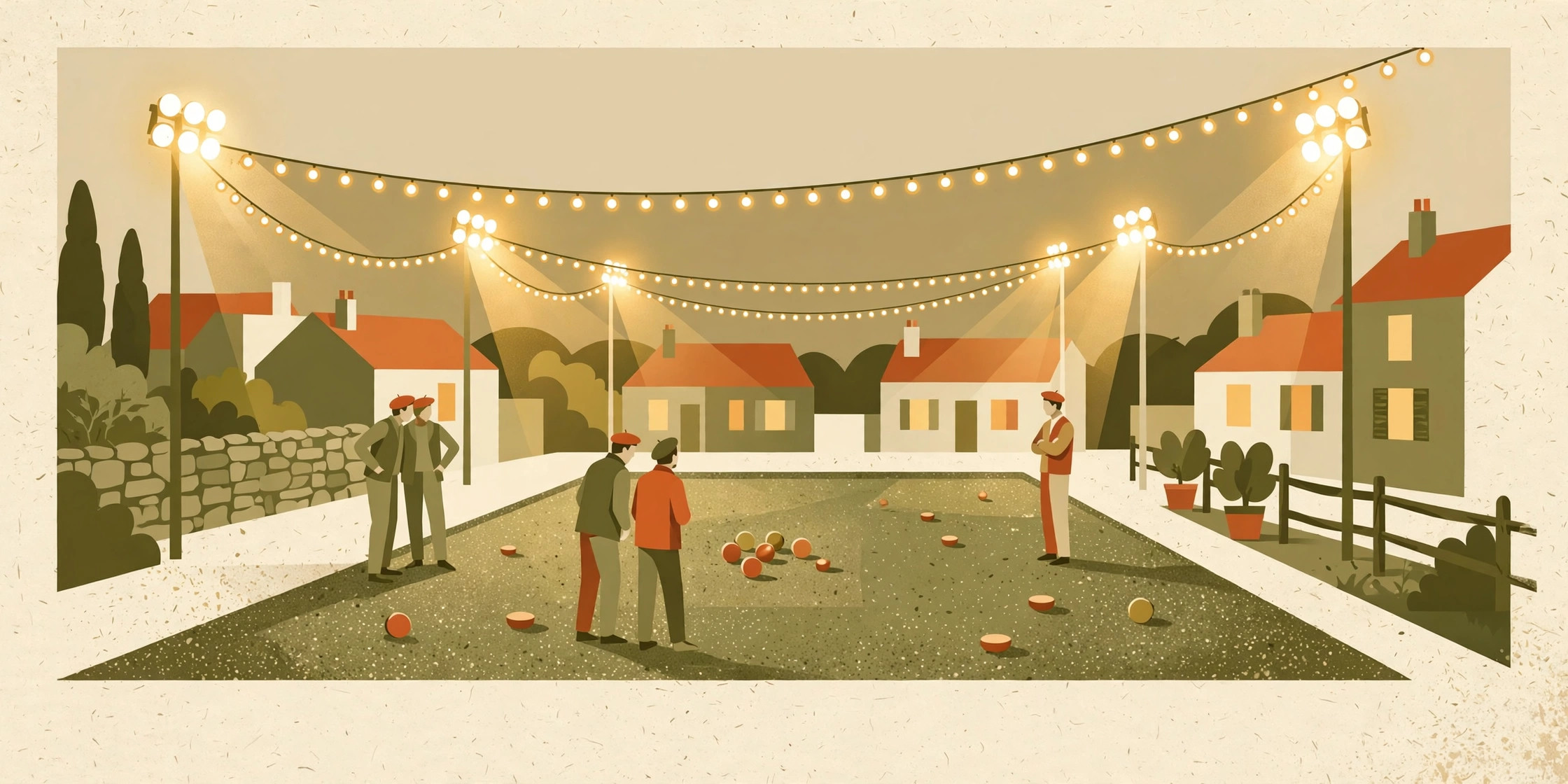
There is a moment, in both places, that I coach my players to notice. It comes late in the afternoon, when your legs are gone and the light is going and the match that matters is the one you are in. In France it happens on gravel, with the smell of the buvette drifting over. In America it happens under floodlights, with the pop of plastic balls all around. Different continents, same heartbeat. Somebody’s hands are shaking. Somebody’s are not. The shaking stops eventually — not because you conquered it, but because Saturday comes back, week after week, until the pressure feels like weather.
So here is the drill for this week, and it costs nothing. Find your Saturday. Sign up for whatever the local version is — the concours, the ladder, the open play with a draw sheet taped to a clipboard. Show up when you are tired. Play people you have never played. Lose loudly. Come back the next week. The game will teach you the rest.
Advertisement