Pétanque
The Last National of the Year
This weekend at Cagnes-sur-Mer, 512 teams play the Europétanque des Alpes-Maritimes — the final big National before the World Championships in Thailand.
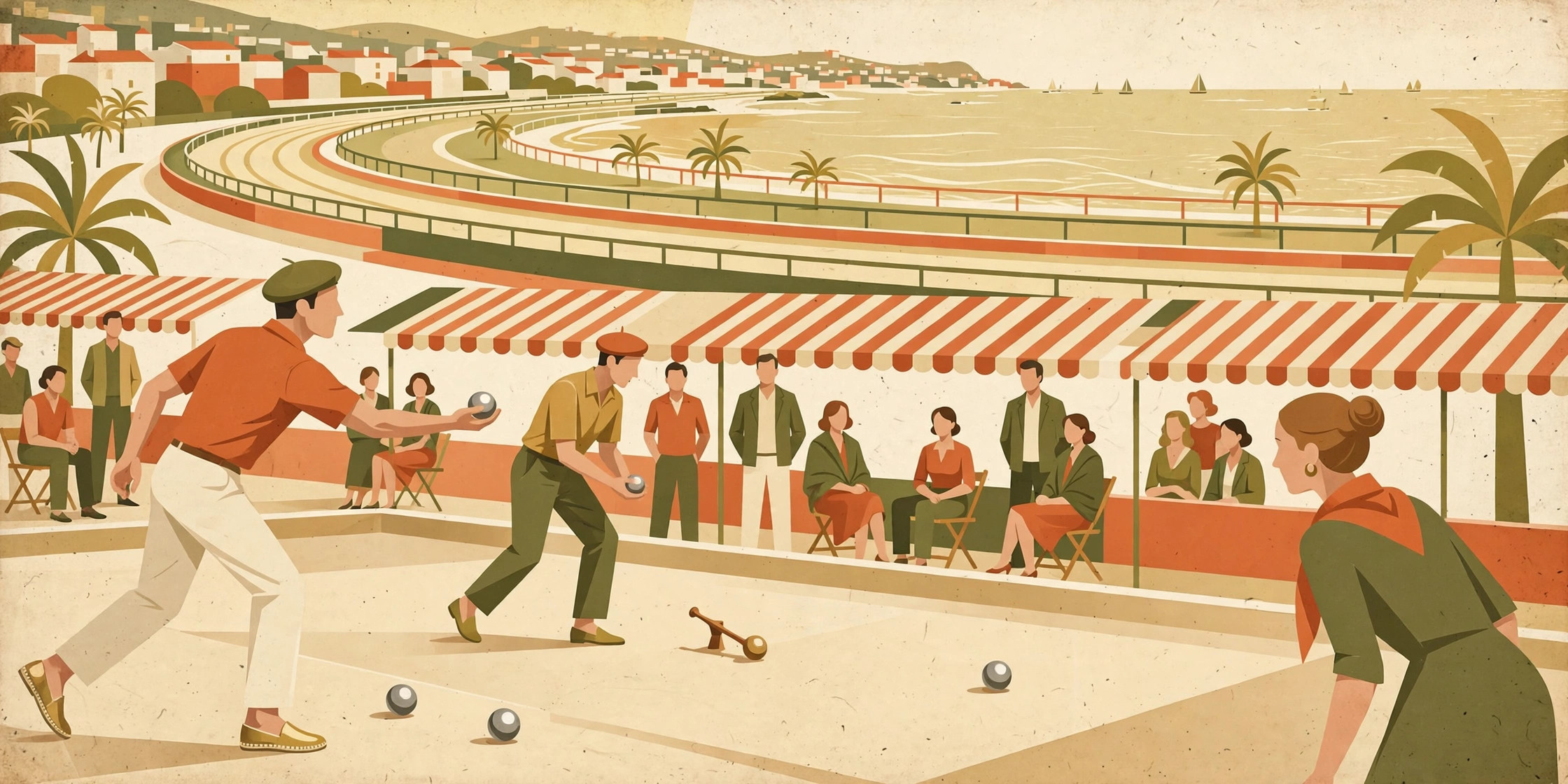
October 17 and 18, Cagnes-sur-Mer. The last big National of the year. 512 teams. After this, the winter.
The Europétanque des Alpes-Maritimes has become what the old-timers always wanted: a season closer with real stakes. The players who win here carry it all winter. The ones who lose spend all winter explaining it.
Advertisement
The favorite
Dylan Rocher. Fréjus. Winner of three of the last five editions of this tournament. That is the sentence that ends most discussions about who wins.
This year he comes with the winning team from last year — Stéphane Robineau and Maison Durk. They know these grounds. They know each other. Reformed teams sometimes creak at the hinges. This one does not seem to.
Rocher plays the way champions play when they are not worried: he takes the point when it is there, he shoots when it must be shot, and he leaves the explaining to the others. In Cagnes, on grounds he has already mastered, he starts as the man to beat.
The challengers
Henri Lacroix does not lose here quietly. Six times he has won this event — six — and this summer he added a double French championship title. He returns with Ligan Doerr and Patrice Nièvre. No Laurent Matraglia this time. That is a change, and changes in triplette chemistry show up fast on the Cagnes grounds, where the gravel is honest and the wind is not.
Lacroix is the other pole of this tournament. If Rocher is the present, Lacroix is the proof that the present was built on something older.
Also in the field: the Bonetto–Feltain–Helfrick triplette. They are not the favorites. They are the team the favorites do not want to meet in the round of 32.
You can watch it all on BoulistenauteTV. The streams are free, the commentary is partisan, and the crowd around the main terrains is exactly as loud as you would hope.
What decides Cagnes is rarely the shooting. It is the pointing on the last boule, when the terrain has been worn into ruts by a day of play and the head is full. Rocher’s team has the edge there because they have won it before on these exact grounds. Lacroix’s team has the edge in experience of everything else — six titles do not happen by accident. If the two triplettes meet, the winner is the one who accepts the terrain as it is, not as the handbook says it should be.
Advertisement
One month to Thailand
Here is what gives this weekend its weight. In one month, the World Championships open in Thailand, November 20 to 25. The Europétanque is the last time the contenders can be seen in full before the long flight.
Two national selections made news this week, and both are worth noting.
Madagascar has announced a bold all-new selection. None of the chosen players has prior World Championship triplette experience. It is a gamble — or a statement. Among them is Liva, the African Zone 4 champion. Youth, hunger, no scars. Sometimes that is exactly what wins.
Senegal has announced its squad, led by Fara N’Diaye, and the word around the grounds is that this team is a serious outsider. The Senegambia corridor keeps producing players with iron wrists and calm heads. N’Diaye is that kind of player.
The French selection, of course, is the one everyone at Cagnes will be measuring themselves against. A strong weekend here is a résumé line before Thailand.
The clubs play too
While the stars gather on the coast, the club championship grinds on. CNC1 qualifying continues this weekend.
Domérat, from the Allier, leads Group B and travels to Bassens in the Gironde. The long road trips are the soul of the club championship: a minibus, a Sunday morning, terrains you have never seen.
Ronchin heads to Le Relecq-Kerhuon in Brittany for a double weekend — Appoigny on Saturday, CSM Sully on Sunday. Two matches, one trip. That is the arithmetic of the CNC.
The rule of the last National
The last National has its own logic. Some players are already thinking about Thailand and play loose. Some are playing for their winter and play tight. The ones who win are usually the ones who play neither — the ones who play the next boule.
Cagnes-sur-Mer, October 17 and 18. 512 teams. One winner. The gravel will decide.