Pétanque
Eleven-Thirteen: The Final France Could Not Close
In Loutraki, the French women reached the European triplette final, led a comeback for the ages, and lost 11-13 to Belgium. Henri Roche on a week that started with Fannys and ended two points short — and on the young team that saved the trip with gold.
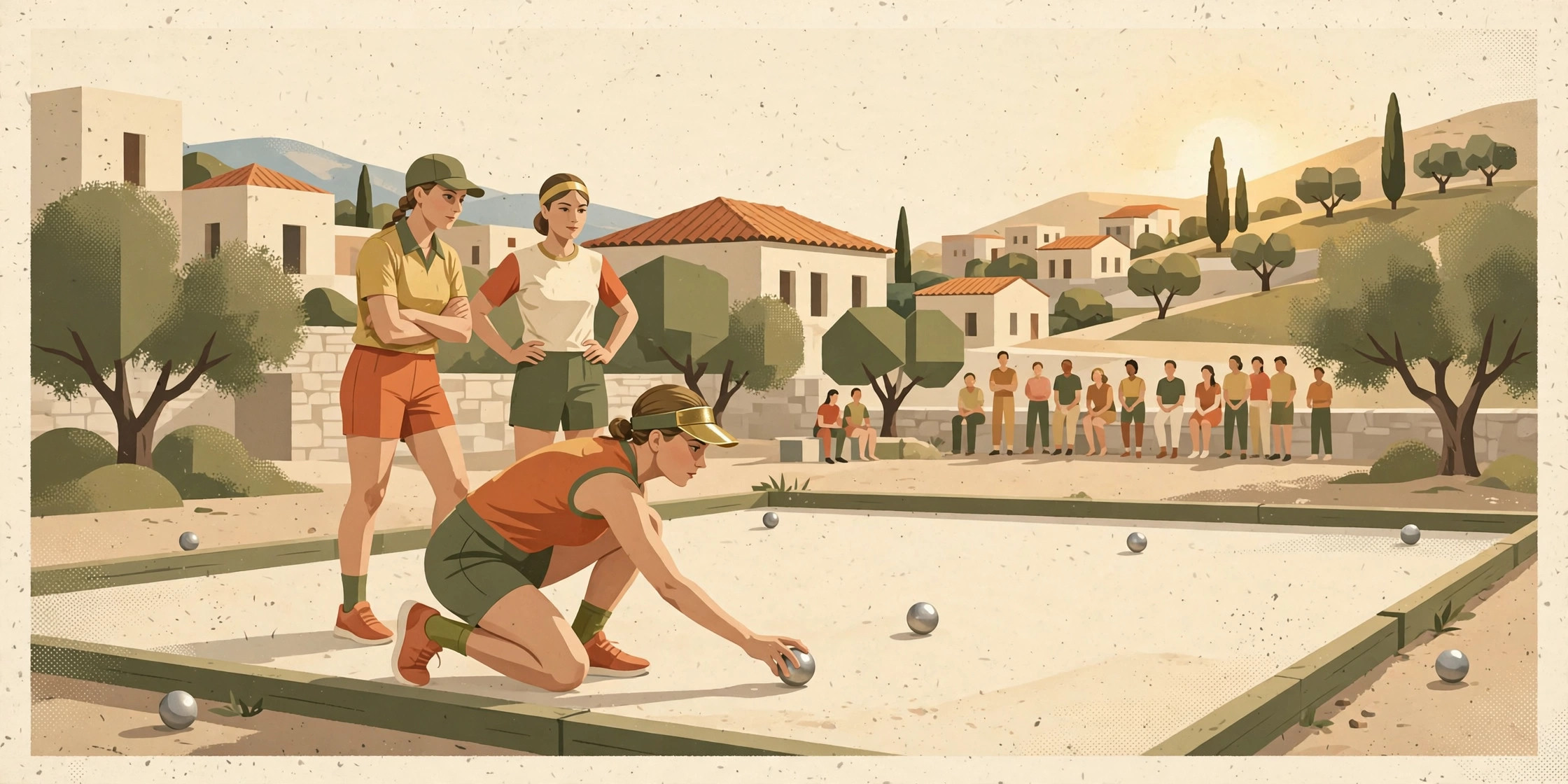
Eleven-thirteen. That is the score you remember.
Not the Fannys. Not the comebacks. The final score. France 11, Belgium 13. Two points. One mène. A whole week, decided by one mène.
Advertisement
Let me start at the start. Friday, Loutraki, Greece. The French women open the European triplette championships the way you dream about opening them. Scotland, 13-0. Bulgaria, 13-0. Two Fannys in one day. Zero points conceded. We wrote about it here on Saturday, and we said: a start is not a title. We were right, and it still stings.
The pool rounds went on. Israel fell. Spain fell. Four wins in five games. The only loss came against Germany, 10-13, and Germany topped the pool. That is the Swiss system for you. It finds the strong teams fast. France was one of them. No doubt about that part.
Saturday brought the knockout rounds. Ukraine in the round of sixteen: 13-4. Controlled. England in the quarterfinal: 13-7, settled by a final mène worth six points. That is the shot of the week nobody talks about, because the final buried it. Six points in one mène, against England, to reach a semifinal. That is championship pétanque.
Sunday morning, the semifinal. Spain again. This time there was no contest: 13-1. The French triplette — Sandrine Poinsot, Toréa Tairio, Nelly Peyré, with Nadège Baussian-Protat rotating in — walked into the final looking like the team that had handed out Fannys on Friday. The machine was warm. The belief was real.
And then Belgium. The defending champions. The neighbours. The team that had already beaten France to the title before.
The final started the worst way possible. Two perfect pointing shots from Poinsot. Two carreaux from the young Belgian shooter Vleminckx. First mène: five points conceded. Then two more carreaux, and it was 0-6. Six points down before France had taken a breath. In a final. Against the champions. That is the kind of hole that ends tournaments.
But this French team did something I will remember longer than the score. They answered with a full mène of their own. Six points. Two clean hits from Tairio. Then Peyré: a carreau, then a palet. Then Poinsot, to finish the job: two carreaux. Six-six. Level. From 0-6 to 6-6 in two mènes. That is not luck. That is nerve.
I have played this game for forty years, and I will tell you what a comeback like that costs. It costs everything. You spend your calm. You spend your margin. You walk back to the circle knowing you have already played your best mène, and the other team knows it too.
Advertisement
Belgium did not fold. The two teams traded mènes — 6-8, 7-8 — and then Belgium struck again. Five points in the bag. Vleminckx at the carreau again, Meskens twice, and Camille Max nearly closing the whole thing out early, her last shot landing against a Belgian boule. Seven-twelve. The mountain was back.
France climbed it again. Twice. Nine-twelve. Eleven-twelve. The Belgians wobbled. The French missed a few extra-point boules they would normally make — that is what pressure does, even to good players. And then, in the last decisive mène, the French cracked first. Vleminckx kept her shooting rhythm. France was forced into a shot at the target that missed. Belgium kept the title. Eleven-thirteen.
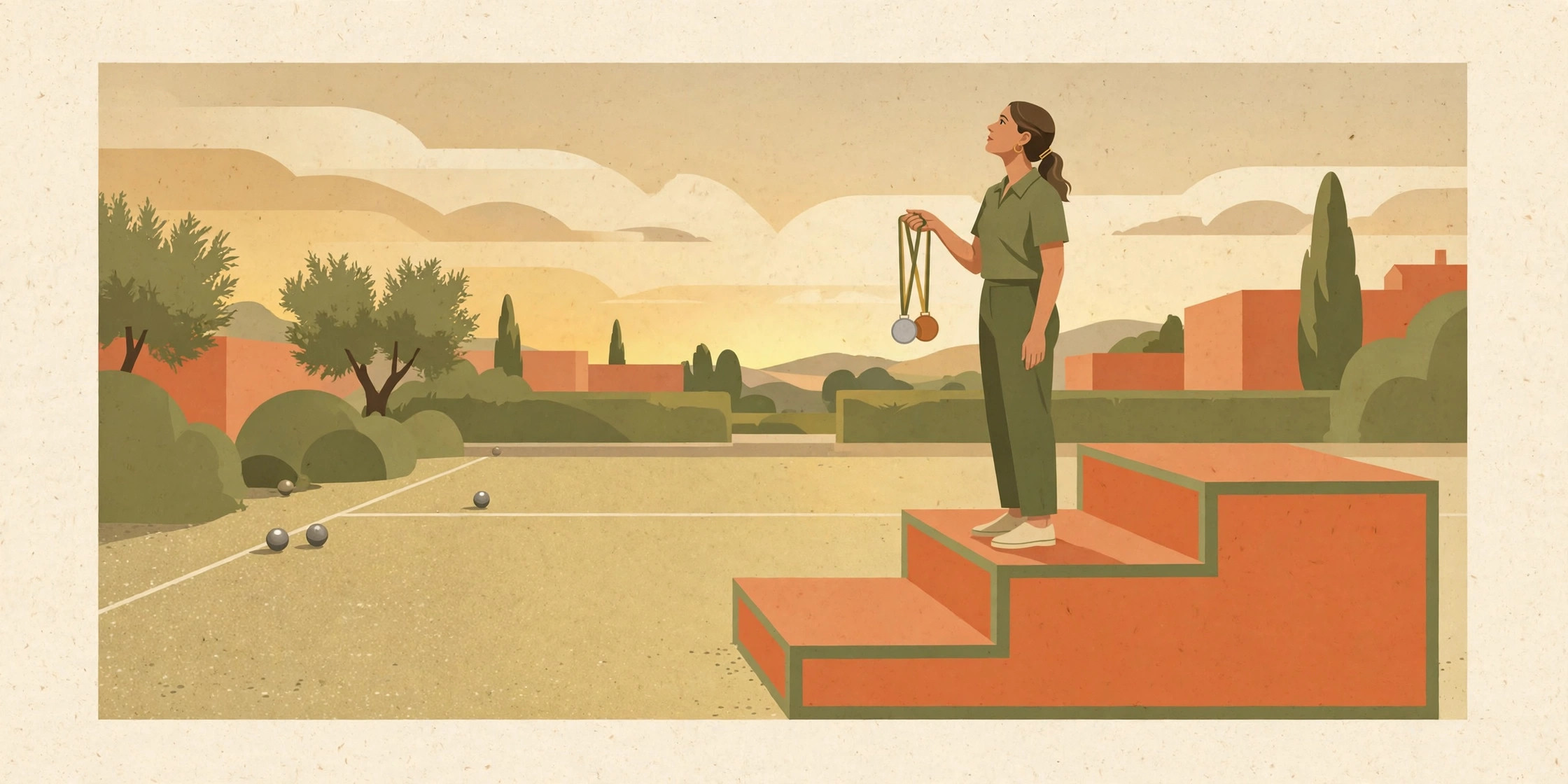
So. Silver in the triplette. Bronze for Nelly Peyré in precision shooting, after a semifinal defeat to Norway’s Ranu Homniam. A week on every podium and no gold for the senior team. That is the honest balance sheet.
It is also, in a way, the story of this French women’s team for a while now. Remember the backstory. The selection for these championships was turbulent — announced, then revised, with Philippe Quintais sidelined. France arrived in Loutraki holding no senior women’s European title. It leaves the same way. The gap between very good and champion is two points wide, and it is the hardest gap in sport.
Now the other half of the week. The part that should make you smile.
The Espoirs women — the under-23s — won gold. Kaylie Victoor-Demeter, Dorine Mesmin, Kimberley Miclo, Camille Picard. In their final against Sweden, they trailed 4-8. They were being outplayed. And then they did what the seniors did in their final, except they finished it: they worked their way back, turned the game around, and won 13-9.
Sweden had earned their place in that final. The defending champions, Germany, lost their semifinal 9-13 to the Swedes — but that semifinal was still Germany’s fifth European medal in a row at this level. The depth of this competition is real. Nobody stumbles into a European final anymore.
The Espoirs gold matters for a reason beyond the medal itself. These are the players who will wear the senior shirt next. They have now felt what it is to be down 4-8 in a European final and win. That is a memory you carry into every circle for the rest of your career. The seniors’ lesson is the reverse, and just as valuable: you can come back from 0-6 and still lose, because the other team gets to play too.
So what do we keep from Loutraki? Two things. First, the French women’s game is healthy at every level — finalists, medallists, champions, all in the same week. Second, the last step is the hardest one. The Fannys were fun. The comebacks were brave. But titles are decided in the last mène, and Belgium played the last mène better.
Eleven-thirteen. Remember the score. Then remember the two comebacks. Then get back in the circle. That is the game.