Pétanque
Pétanque's Olympic Dream: The Long Road to Recognition
For forty years, the boules federations have knocked on the IOC's door — and watched breakdancing walk in instead. What the quest says about sport, legitimacy, and the French and American ways of wanting something.
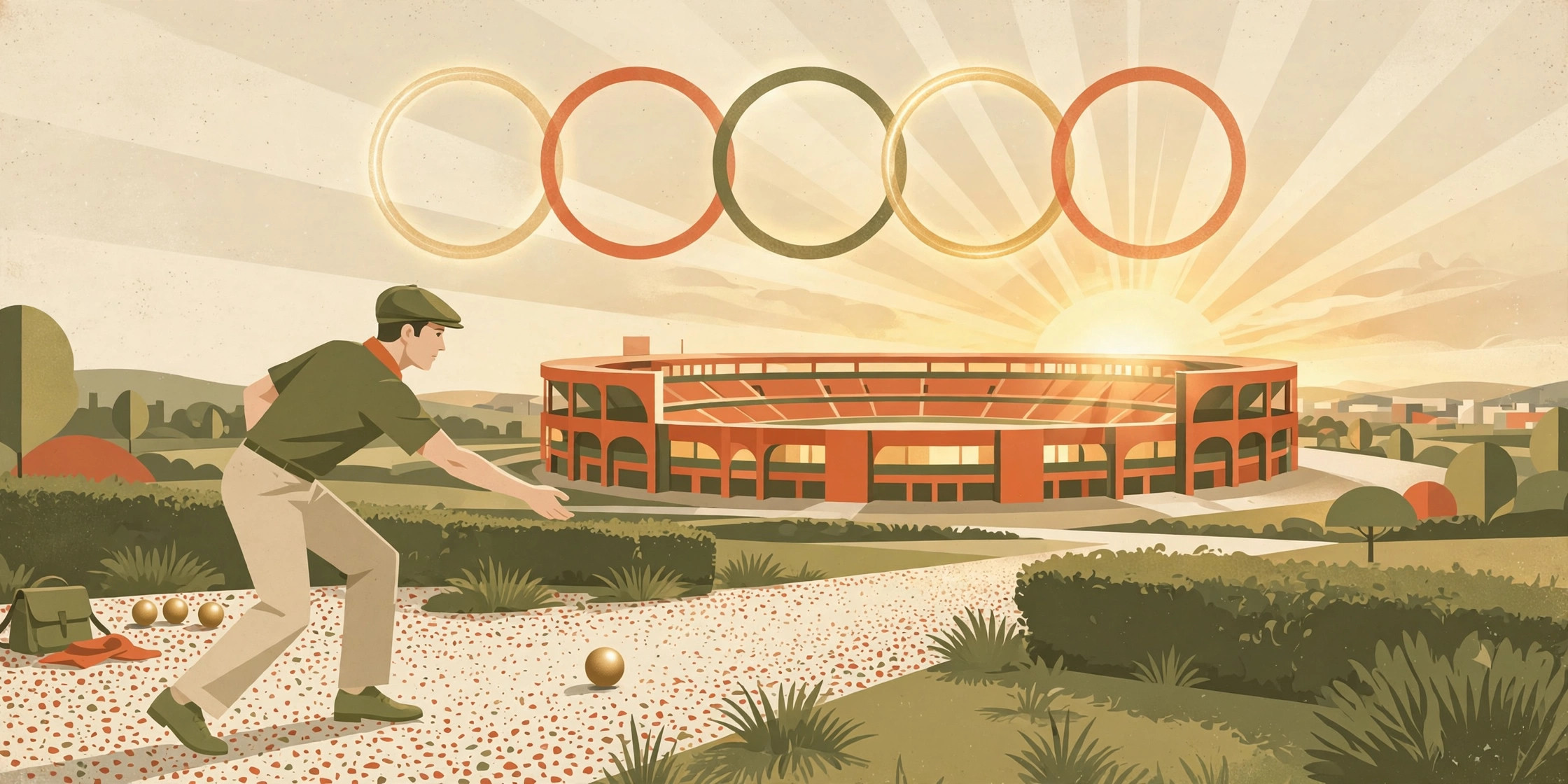
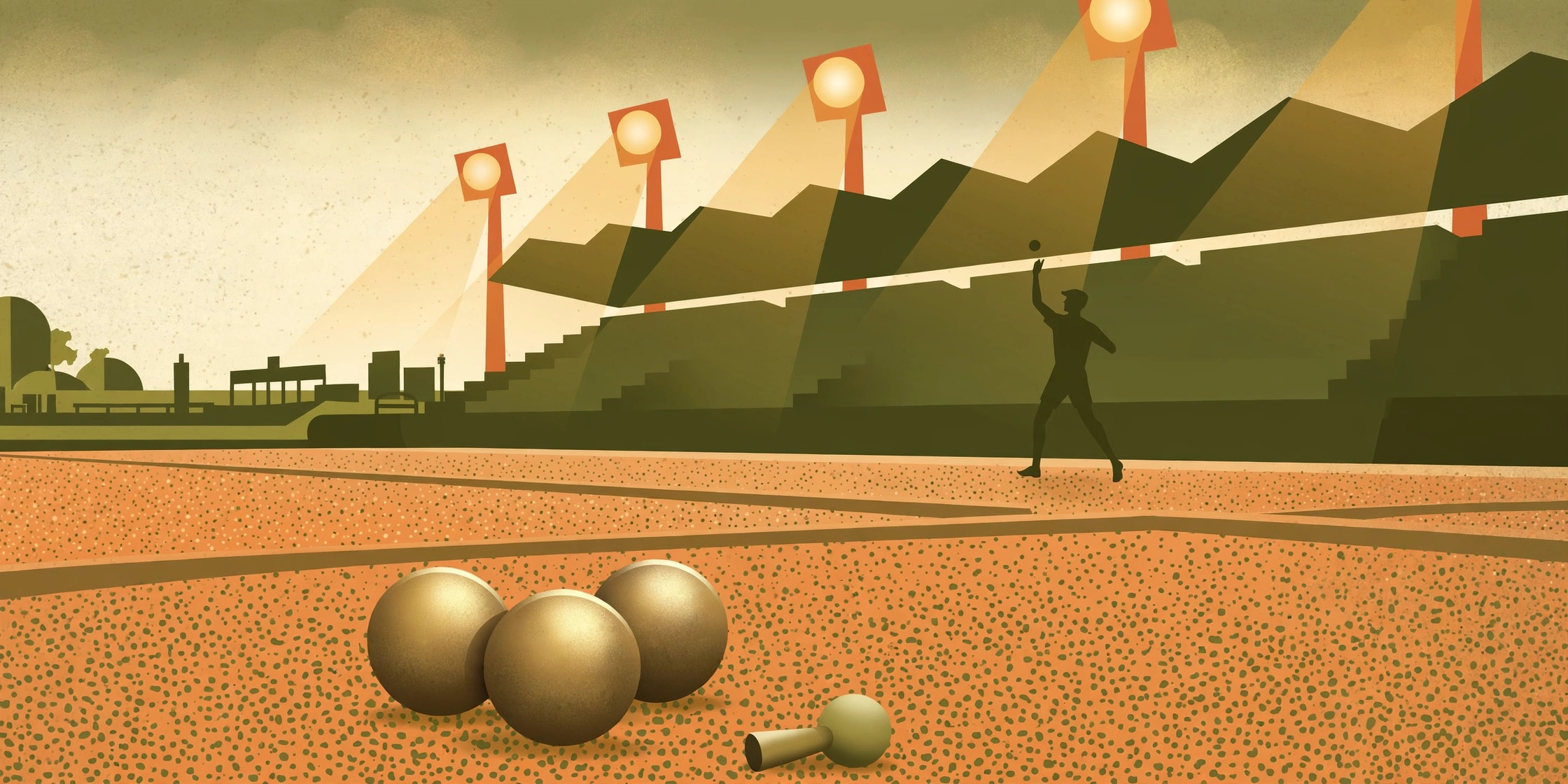
Picture it: a packed stadium, floodlights, a hush — and then the soft clack of steel on steel as a French tireur lofts a boule six meters into the air to knock an opponent’s clean out of the circle. The crowd gasps. Somewhere, a commentator whispers “carreau.” This is the dream the boules federations have been dreaming, on paper, since 1985. Forty years of applications, delegations, and dossiers — and the Olympic rings remain just out of reach.
The most recent serious attempt came on 12 October 2015, when the world’s boules federations filed a joint candidacy for the Paris 2024 Games under the banner “Boules Sport 2024.” Three disciplines marched together: pétanque, boule lyonnaise, and raffa — the Italian cousin. They had a royal patron in Prince Albert of Monaco, honorary president of the Confédération Mondiale des Sports de Boules, and they had numbers: some 200 million regular players worldwide, they claimed, across 165 countries and 262 federations — twice as many as golf, which was waltzing back into the Olympics at Rio 2016.
Advertisement
Paris said no. When the 2024 program was finalized, the new sports were skateboarding, surfing, sport climbing — and breaking, competitive breakdancing. Let that sink in: the IOC looked at a century-old global game played by 200 million people and chose teenagers spinning on their heads instead. In the boulodromes of France, the news landed like a badly thrown boule: with a dull thud and a long silence.
To understand the stubbornness of this dream, go back to Monte Carlo, 21 December 1985. Three international federations — the Italians’ bocce confederation, the French boules federation, and the FIPJP, the international pétanque federation — sat down and invented a brand-new umbrella body, the Confédération Mondiale des Sports de Boules. Its stated purpose was undisguised: to lobby the International Olympic Committee. This was not a confederation born of love for the game. It was born of ambition — a legal vehicle built for a single destination.
And at first, the vehicle moved. On 15 October 1986, in Lausanne, the IOC granted the CMSB official recognition. In the alphabet soup of international sport, this matters: recognition means the IOC acknowledges you as a legitimate international federation. It is the difference between being a hobby and being a sport, at least on letterhead. But recognition is not inclusion. It is an invitation to keep knocking, not an opened door. The boules world has been knocking ever since.
The first great disappointment came quickly. The CMSB applied to appear as a demonstration sport at the Barcelona Games in 1992 — the traditional antechamber for aspiring Olympic disciplines — and was turned down. Then came the long corridor of polite refusals: Atlanta, Sydney, Athens, Beijing, London. Each cycle, the dossier was updated, enriched, re-presented; each cycle, the answer was some variant of not yet. The federations learned the IOC’s vocabulary of delay the way pétanque players learn the terrain: by feel, over decades.
There was a consolation stage: the World Games, the Olympics’ officially sanctioned waiting room for sports the IOC recognizes but doesn’t invite. Boules appeared at London in 1985, The Hague in 1989, Karlsruhe in 1993, and several editions after. For the players, these were real medals and real anthems. For the cause, they were evidence — exhibits in the endlessly resubmitted file, proving the sport could behave on a podium.
But the rules of the game changed. Under the IOC’s Agenda 2020 reforms, host cities won the right to propose new sports for their own Games — and the hosts started choosing like television executives. Paris 2024 wanted youth, urban energy, and screen-friendly spectacle. Skateboarding, surfing, climbing, breaking: all photogenic, all young, all legible to someone who has never seen them before. Against that brief, pétanque had a problem that no dossier could fix. It is slow. It is old. Its athletes do not look like athletes.
Which is unfair, because the sporting case is genuinely strong. The numbers are real even when the 200-million figure is doing some marketing work: boules are played on every continent, and the competitive map has quietly globalized. France — the motherland — now routinely loses to Thailand, Laos, and Malaysia in women’s competition, a fact the CMSB’s president has cited with pride. The game is radically intergenerational, radically cheap, and tactically deep. A thirteen-year-old and a seventy-year-old can contest the same title, and sometimes the teenager wins.
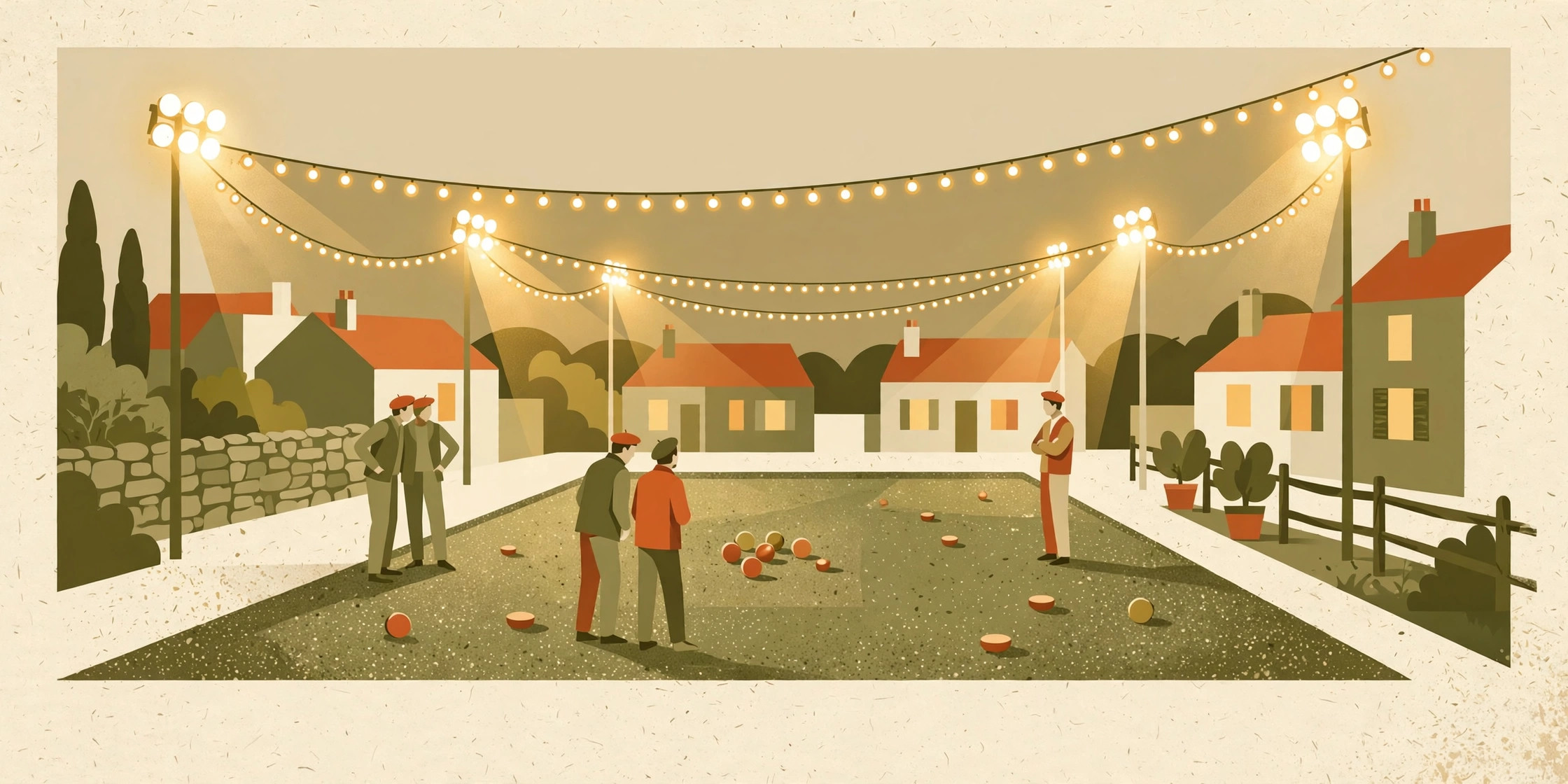
And yet the case against is written on every village square in July. Pétanque’s brand, in the global imagination, is a man in a flat cap holding a pastis — the joueur du dimanche, the Sunday player, boules in one hand and an apéritif in the other. The president of the French federation himself has conceded the awkward truth: it is not, by any honest measure, a particularly physical sport. France only officially recognized it as a sport at all in 1993. You cannot buy that kind of image problem; forty years of federation letterhead hasn’t dented it.
Advertisement
If boules ever do get in, the wedge will be the tir de précision — precision shooting, the discipline where a player must knock a target boule out of concentric circles at increasing distances. It is the most televisual thing pétanque owns: a single athlete, a single target, measurable in millimeters, genuinely gasp-inducing when it lands. Every Olympic bid quietly leads with it, the way a job application leads with the good degree. The mène — the slow, tactical, argumentative heart of the game — does not televise. The tir does.
Suppose the door opened tomorrow. What would change? Money, first: Olympic status unlocks state funding in dozens of countries, youth academies, professional coaching structures. Then the machinery: standardized anti-doping, athlete whereabouts, governance audits — the full bureaucratic apparatus of modern sport. For the federations, this is the promised land: budgets, staff, relevance. For the FIPJP, which has administered world championships since the last century, it would be the vindication of a forty-year strategy.
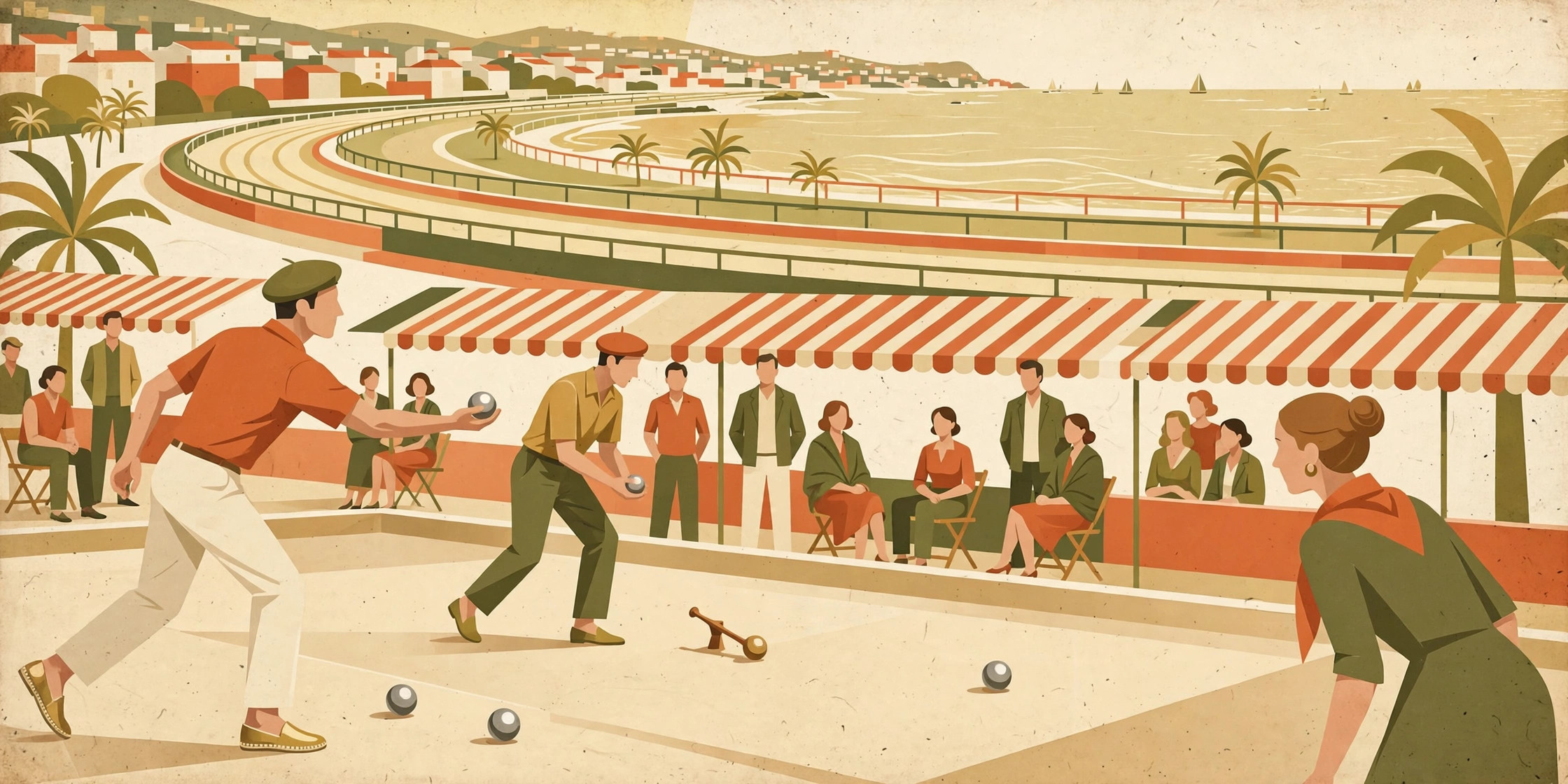
But everything has a price, and here the price is visible from any boulodrome in Provence. Olympic sport is, by definition, professionalized, sanitized, and scheduled. The village square at golden hour — the arguments, the pastis, the eighty-year-old who has played the same terrain since De Gaulle — does not survive contact with a high-performance program. Would the Fanny survive an IOC ethics commission? Would the post-game apéro survive a nutritionist? The game the federations are selling to Lausanne is not quite the game being played in La Ciotat. Everyone involved knows it; almost no one says it.
There is a deeper irony here, and it is very French. Pétanque pursued legitimacy the European way: federations, recognition, paperwork, patience. It built the cathedral — confederation in 1985, IOC recognition in 1986, dossiers ever since — and the cathedral is beautiful and empty. Forty years of doing everything right, by the book, through the proper channels. The door never opened. The system rewarded the application and withheld the prize.
Now look across the Atlantic. Pickleball wants the same rings and has taken the opposite road: it skipped the waiting room entirely. No forty-year dossier. Instead: professional tours, franchise leagues, television windows, and celebrity investors writing checks. The American theory of sporting legitimacy is not recognition but revenue — if enough people watch and enough money moves, the institutions will eventually come to you, hat in hand. It is the sporting equivalent of building the restaurant before applying for the license.
And the numbers are absurd. Some 13.6 million Americans now play pickleball, according to industry figures — up more than 200 percent since 2020 — making it the fastest-growing sport in the country three years running. Tennis clubs are being converted by the dozen; even Novak Djokovic has publicly fretted about it. By every metric of popularity, pickleball has lapped every sport that ever waited politely outside the IOC’s door. Popularity, it turns out, is not the currency the door accepts.
Because when Los Angeles — pickleball’s hometown Games — named its new sports for 2028, the list was baseball and softball, cricket, flag football, lacrosse, and squash. No pickleball. The reasons were bureaucratic and therefore fatal: the IOC requires a single recognized international federation, and pickleball has three rival bodies squabbling over the crown. As one of the sport’s own leaders admitted, the movement’s biggest challenge is the pickleball community itself. A consolidation body was finally launched in 2024, but the LA28 train had left the station. Earliest realistic stop: Brisbane 2032. Maybe 2036.
So here are the two models, side by side, both stalled at the same door. The French model: build the federation first, earn recognition, wait your turn — forty years and counting. The American model: build the market first, let the money talk, assume the institutions will follow — and discover that the IOC is the one institution money can’t rush. Pétanque has the paperwork and lacks the spectacle; pickleball has the spectacle and lacks the paperwork. It is almost too neat, the kind of symmetry this site was invented to notice.
Which raises the question nobody in a federation office likes to ask: does pétanque actually want this? Ask around a boulodrome — not the officials, the players — and the dream looks different. The game was perfect before 1985 and will be perfect after. The Olympic quest belongs to the institutions: the budgets, the staff positions, the plaques. The players already have what the Olympics promises — a game worth caring about, opponents worth beating, and somewhere to argue about it afterward. The rings would be nice. The square is enough.
The dossiers will keep coming; the CMSB files every year, as is its tradition. Perhaps Brisbane, perhaps later, perhaps never — committees are patient and pétanque is more patient. But consider the possibility that the IOC needs boules more than boules need the IOC: a Games increasingly staged for screens could use a sport that cannot be rushed, that belongs to grandparents and teenagers equally, that has been played since before the rings existed. Until then, the cochonnet will keep landing in the dust of a thousand village squares, indifferent to Lausanne. Some dreams are worth having precisely because you don’t need them to come true.