Pétanque
Two Games, One Grammar
Pétanque and pickleball were born an ocean apart. Play both for a week and they start to rhyme.
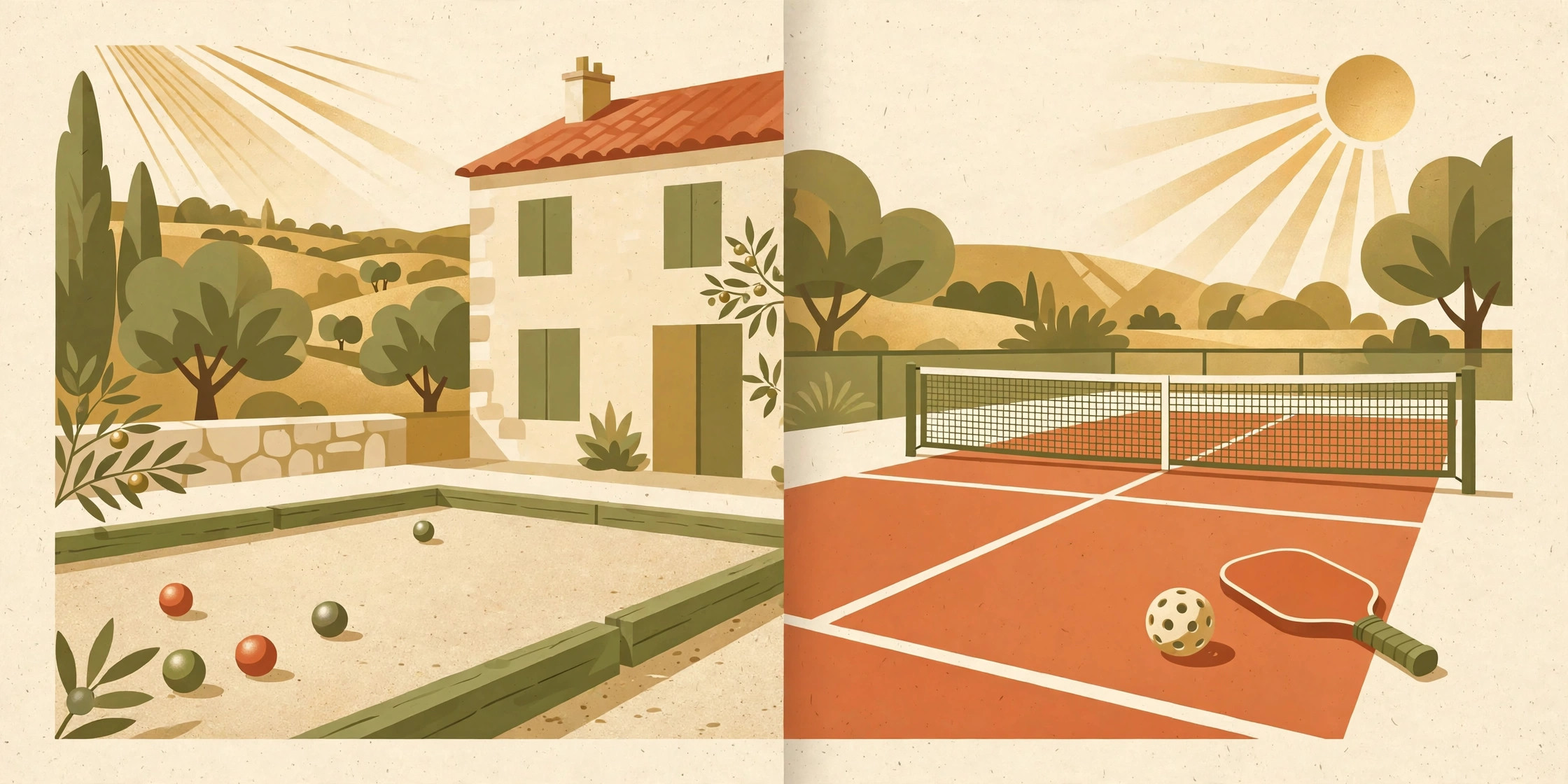
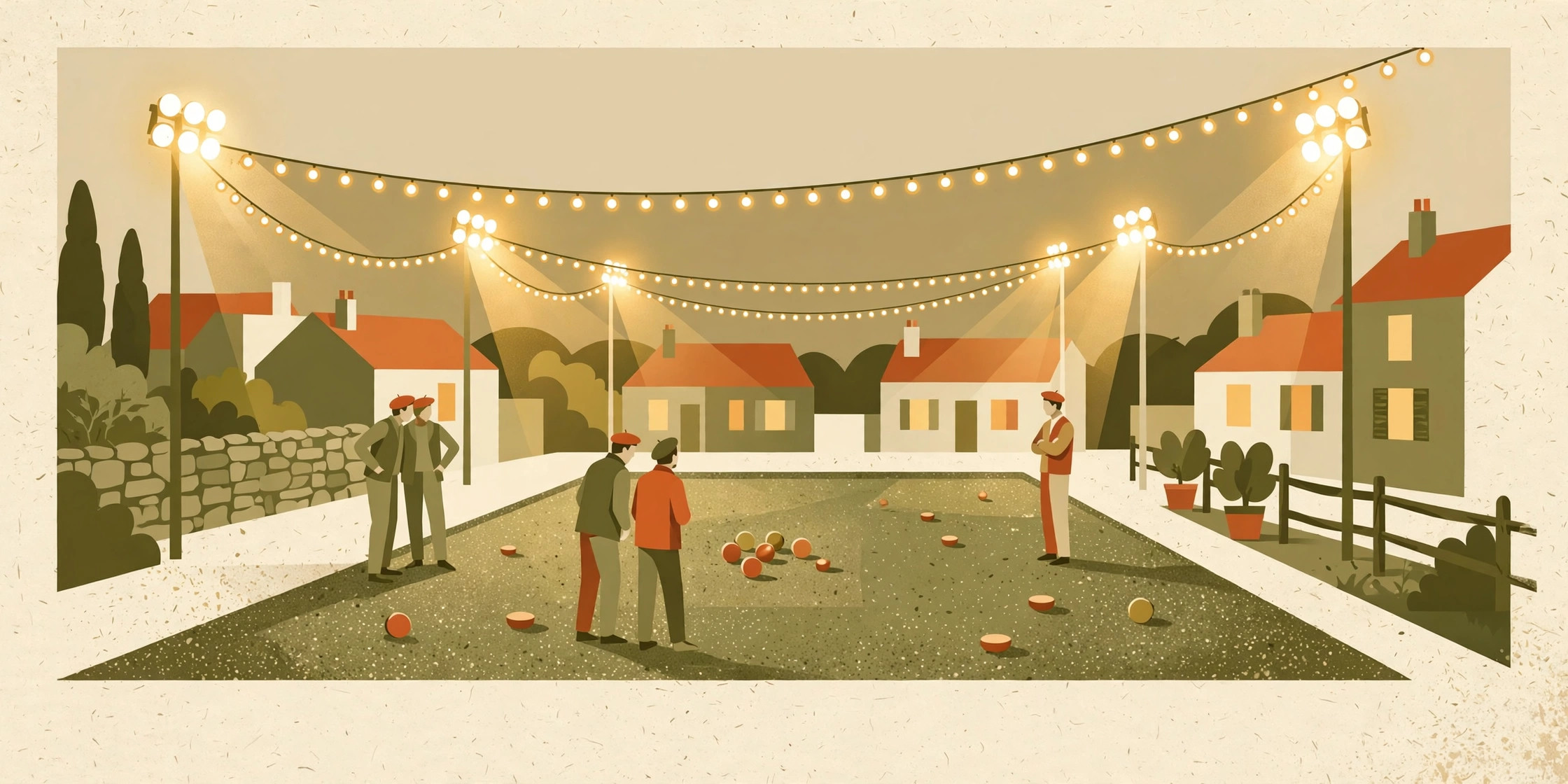
On paper they share nothing. Pétanque: steel boules, a dirt square, Provence, 1907. Pickleball: plastic ball, a painted court, Seattle, 1965. One smells of pastis, the other of sunscreen. And yet play both for a week and they begin to rhyme.
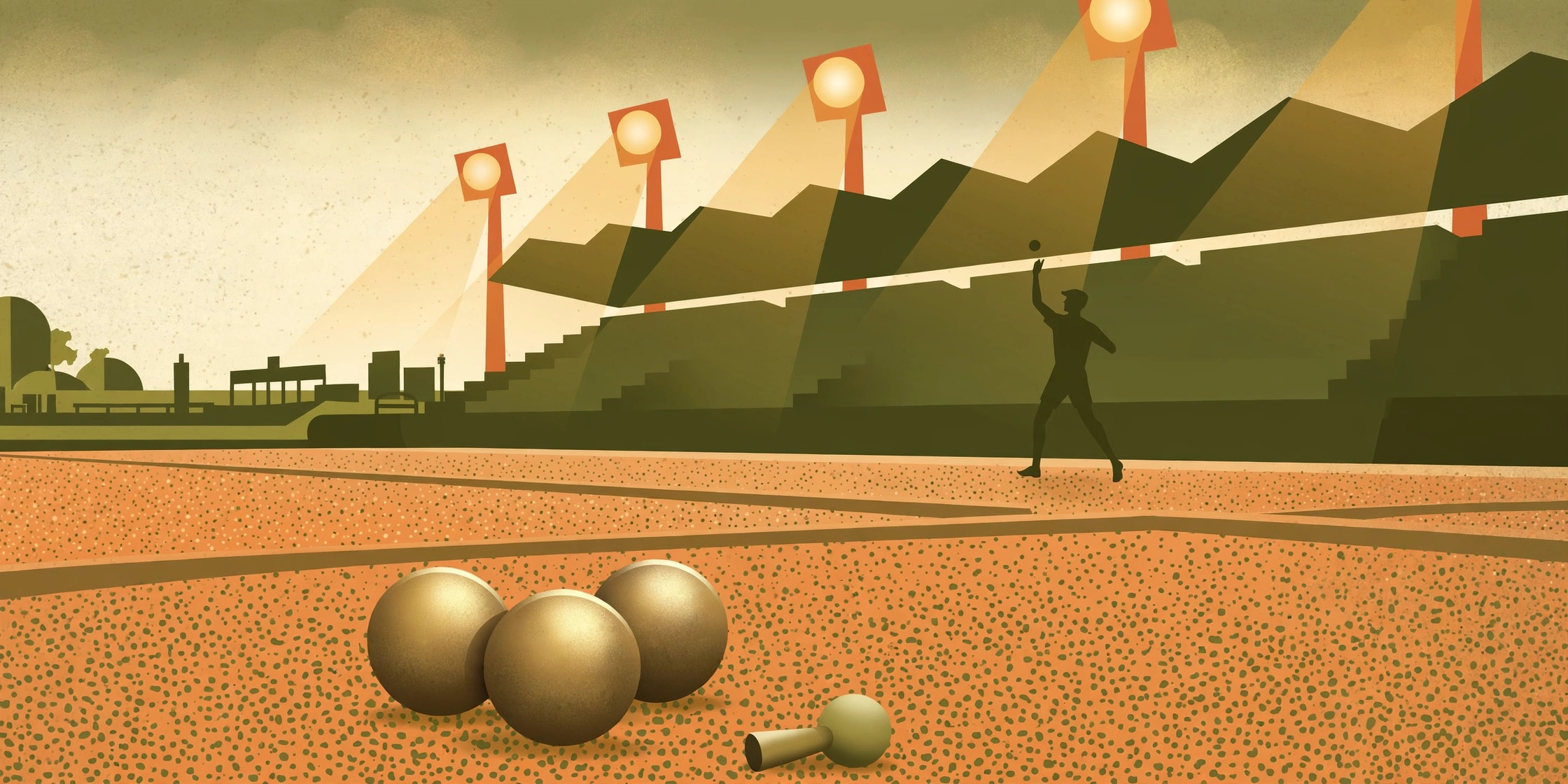
Both are sports of placement over power. Pétanque’s pointer and pickleball’s dink are the same idea in different weather: put the thing exactly where the opponent isn’t, gently, on purpose. Both have their violent counterpart — the tir and the drive — and both treat the perfect violent shot as a work of art. A carreau, where the boule takes the exact place of the one it displaced, gets the same gasp as a drive volleyed off the kitchen line.
Both are radically democratic. A seven-year-old plays pétanque alongside a seventy-year-old on equal terms; pickleball’s slower ball lets grandparents genuinely trouble grandchildren. No special terrain, no expensive kit, no athletic gatekeeping. The barrier to entry in both sports is roughly: show up.
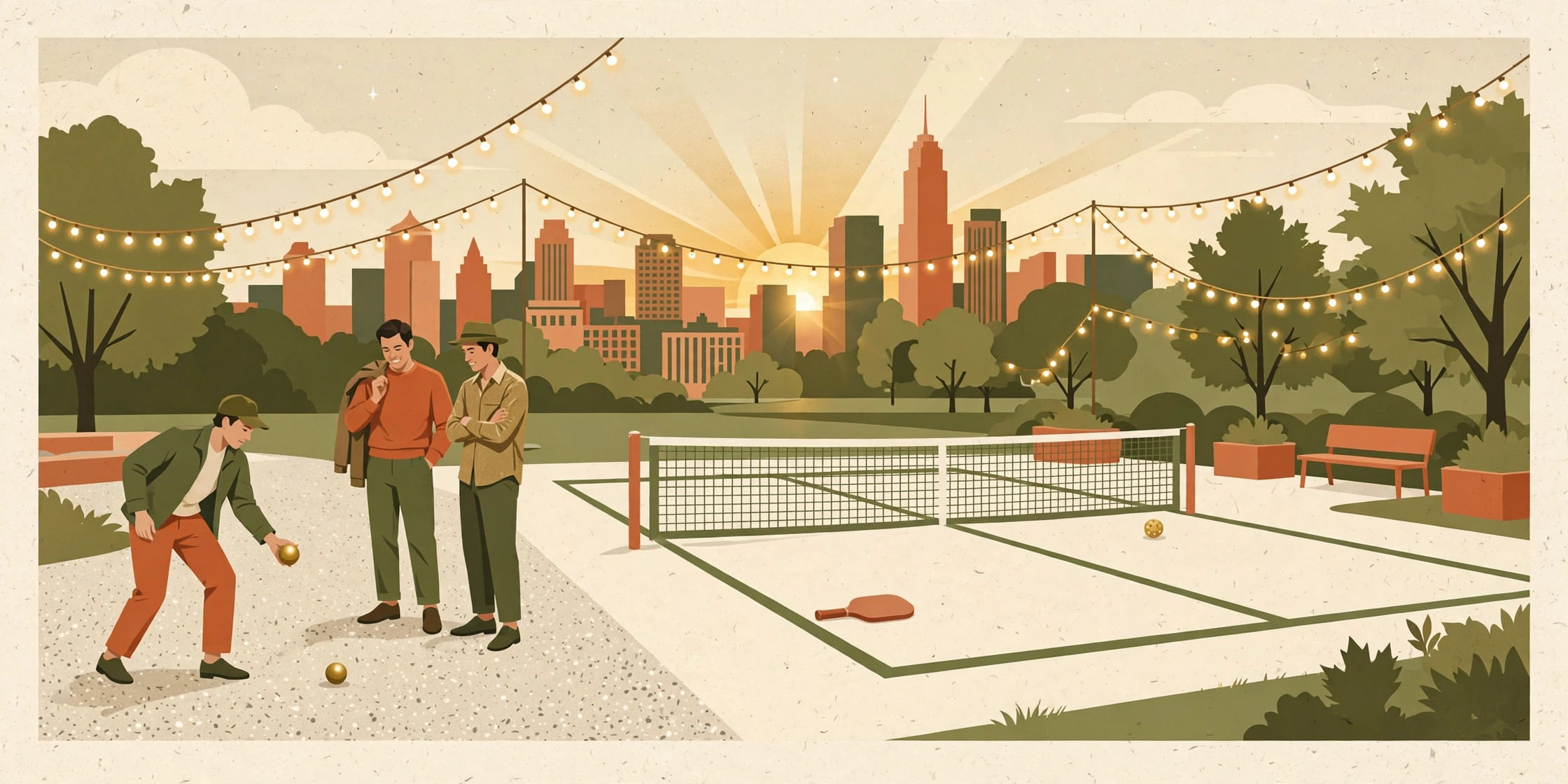
The differences are cultural, and they are delicious. Pétanque is played slowly, between sips, with arguing as a feature. Pickleball is played in rotation, four strangers deep, with small talk as a feature. One is a village square; the other is a networking event that accidentally became a sport.
Which is why they belong together on this site. France and America keep inventing the same game in different accents — and then arguing, beautifully, about which accent is correct.
Advertisement