Pétanque
The Road to Thailand
An American men's triples team just did what no American team had ever done — winning both the Panamerican World Qualifier and the Panamerican Open. In November, they carry the Stars and Stripes to the World Pétanque Championships in Thailand.
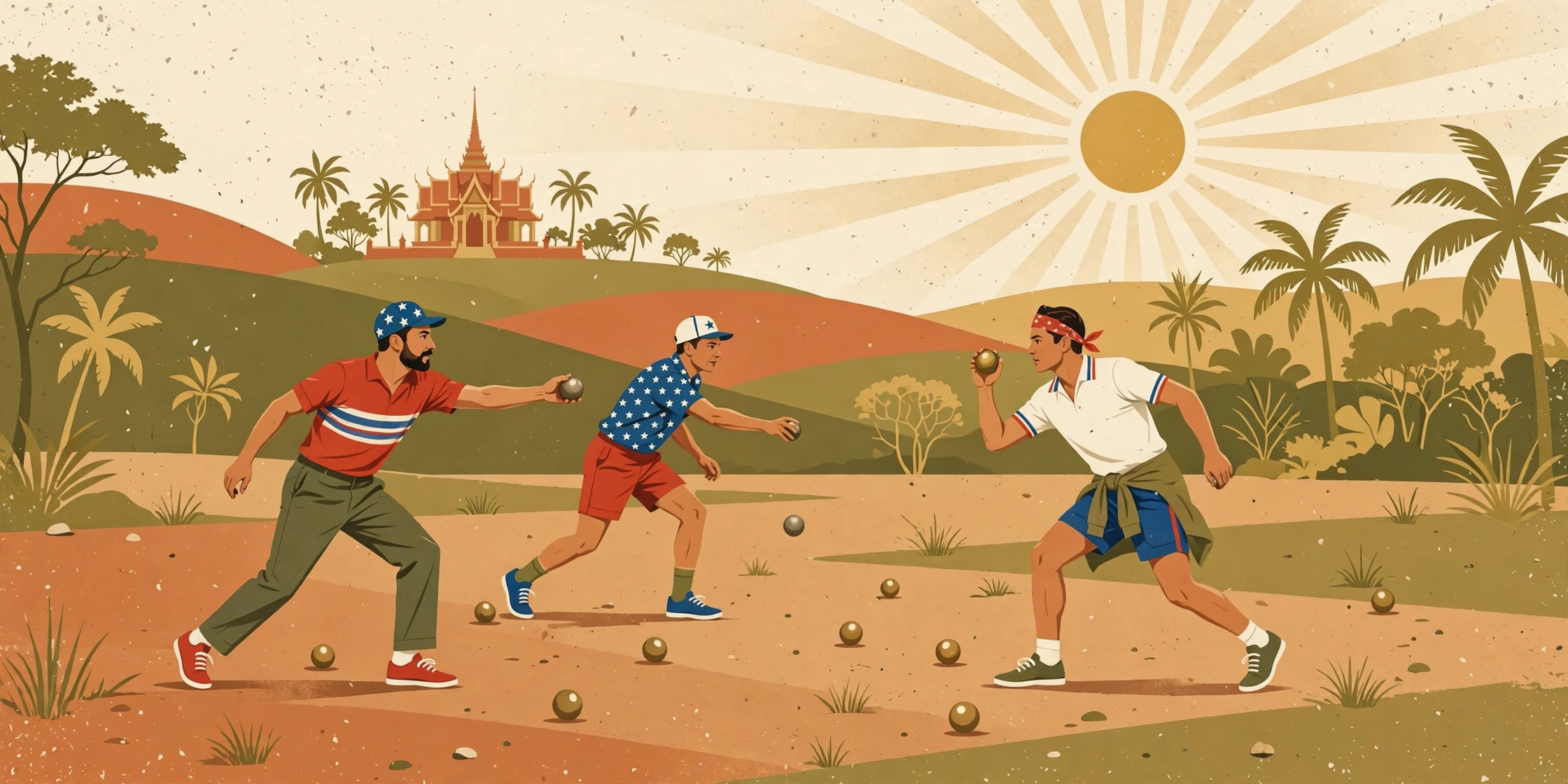
This November, on a terrain in Thailand, a circle will be drawn in the dust, a cochonnet will be thrown, and three men in American colors will step up to play the most French game on earth for the highest stakes it offers. Nobody in the boulodromes of Provence saw it coming. That is rather the point.
The squad earned its ticket the hard way. First came the US Qualifier — the domestic gauntlet where America’s best triples fight for the right to be called the national team. Then came the Panamerican championships, where the Americans did something no American team had ever done: they won the World Qualifier and the Panamerican Open back to back. The full double.
Advertisement
The first victory was the passport. The World Qualifier is the door — win it, and you represent your continent’s hopes at the World Championships. The second victory was the statement. The Open is the tournament everyone wants; winning both in the same week is the kind of thing that makes the rest of the continent remember your name. No American team had ever managed it. This one did.
The triples format deserves a word, because it is the hardest way to win anything in this sport. Three players, three temperaments, one circle: the pointer who must land soft as a whisper, the milieu who does a bit of everything, the tireur who is called upon to destroy. A triples team is less a roster than a small marriage — it works on trust, telepathy, and the shared memory of every mène ever argued over. To win twice in a week, a team must be all three players at their best and none of them in the way.
And so, this November, the United States will send a men’s triples team to the World Pétanque Championships in Thailand. Say it slowly, because the sentence is doing a lot of work: the United States. Pétanque. The World Championships.
A French game, an American dream
Pétanque belongs to France the way jazz belongs to America or tea belongs to England — which is to say, officially, emotionally, and in the opinion of everyone who plays it in the parking lot behind the village café. Born in Provence in 1907, it has crossed the century without aging a day: the same circle, the same cochonnet, the same endless arguments over a disputed point.
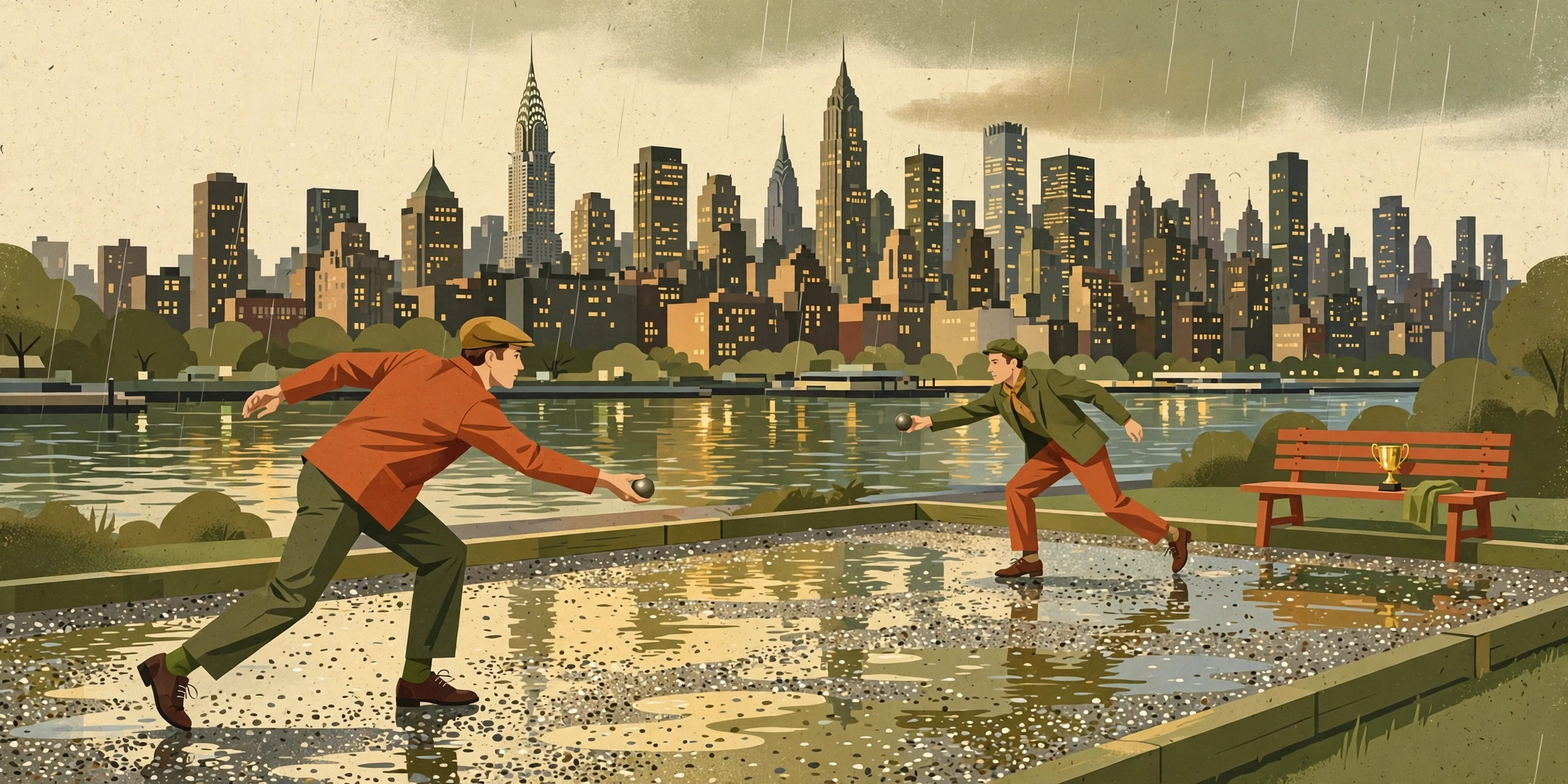
For an American to take up pétanque has always carried a gentle absurdity — like a Frenchman taking up NASCAR. A loving trespass across a cultural border. The game arrives in the United States without its scenery: no village square, no plane trees, no pastis at golden hour. What arrives is the pure mechanism — steel, dust, geometry — and Americans, being Americans, fell for the mechanism.
The long road of American pétanque has been exactly that: long. Scattered clubs, borrowed terrains, a small devoted congregation keeping the faith thousands of miles from the motherland, in the long shadow of the country that invented the thing. Every American player knows the feeling of explaining the sport at a barbecue while someone asks whether it’s “like bocce.” It is not like bocce. To the people involved, this matters enormously.
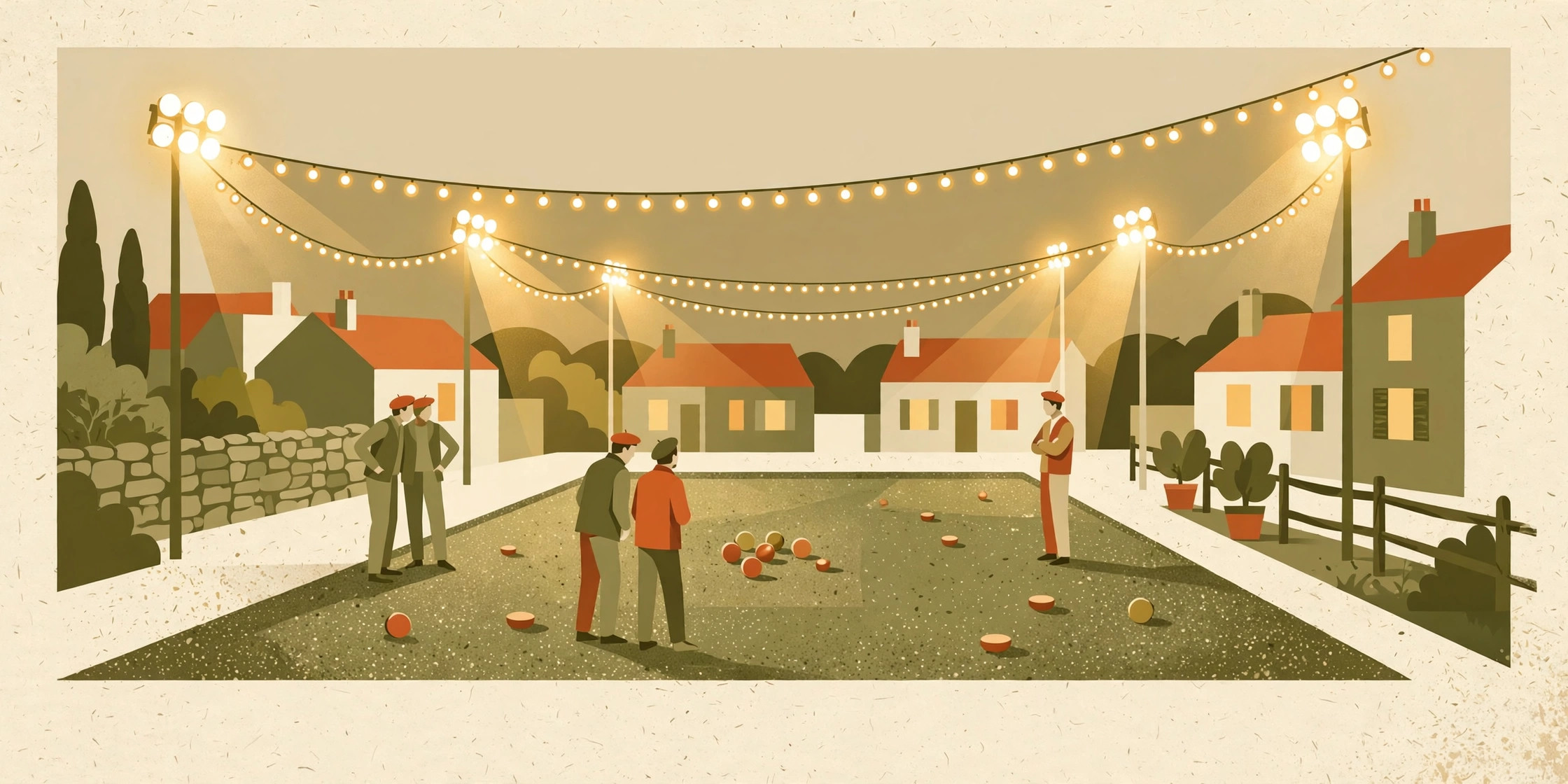
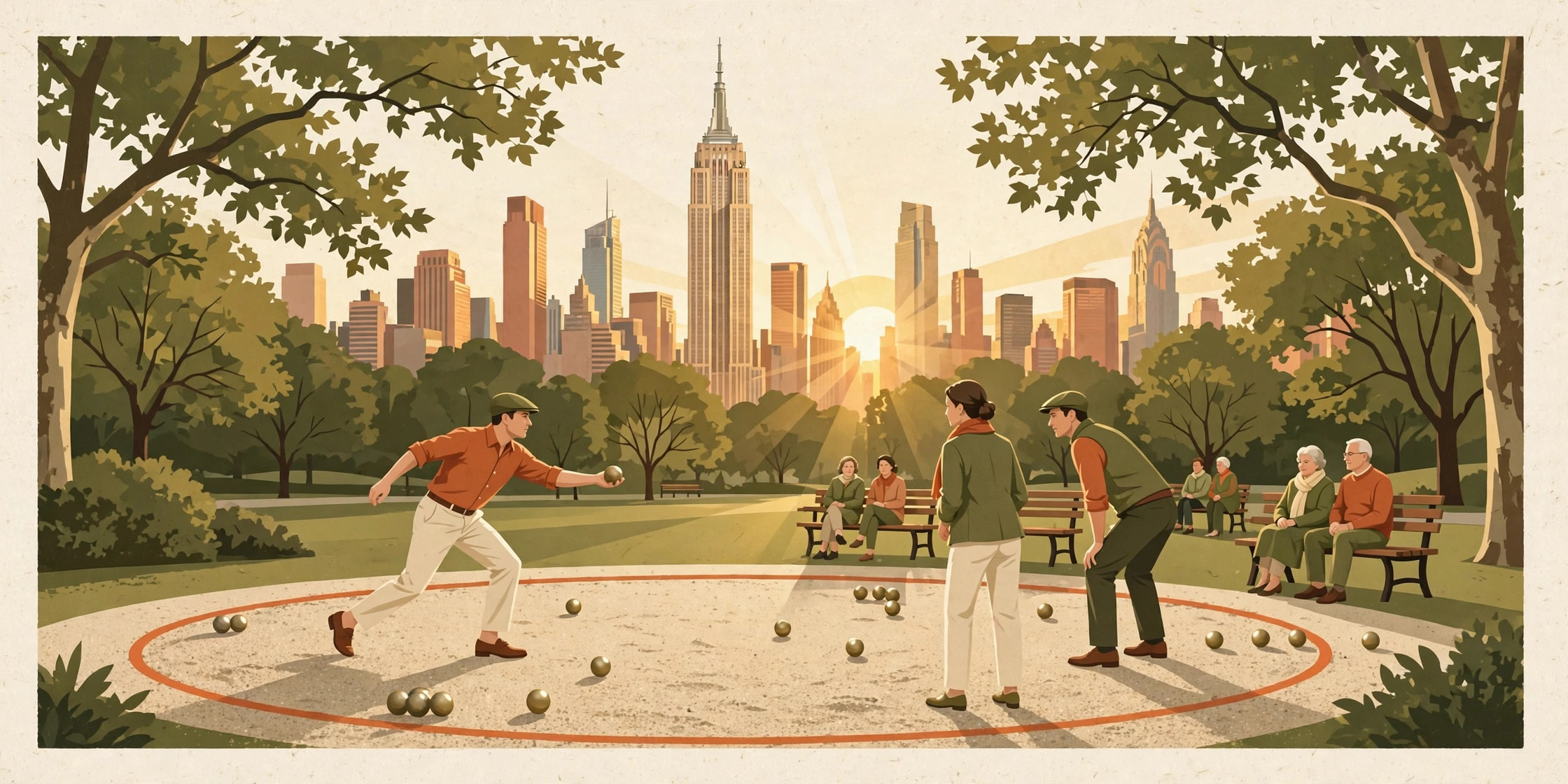
American pétanque lives in the interstices: clubs that borrow corners of parks, leagues that play under lights after work, French expatriates who arrived with boules in their luggage and found themselves, to their astonishment, evangelists. It is a volunteer civilization — no academies, no sponsors, just people who love the clack of steel and recruit the way the devout do, one curious neighbor at a time. Every national team the country has ever fielded was built from that soil.
The double
Which is why the Panamerican double lands the way it does. The World Qualifier is a pressure cooker by design: a handful of the continent’s best teams, a single ticket to the worlds, no margin for a bad afternoon. To win it is to survive. To then turn around and win the Open — the free-for-all where everyone, including the teams you just beat, gets another crack at you — is to dominate.
Consider what “first American team ever” actually means. It means that in all the years American triples have crossed borders to play this French game at the continental level, nobody had put these two trophies on the same shelf in the same week. Records like that don’t fall to luck. They fall to a squad that played its best pétanque when the light was brightest.
There is a particular cruelty — and a particular romance — to the qualifier format. Months of preparation collapse into a few days; a season’s worth of pointing and shooting gets decided by millimeters and nerve. The squad that survives that is never the most talented team in the building. It is the steadiest. Steel on steel, end over end, the cochonnet sitting exactly where you left it.
To win the qualifier is to earn the ticket. To win the Open too is to announce you plan to use it.
Advertisement
Thailand, the proving ground
And now Thailand — which is where the story gets its delicious twist. The World Championships are not being held in France. They are being held in one of the countries where pétanque is played with a seriousness that would make a Provençal grandfather nod in slow approval. The motherland, as the regulars know, no longer owns the podium the way it used to; the game’s center of gravity has been drifting east for years.
So picture the scene again: an American team, carrying the Stars and Stripes, walking into the spiritual home turf of a French game that is now contested most fiercely half a world from France. The French will be there, of course — the French are always there, the way the sea is always at Marseille. But the terrain in November belongs to everyone, which is another way of saying it belongs to no one.
The World Championships are a beautiful chaos: dozens of nations, a tower of Babel in team jackets, anthems you have never heard played for a sport you thought you knew. The terrains multiply, the days blur, and somewhere in the middle of it a cochonnet rolls that will decide a nation’s year. For a team arriving as an outsider, the scale is the shock — and then, quickly, the drug. You came to watch the world. The world, it turns out, is watching back.
This is the underdog romance in its purest form. Nobody expects the Americans to win the worlds. The odds, the history, the entire weight of the sport’s geography all say otherwise. But the squad did not come this far by reading the odds. They came by winning the only games that mattered, twice, in the same week, on foreign soil.
What it means back home
Back home, the victory is already doing its quiet work. Every American club player who has ever chalked a circle on an improvised terrain, who has ever recruited a curious neighbor with a spare set of boules, gets to point at something now. The argument for American pétanque used to be philosophical — the game’s beauty, its democracy, its cheapness. Now the argument has a trophy cabinet.
There is also the matter of the story, and America runs on stories. An underdog in an unfamiliar arena, a first-ever double, a flag planted where no flag of its kind has flown — the sports pages understand this grammar instinctively. Pétanque will never be prime time in the United States, and it doesn’t need to be. It needs one good story a year, told well, landing in front of the right curious kid. This is that story, gift-wrapped.
That matters more than it sounds. Sports grow the way stories grow: someone has to do the thing first, so that everyone after can imagine doing it. A kid picking up boules in a park this fall — and there will be such a kid, there is always such a kid — now has a sentence to carry: the Americans went to the Panamericans and won everything. Try stopping a kid who believes that.
The French, for their part, will watch with the particular affection they reserve for foreigners who love their game properly. France has strong opinions about many things, but it has never begrudged anyone the love of pétanque — only the casualness of it. Play it seriously, play it well, and the boulodrome doors swing open. The squad has played it seriously. The doors are open.
Carry it well
What should they aim for in Thailand? The honest answer is the one every underdog learns: you cannot control the podium, but you can control the circle. Win your mènes. Point with courage. Shoot when the moment asks for shooting. Make the teams that expected a formality work for every point. There is no shame in losing to the world’s best; there is glory in making them remember you.
And there is the flag itself — the strange, moving sight of the Stars and Stripes over a pétanque terrain. Flags at sporting events are usually about dominance: we are here, we win, you know the rest. This one will mean something rarer. It will mean: we crossed an ocean and a cultural border to be here, for a game your grandfather taught you, and we intend to honor it by competing.
The boule, in the end, does not care about your passport. The circle is the same diameter in Ohio as in Orange; the cochonnet lands where physics puts it; steel is steel in every language. That is the quiet democracy of the game, and it is why an American team can dream at all. The terrain does not ask where you learned. It asks what you brought.
That is the athlete’s bargain, and it is a good one. Whatever the scoreboard says in November, the squad comes home changed and unchanged: changed, because no one takes your double away — it is yours the way a first is always yours; unchanged, because the work is the same work, the circle the same circle, the Tuesday-night terrains waiting exactly where you left them.
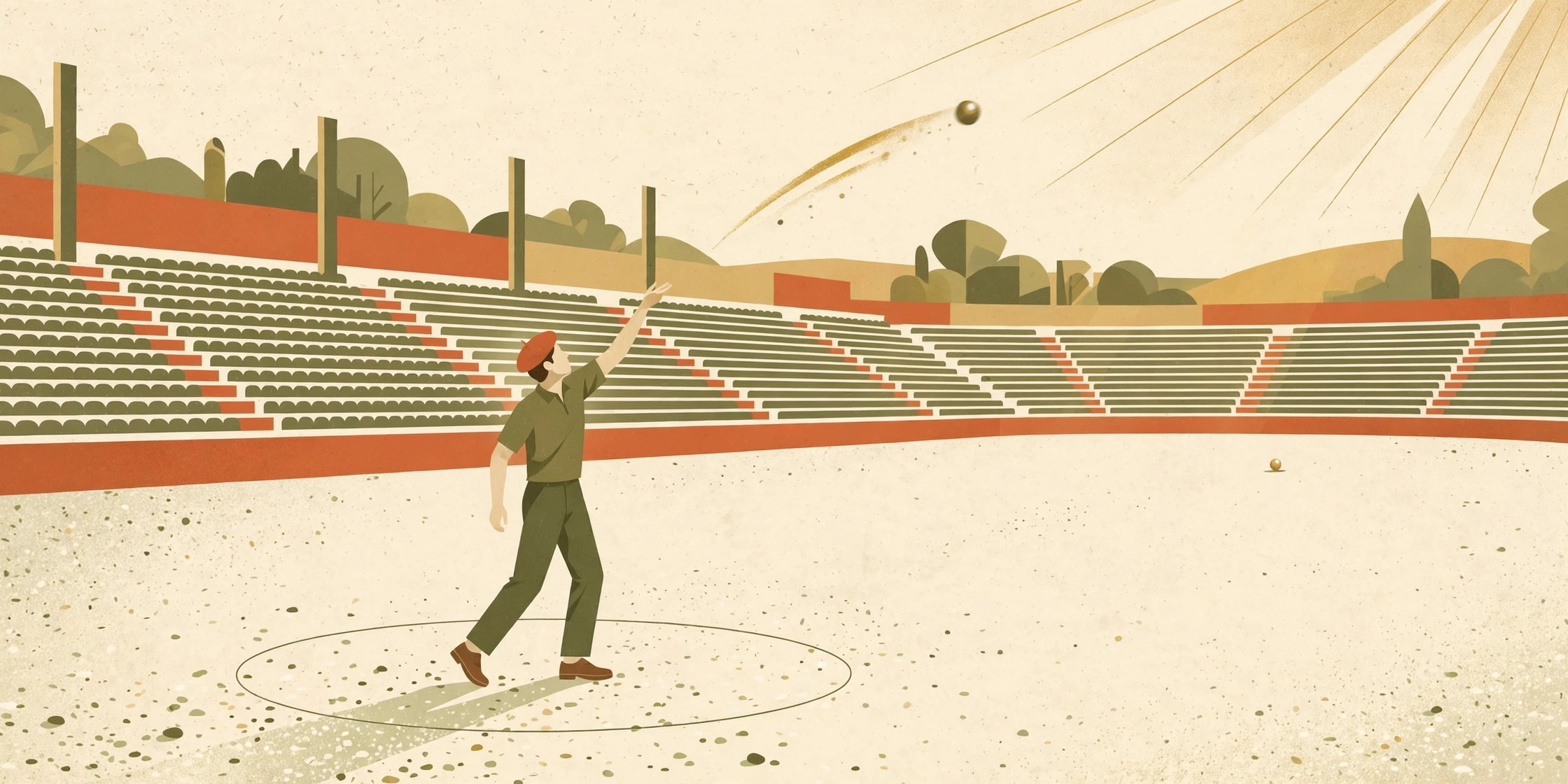
The road to Thailand ends in November, under the floodlights or the tropical sun, with the world watching. Whatever happens there — the medals, the near-misses, the stories they will tell for years — the longer road continues: back home, on borrowed terrains, where the next squad is already forming and doesn’t know it yet. Someone had to win the double first. Someone just did.