Pickleball
Pickleball's Unlikely Rise
Three dads, one bored summer afternoon in 1965, and a dog named Pickles. The fastest-growing sport in America was an accident.
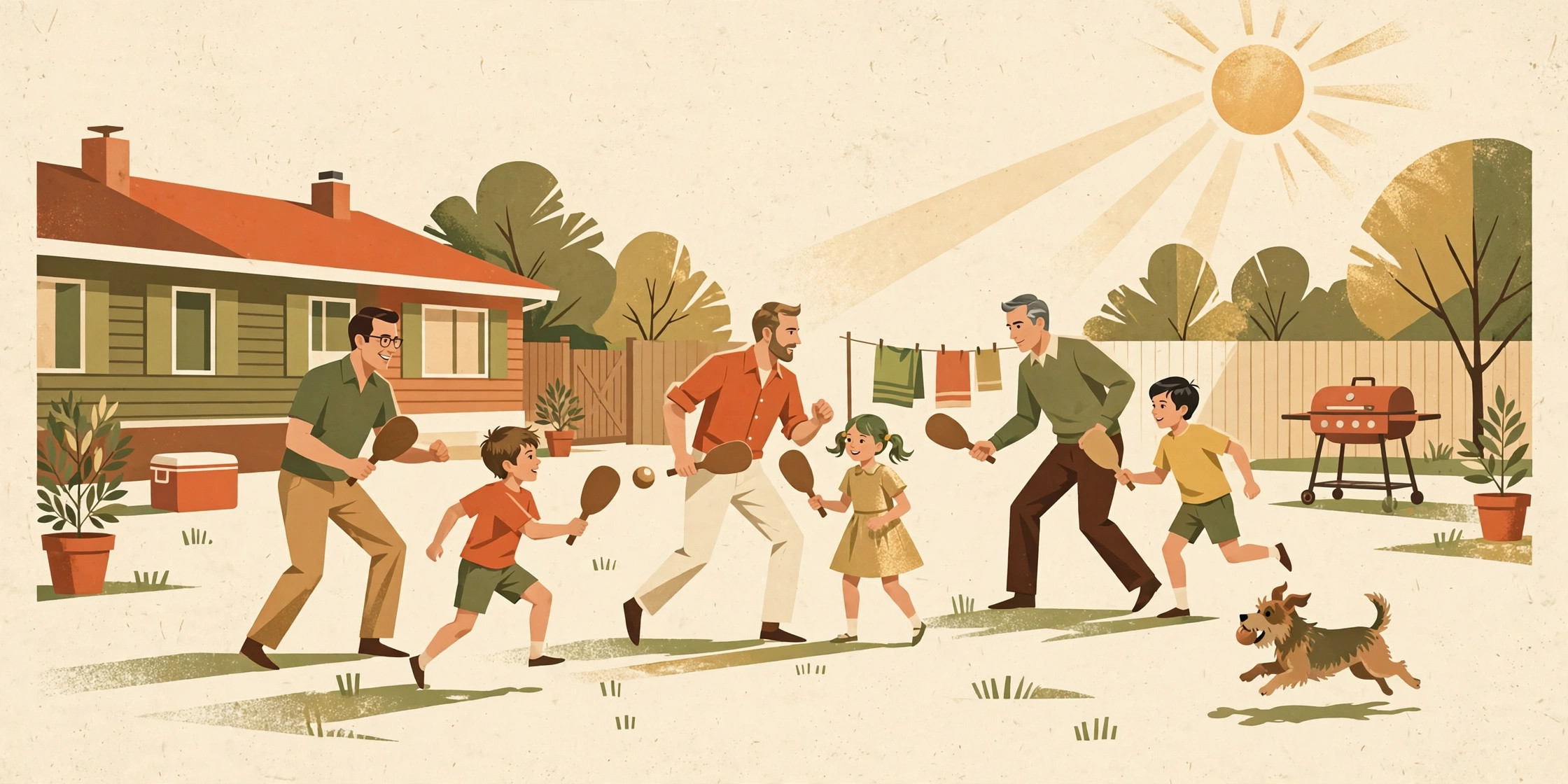
Pickleball began as childcare. In the summer of 1965, on Bainbridge Island near Seattle, Joel Pritchard came home to find his kids bored. With two friends — Bill Bell and Barney McCallum — he improvised a game on an old badminton court: lowered the net, grabbed ping-pong paddles and a perforated plastic ball, and made up the rules as they went.
The name? One story says the Pritchards’ dog was named Pickles, and the dog kept stealing the ball. Another says the game was a “pickle boat” — rowing slang for a crew thrown together from leftovers. Either way, the sport got the least dignified name in athletics and never looked back.
For decades pickleball was a Pacific Northwest curiosity, a retirement-community pastime. Then, around 2020, it detonated. The pandemic closed gyms and the sport was perfect for the moment: outdoors, distanced, cheap, easy to learn in an afternoon. By 2023 the Sports & Fitness Industry Association counted nearly 14 million American players. Tennis courts were repainted. Country clubs panicked. Entire municipal budgets were reallocated to the sound of the pop.
The French, naturally, were baffled and then intrigued — France now has its own federation and a growing club scene. Pickleball did in five years what took pétanque a century: it conquered a continent. The difference is that pétanque spread by joy and pickleball spread by joy plus a business model.
Advertisement