Pickleball
How Pickleball Works
A badminton court, a wiffle ball, and one sacred rule: thou shalt not volley in the kitchen.
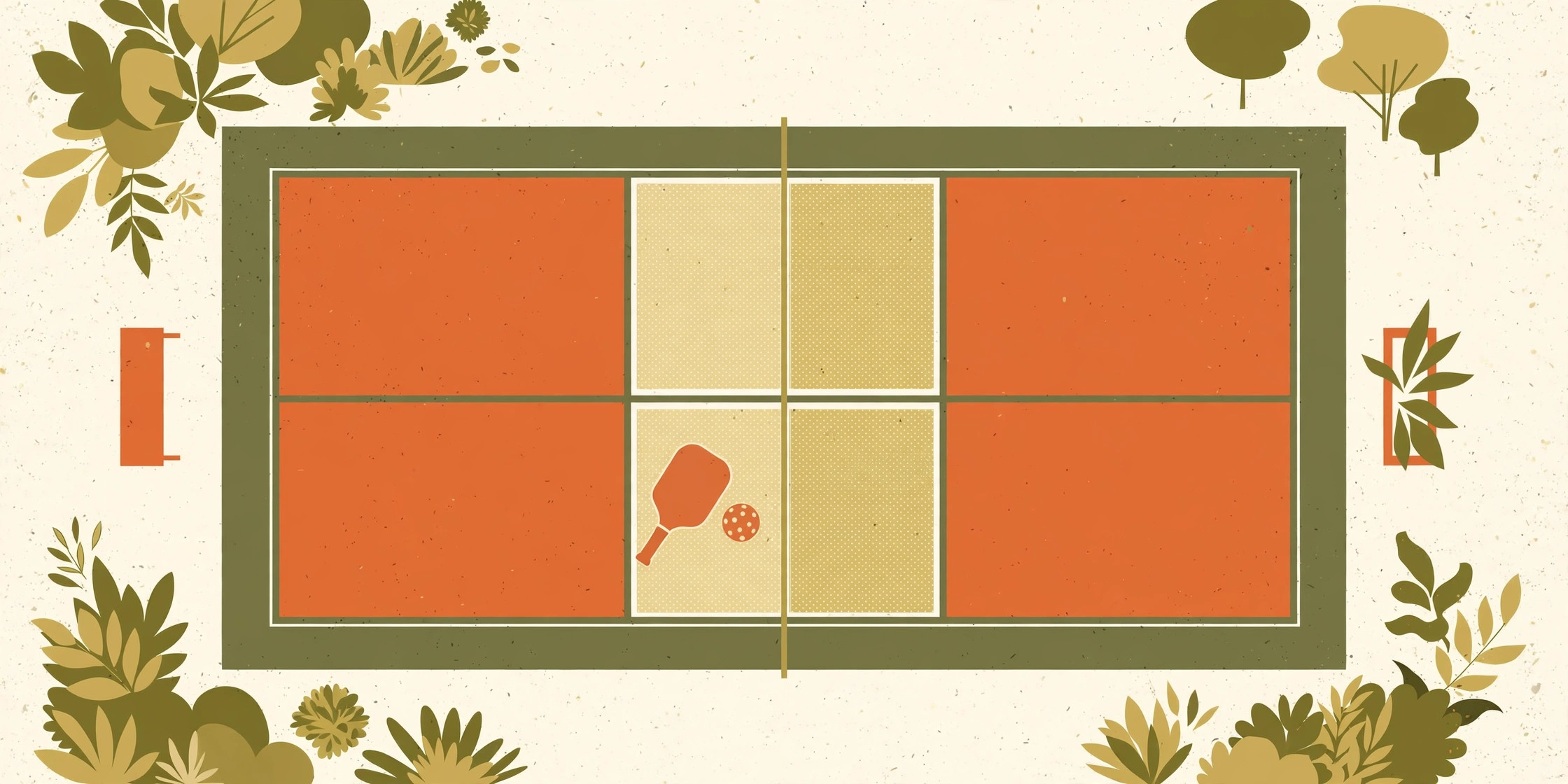
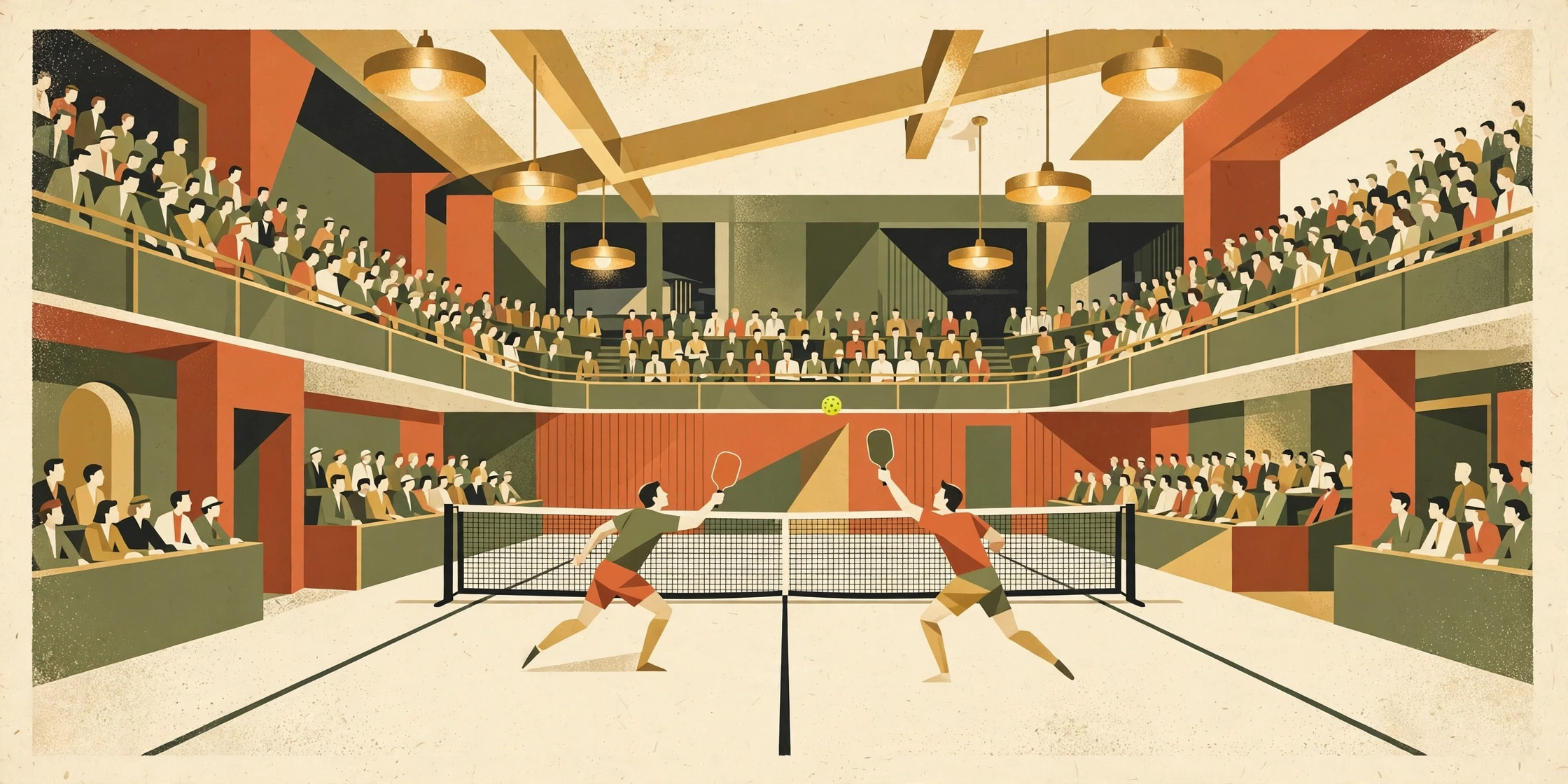
Pickleball is played on a badminton-sized court (20 × 44 feet) with a low net, solid paddles, and a perforated plastic ball that moves slower than a tennis ball — which is the whole point. The slower ball means rallies last, beginners survive, and a 70-year-old can genuinely trouble a 25-year-old. It is the rare sport where the equipment is a handicap for the athletic.
The signature rule is the kitchen. A seven-foot “non-volley zone” extends from each side of the net, and you may not hit the ball out of the air while standing in it. Step into the kitchen to volley and you lose the rally. This single rule forces the game’s defining shot: the dink — a soft, arcing drop shot that lands just over the net in the opponent’s kitchen, gentle as an apology.
Serves are underhand and must bounce. Scoring is to 11 (win by 2), and — in the traditional rule that drives newcomers mad — only the serving side can score. Games are usually doubles, and doubles is where the sport’s social engine lives: four people, constant rotation, endless small talk.
Compare it to pétanque’s pointer/tirer and the family resemblance shows. The dink is a pointage — placement over power. The drive, the hard passing shot, is a tir. Two games invented an ocean apart, and both settled on the same grammar: place it gently, or smash it away.
Advertisement